
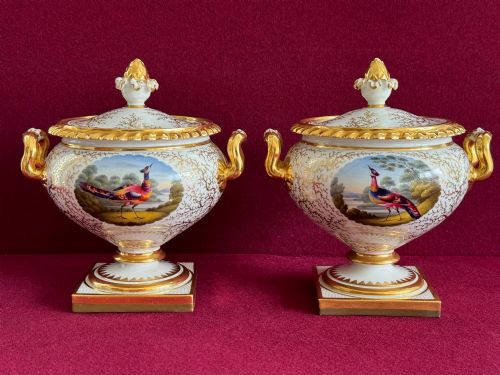
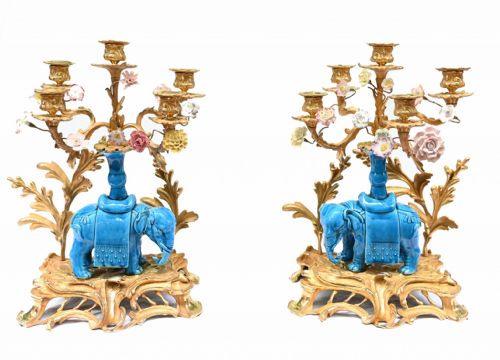


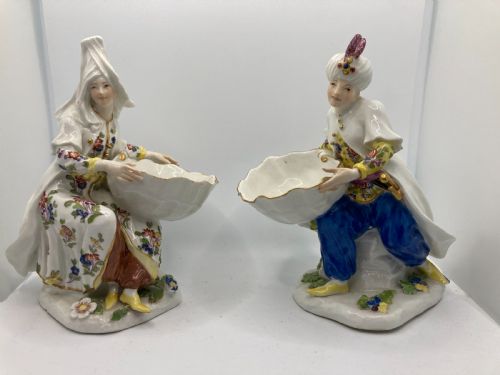


Pair Porcelain Centrepieces
These pair porcelain centrepieces bring grand tables to life with sculpted figures and gilded mounts designed to impress every guest.
Pair Porcelain Centrepieces
When you search for pair porcelain centrepieces, you enter a field populated by dual decorative items created to sit at the middle of dining tables or sideboards. These objects frequently take the form of figural arrangements, sweetmeat dishes, and candelabra designed to hold candles or display fruit and confections.
The examples found here draw on periods ranging from the eighteenth century through the Victorian and Edwardian eras. Continental factories dominate the selection, bringing German and French manufacturing traditions to the British market.
Buyers meet works featuring mythological scenes, exotic figures, and botanical motifs shaped from hard-paste porcelain and soft paste. Many incorporate gilt bronze or ormolu mounts that elevate the ceramic body into a formal decorative piece.
Materials and production methods
The makers of these items relied on refined porcelain clays fired at high temperatures to achieve durable, glossy bodies. Artisans applied vibrant glazes and hand-painted enamels over the fired surface to render intricate facial expressions and clothing details.
Gilding and gold leaf accent raised mouldings, rims, and figural bases, while ormolu and gilt bronze mounts provide structural support and opulent frames. These combined techniques required multiple firings in kiln chambers to set the colours and metallic layers securely.
Object forms span candelabra, sweetmeat dishes, and figural flower carts originating from German and English factories.
Judging the standard of manufacture
Quality reveals itself in the crispness of the modelling and the precision of the hand-painted enamel work. Superior pieces display finely articulated fingers, lifelike drapery, and clean separation of colours without bleeding.
Royal Dux Bohemia·Volkstedt Porcelain·Meissen porcelain·Royal Worcester Hadley·Schierholz and Sohn
The Pair Porcelain Centrepieces Glossary
- Hard-paste porcelain
- A dense, vitrified ceramic compound made from kaolin and petuntse, fired at very high temperatures. It resists scratching and takes glossy glazes exceptionally well.
- Ormolu
- A gold-coloured brass or bronze alloy applied to metalwork through a mercury amalgamation process or modern electroplating. It frames and supports porcelain bodies in garnitures and candelabra.
- Sweetmeat dish
- A small vessel designed to hold confections, nuts, or dried fruits during formal dining. These dishes often appear supported by figural porcelain groups.
- Gilding
- The application of gold leaf or powdered gold suspended in a medium to ceramic surfaces or metal mounts. It creates brilliant metallic highlights that catch candlelight.
Pair Porcelain Centrepieces: Frequently Asked Questions
How were pair porcelain centrepieces used originally?
These pieces sat at the centre of dining tables during formal meals to display sweetmeats or hold candles.
They functioned as conversation starters and status symbols for wealthy hosts hosting dinner parties.
What is the difference between candelabra and vases?
Candelabra feature arms designed to hold multiple candles above the main porcelain body.
Vases serve primarily as decorative vessels for flowers or standalone display.
How do I care for antique porcelain?
Keep these items away from direct sunlight and dust them gently with a soft, dry brush.
Avoid using water or cleaning solutions on painted surfaces and gilded areas to prevent damage.
How can I tell eighteenth century from nineteenth century pieces?
Eighteenth-century examples often display softer paste bodies and distinct hand-painted factory marks underneath.
Nineteenth-century revival pieces tend to feature heavier moulding and brighter, more varied enamel palettes.