


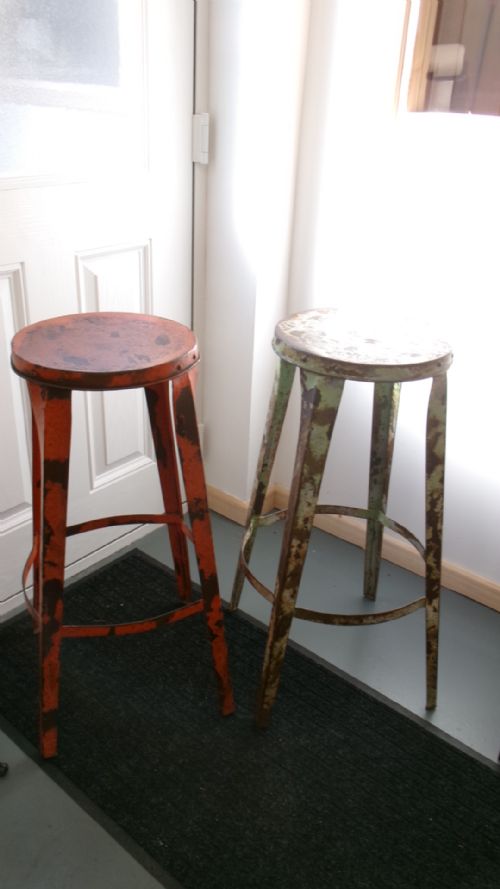


Pair Painted Stools
Pair painted stools offer decorative seating in matched sets, bringing colour and period character to interiors.
Pair Painted Stools
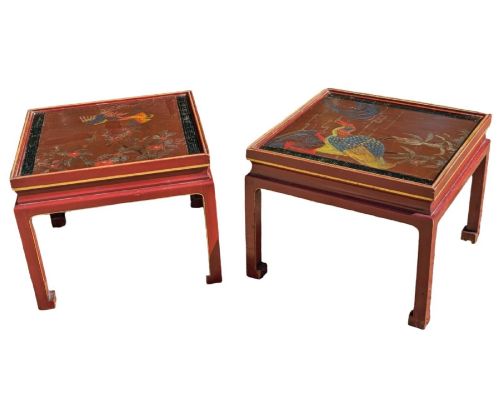
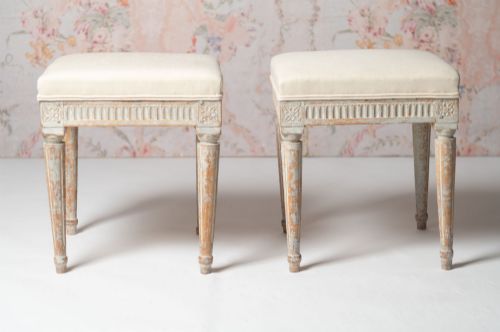
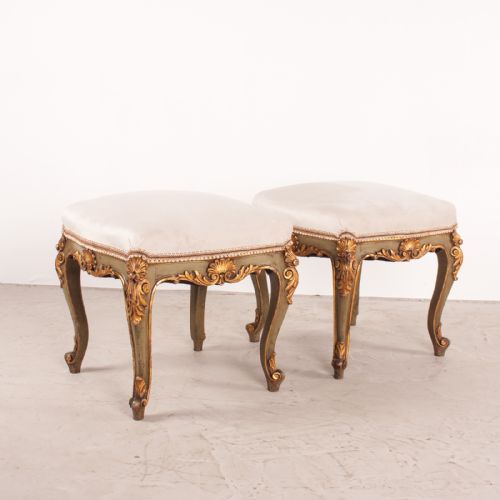
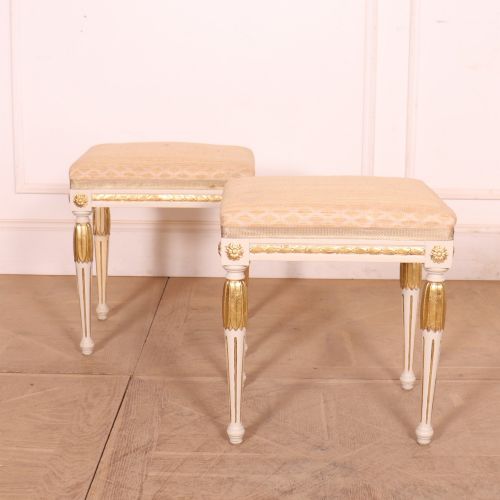
Pair painted stools encompass matching dual items designed for seating or display, emerging frequently in Swedish Gustavian, Continental Rococo, and Chinese styles. These furnishings span the eighteenth, nineteenth, and early twentieth centuries, including footstools, garden seats, window seats, and bar stools. The selection leans heavily towards nineteenth-century examples and Swedish painted forms.
Buyers encounter diverse regional interpretations, from English and French pine plank variants to elaborate Asian lacquer and porcelain barrels. Many pieces combine painted wood surfaces with fabric upholstery, gold leaf accents, or enamel detailing. This variety allows collectors to source items ranging from rustic industrial metal bars to refined neoclassical window seats.
How they were made
Maker construction relies primarily on wood, incorporating painted pine, carved timber, and lacquered structures alongside metal and ironstone elements. Artisans applied hand-mixed paint, enamel, and gold leaf directly onto the timber substrates to achieve decorative finishes. Textile additions such as linen and fabric provide upholstered top surfaces on seated variants.
Specialised techniques distinguish different stylistic traditions, notably Chinese cloisonne work, rose medallion porcelain glazing, and European surface distressing. Riveted metal construction appears in industrial bar stools, contrasting with the traditional joinery of antique pine joint stools. Gilding and multi-layered lacquer applications require precise timing to cure correctly across various base materials.
Some nineteenth-century Asian garden seats were sculpted into the likeness of full-bodied elephants complete with wooden tusks.
What varies in quality
Quality rests significantly on the integrity of the original surface decoration and the preservation of hand-applied paint, gold leaf, or lacquer. Pieces retaining their initial painted finish command higher regard than those subjected to later overpainting or modern repainting. Structural joinery execution also dictates standard, with hand-carved details and secure pine framing demonstrating superior craftsmanship.
The sophistication of the stylistic execution separates standard production from exceptional work, particularly in complex Chinoiserie motifs or intricate French Rococo carving. Material selection plays a role, where dense hardwoods, high-grade porcelain, or heavy metal riveting indicate robust manufacture. Consistency between both items in a matched pair remains essential for overall aesthetic balance.
The Pair Painted Stools Glossary
- Gustavian
- The Swedish neoclassical design style characterised by pale painted finishes, restrained carving, and symmetrical proportions. It flourished during the late eighteenth and early nineteenth centuries.
- Chinoiserie
- The European interpretation and imitation of Chinese artistic traditions, featuring painted landscapes, figures, and decorative motifs. This style gained popularity across furniture and decorative arts during various historic periods.
- Rose Medallion
- A distinct Chinese porcelain decoration style featuring panels filled with figures, birds, and flowers painted in polychrome enamels. The palette typically centres on pink and green tones.
- Joint Stool
- A sturdy wooden stool constructed using mortise and tenon joinery held together with wooden pegs. These pieces date back to early vernacular furniture traditions.
- Cloisonne
- An ancient metalwork technique where enamel compartments are created by soldering thin wire to a metal substrate. The resulting cells are filled with coloured paste and fired.
Pair Painted Stools: Frequently Asked Questions
What rooms suit pair painted stools?
These matched furnishings fit well in living rooms, bedrooms, and entrance halls as flexible seating or decorative display surfaces. Their dual nature allows placement flanking a fireplace or beneath a window.
Garden seats and plant stands work equally well on enclosed porches or in conservatories. Selecting the appropriate height ensures the pieces function effectively for their intended use.
How do I care for painted wood?
Maintenance requires gentle dusting with a soft, dry cloth to protect fragile historical paint layers from abrasion. Avoid commercial polishes and liquid cleaners that might soften or dissolve original finishes.
Keep the items away from direct sunlight and moisture fluctuations to prevent wood splitting and paint flaking. Stable indoor climates preserve both the structural timber and surface decoration.
Are these stools comfortable?
Comfort levels vary depending on the specific form, with upholstered window seats and fabric-topped footstools offering softer seating than rigid wooden or porcelain barrels. Many historical examples served primarily as decorative accents or occasional perches rather than primary lounging chairs.
Adding loose cushions can improve comfort without altering the underlying antique frame. Consider the intended daily use when selecting between hard-topped garden seats and padded stools.
How do I identify Swedish Gustavian pieces?
Swedish Gustavian items typically display muted grey, white, or cream paintwork applied over carved pine or birch timbers. The decorative vocabulary draws on classical antiquity with fluted legs and subtle rosette carvings.
Proportions remain light and elegant, reflecting Scandinavian interpretations of French neoclassical design. Original surfaces often show natural wear that confirms their age.