



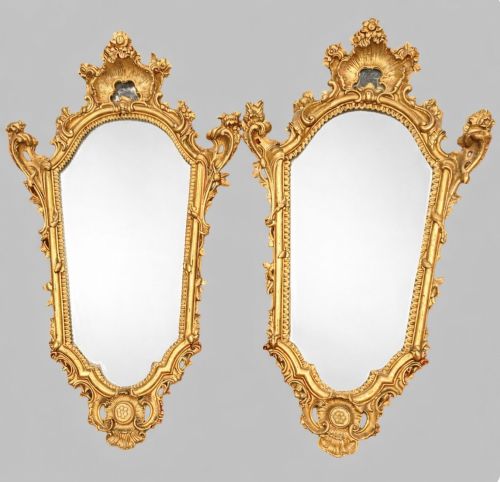
Pair Ornate Wall Mirrors
These pair ornate wall mirrors bring symmetry and deep reflected light to a room, drawn largely from nineteenth century workshops.
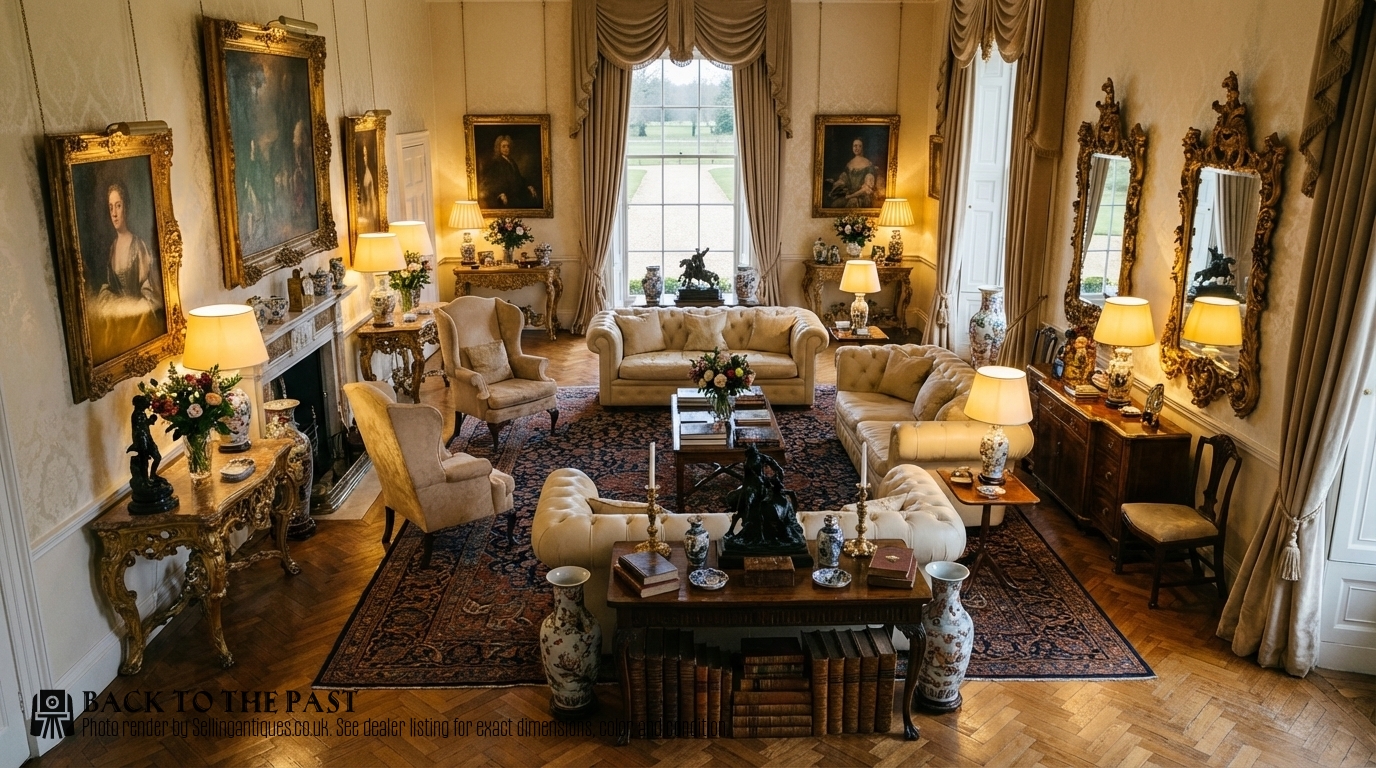
Pair Ornate Wall Mirrors
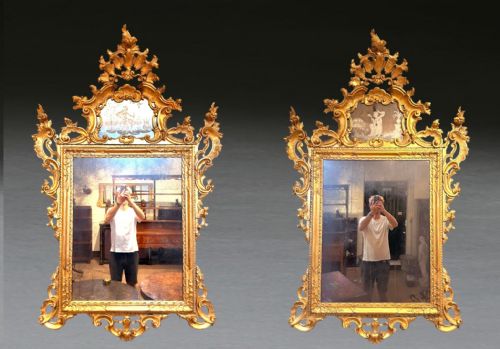
When you search for pair ornate wall mirrors, you encounter matched sets designed to balance a room, frequently hung above mantelpieces or console tables. The selection ranges from nineteenth century Victorian examples to eighteenth century Venetian iterations, spanning wall scones, girandoles, and pier glasses.
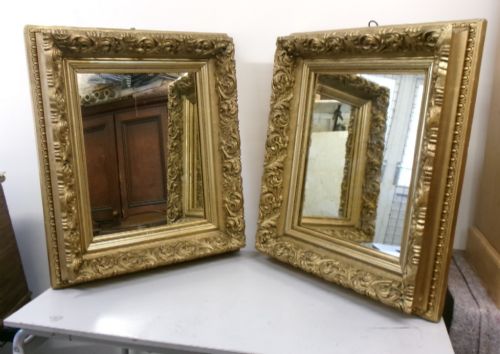
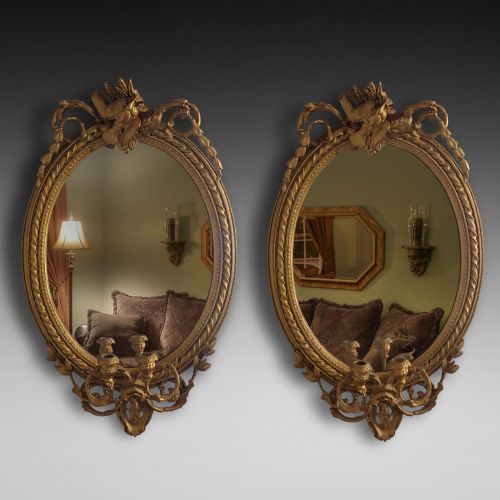
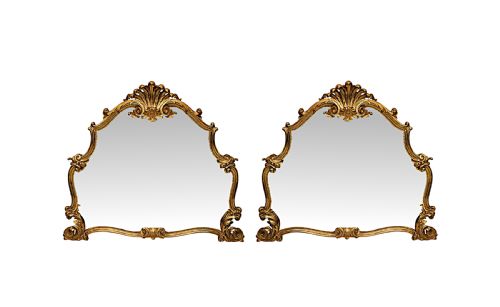
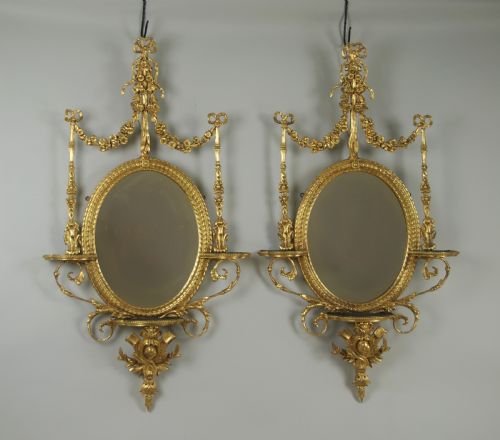
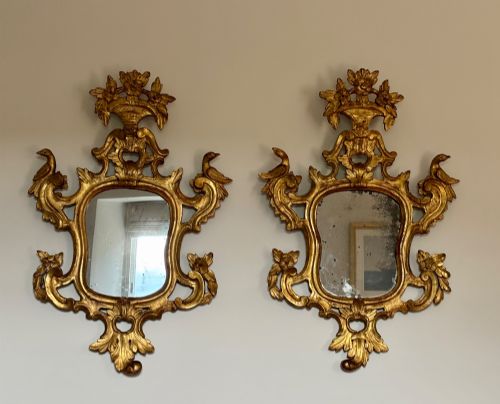
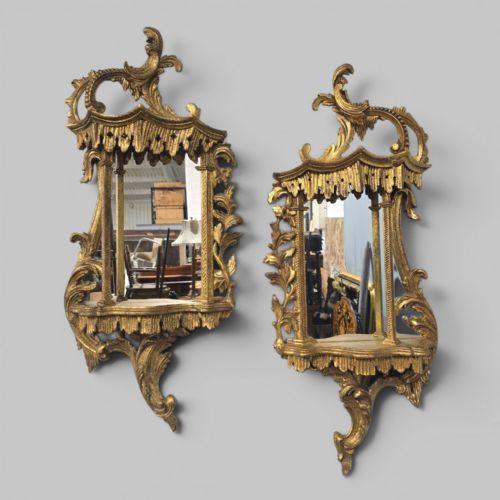
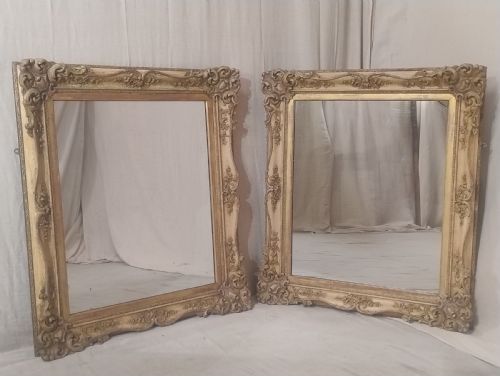
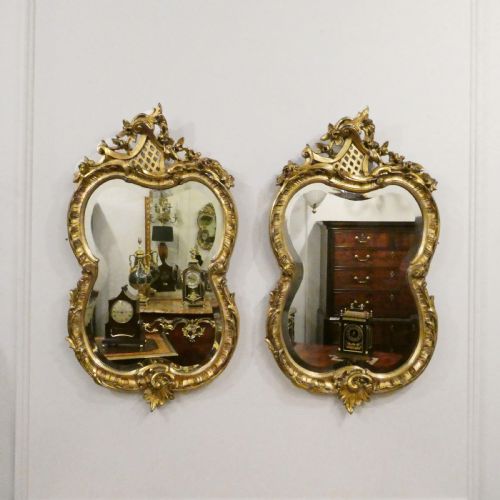
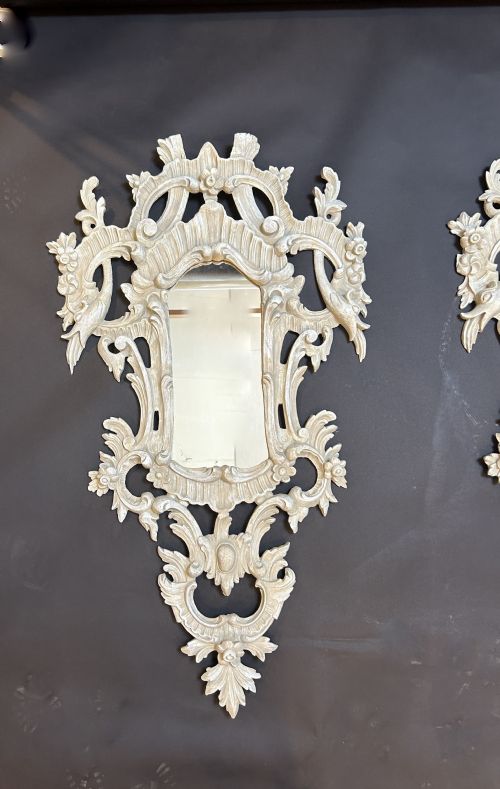
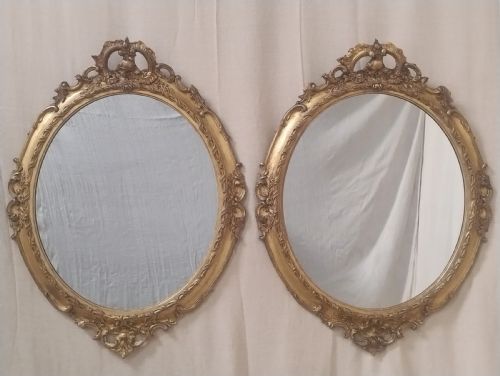
The most common forms on this page include oval and rectangular giltwood frames decorated in Rococo and Neo-classical revival styles. Many incorporate display brackets, candle arms, or carved wooden foliage reflecting continental and English design traditions.
How they were made
Frames are constructed primarily from carved wood, gesso, and plaster, finished with layers of gold leaf, parcel gilt, or paint. Brass and bronze also appear in metal frames and candle sconces.
Mirror glass is set within these heavy frames, sometimes featuring bevelled edges or segmented panels consistent with period manufacturing techniques.
Gypsy mirrors bring a touch of bohemian domestic history to the wall, complete with painted timber and gypsy caravan charm.
What varies in quality
Quality rests in the depth and crispness of the hand-carved ornamentation within the gesso and wood, alongside the integrity of the original gilding. Finer pieces display sharply defined scrollwork and foliage rather than soft, moulded contours.
The condition and age of the mirror glass itself matter greatly, with authentic period silvering showing subtle ageing that distinguishes it from modern replacements.
The Pair Ornate Wall Mirrors Glossary
- Girandole
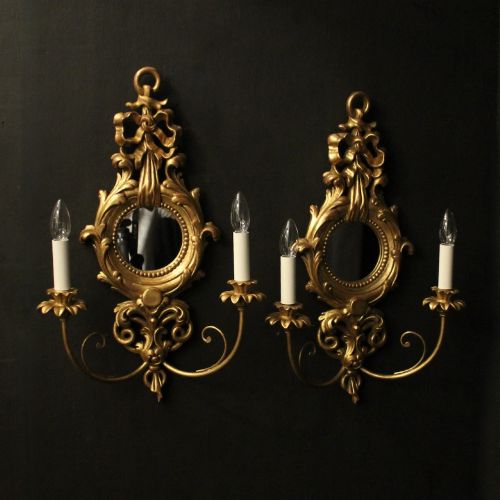
- A wall mirror featuring attached candle sconces or branches designed to reflect candlelight. These candle arms amplify illumination within a dimly lit interior.
- Giltwood
- Timber coated with a thin layer of gold leaf or gold paint. This technique gives frames a luminous finish that catches natural and artificial light.
- Gesso
- A plaster-like mixture applied to wooden frames and carved before gilding. It provides a smooth base for intricate relief ornamentation.
- Pier Glass
- A large tall mirror traditionally placed on the wall space between windows. They often sit above matching console tables.
- Overmantel
- A large mirror designed specifically to hang above a fireplace mantel. These pieces anchor the visual weight of a chimney breast.
Pair Ornate Wall Mirrors: Frequently Asked Questions
Where should I hang a pair?
Symmetry guides the placement of these mirrors, making them effective when hung either side of a fireplace, doorway, or large piece of furniture. Their balanced presence creates an intentional focal point in reception rooms and hallways.
Ensure the wall fixings support the considerable weight of carved wooden frames. Positioning them opposite windows also maximises the natural light they throw back into the space.
How do I identify the period?
Dating relies on examining the construction of the wooden frame, the composition of the gesso, and the style of the carving. Victorian and nineteenth century pieces often show heavier Rococo revival motifs, while eighteenth century examples display more fluid, organic carving.
Inspect the reverse of the frame for old fixings, timber shrinkage, and hand-cut screws. The character of the mirror plate also offers clues, as older glass exhibits subtle imperfections and oxidation.
What is a girandole mirror?
A girandole is a wall mirror fitted with integrated candle arms or branches projecting from the frame. Originally, these arms held wax candles to multiply the light cast around evening rooms.
Today, surviving examples retain their brass or gilt-wood sconces, functioning as decorative wall pieces that combine illumination with reflective glass.
How do I clean antique gilt frames?
Giltwood and gesso frames require gentle dusting with a soft, dry brush to remove particles without disturbing the delicate gold leaf. Moisture and chemical cleaners damage the historic surface layers.
Keep them away from direct sunlight and damp environments to prevent the gesso from cracking or the timber from warping over time.