

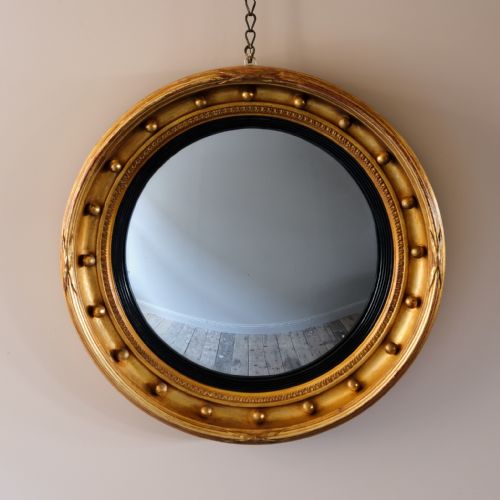


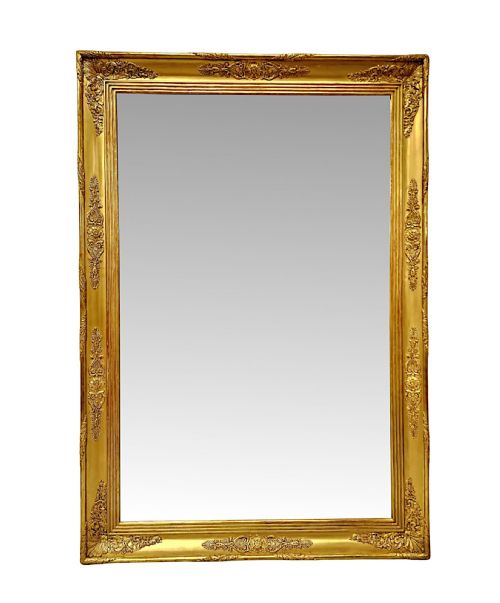

Traditional Gilt Hall Mirror
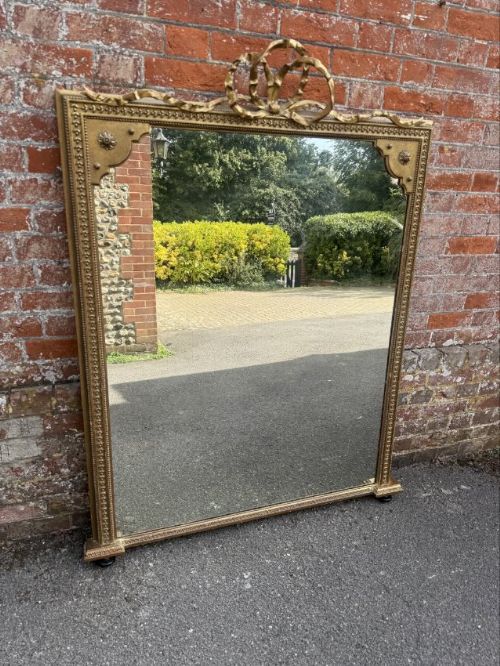
These traditional gilt hall mirror pieces bring light and presence to an entrance, formed in giltwood, gesso, and carved timber across Victorian, Edwardian, and revival styles.
Traditional Gilt Hall Mirror
A traditional gilt hall mirror serves as a decorative and functional focal point in an entranceway, reflecting light into narrow spaces. These wall mirrors appear primarily in nineteenth-century and early twentieth-century examples.
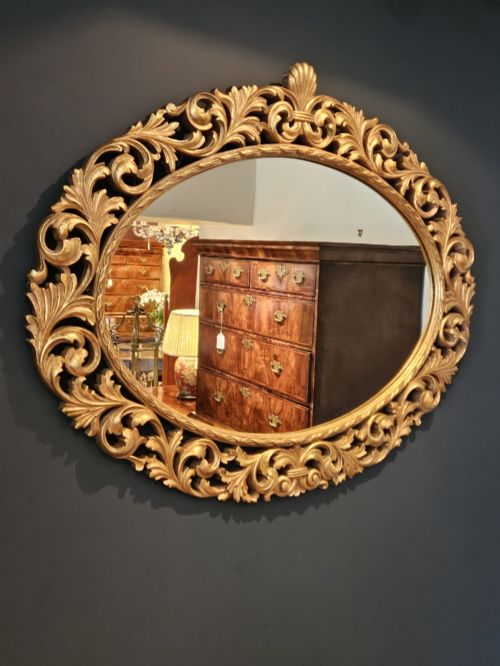
Buyers encounter diverse forms on this page, ranging from large carved timber gilt oval mirrors to substantial overmantel mirrors and pier wall mirrors. Styles span Victorian, Rococo, French Chateau, and Georgian Revival designs.
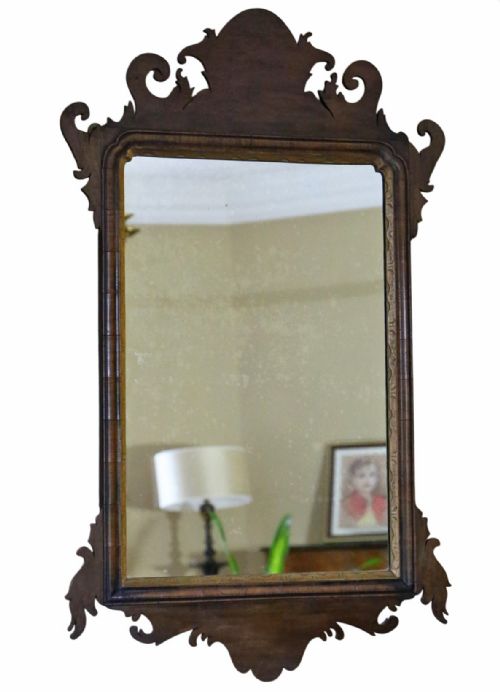
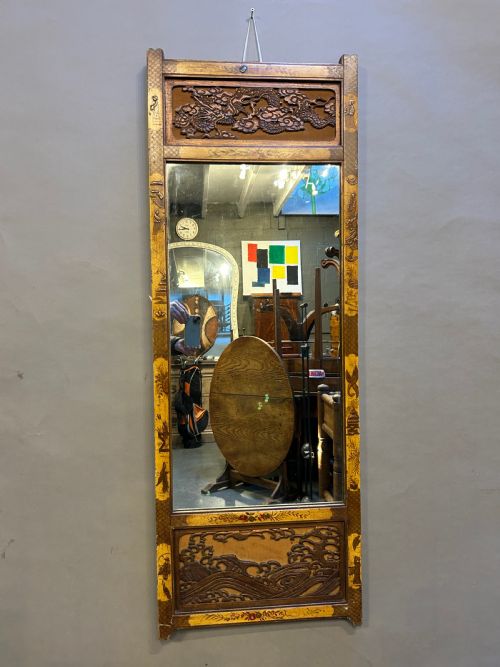
The selection includes specific regional and thematic interpretations such as Chinoiserie pier wall mirrors, convex mirrors, and walnut fret-cut wall mirrors. Makers and artisans utilised gilt wood, gesso, ebonised wood, and walnut to build these pieces.
How traditional gilt hall mirror pieces were made
Construction relies heavily on carved timber, walnut, and ebonised wood as foundational structures for the frames. Artisans applied gesso over wood substrates to build up intricate relief details before the gilding process.
Finishing involved applying gold leaf or paint over the prepared surfaces, creating the characteristic reflective metallic sheen seen on Victorian and revival pieces. Some examples incorporate flowers and complex fret-cut outlines into the carved wood.
Convex mirrors were historically placed in drawing rooms so hosts could monitor their guests' conversations from across the room.
What varies in quality
Depth and crispness of the carved detail separate standard frames from finer works, particularly where floral motifs or fret-cut walnut outlines are present. The integrity of the underlying gesso and the richness of the gilding dictate visual impact.
Proportion and scale play significant roles, with large oval formats and substantial overmantel mirrors demanding greater structural joinery to support heavy glass plates. The presence of period glass or replaced glass alters the historical character of the piece.
The Traditional Gilt Hall Mirror Glossary
- Giltwood
- Wood that has been covered with a thin layer of gold leaf. This material defines the bright surfaces of traditional wall mirrors.
- Gesso
- A plaster mix applied to wood frames to create a smooth base for carving and gilding. Artisans shaped this paste into floral and decorative reliefs.
- Fret-cut
- Wood cut into intricate patterns using a fine saw. This technique creates lightweight geometric or scrollwork frames in walnut.
- Pier glass
- A tall mirror designed to hang on the wall space between windows. These pieces often feature Chinoiserie or revival styling.
- Convex mirror
- A round mirror with a curved glass surface that provides a wide-angle reflection of a room. Nineteenth-century examples often sit within circular gilt frames.
Traditional Gilt Hall Mirror: Frequently Asked Questions
Where should I hang a hall mirror?
These mirrors suit narrow entranceways and corridors where they bounce natural light around the space. Positioning them opposite a light source maximises illumination.
Ensure the wall structure supports the weight of carved timber and gesso frames, particularly for large vertical or oval formats.
How do I clean a gilt frame?
Dust giltwood and gesso surfaces gently with a soft, dry brush to protect the delicate gold leaf finish. Avoid chemical sprays or moisture that can damage aged gesso.
Glass panels can be cleaned with a standard glass cleaner applied to a cloth rather than sprayed directly onto the frame.
Are these mirrors heavy?
Solid timber frames combined with layers of gesso and glass create substantial weight across nineteenth-century and revival pieces. Proper wall fixings rated for heavy loads are essential for secure hanging.
Professional installation is recommended for large overmantel or pier wall mirrors to distribute the weight safely.
How do I identify a revival style?
Revival pieces borrow decorative motifs from earlier eras, such as Georgian fret-cut walnut designs or Baroque carved gilt elements. Examining the construction timber and backing helps distinguish original period work from later interpretations.
stylistic markers often blend nineteenth-century manufacturing methods with historical aesthetics like Rococo or Chinoiserie.