
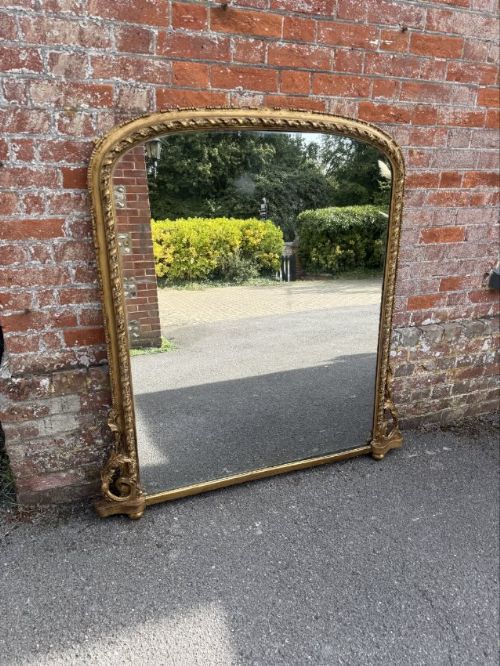
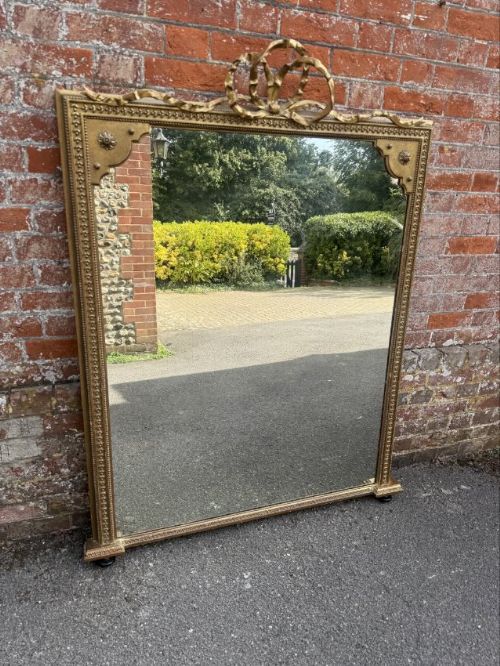
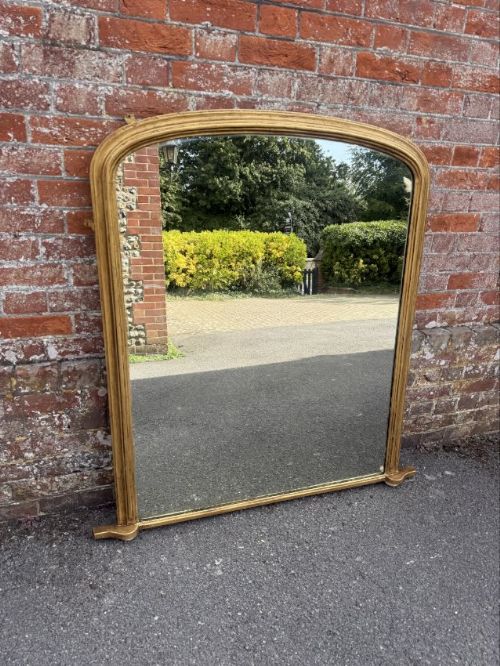


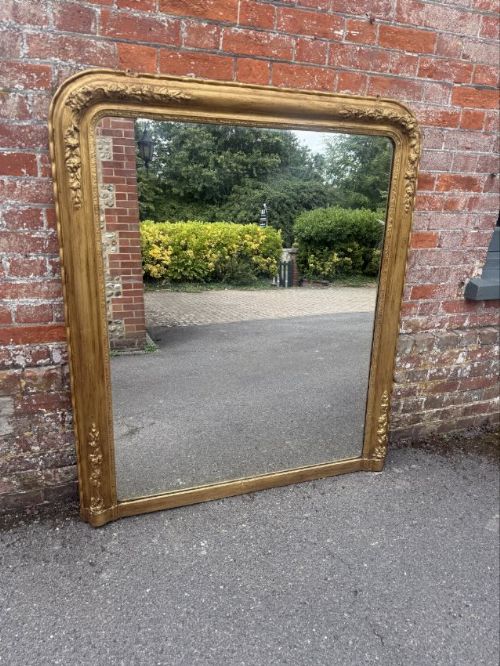
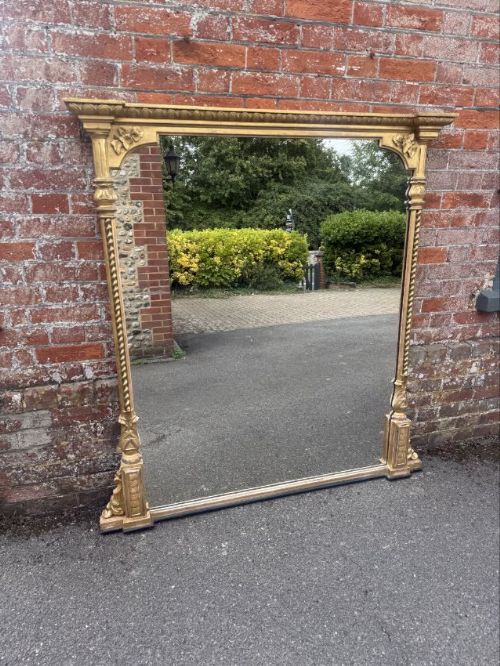
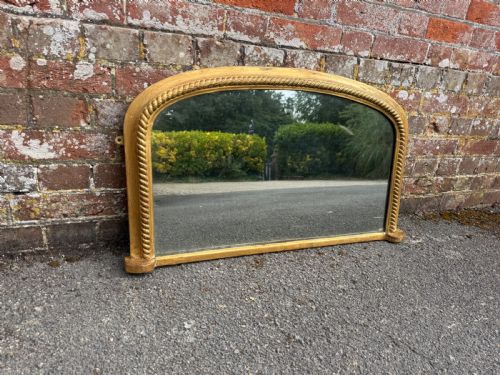
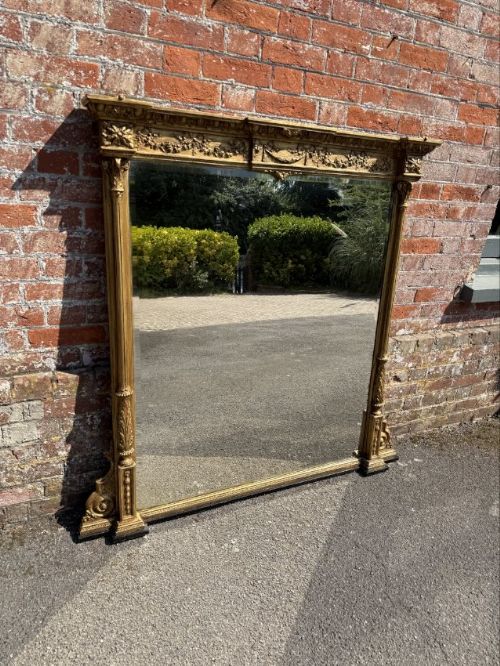


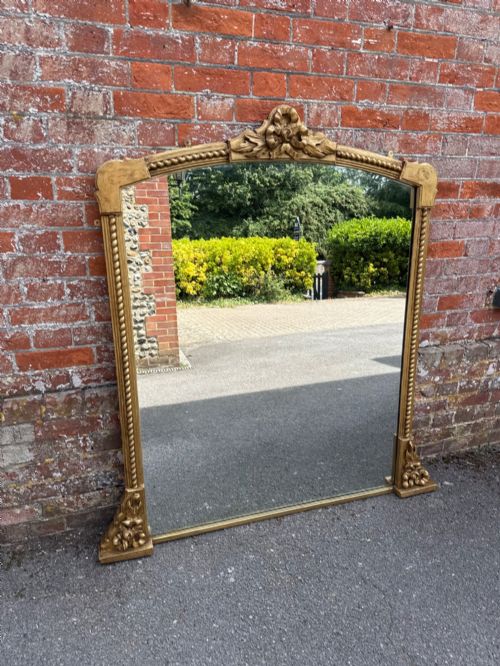

Gesso Gilt Fireplace Mirror
A gesso gilt fireplace mirror brings warmth and reflected light to a room, drawing the eye naturally to the mantelpiece.
Gesso Gilt Fireplace Mirror
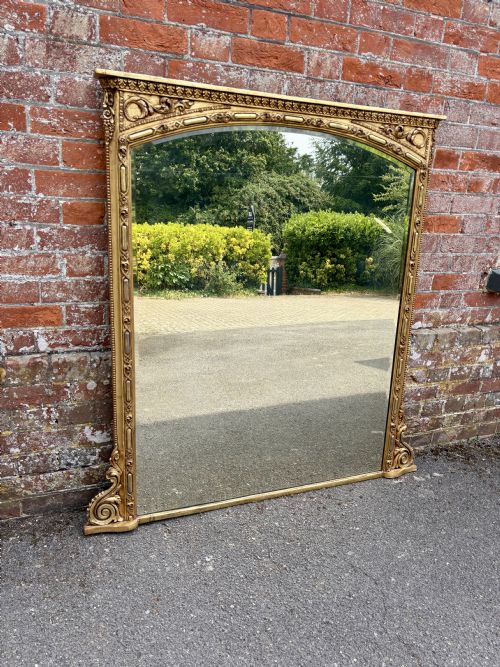
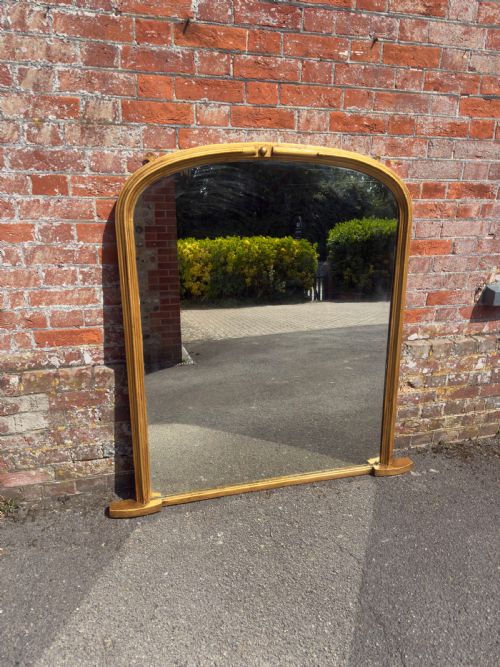
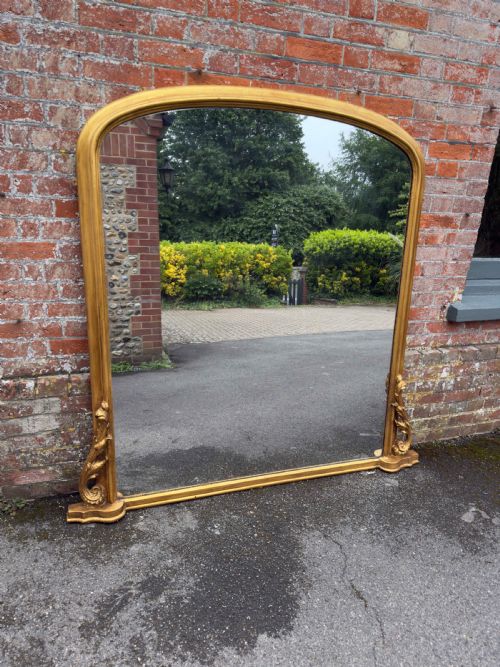
A gesso gilt fireplace mirror serves as a large decorative focal point designed to sit directly above a hearth. Most examples encountered here belong to the nineteenth century, spanning periods from the 1850s through to the 1880s.
The prevailing form is the overmantel mirror, often constructed with an arched or shaped top to echo traditional architectural openings. These pieces frequently appear in English stylistic traditions, alongside interpretations of the Rococo Revival, William IV, and Grand Regency styles.
Makers shaped these frames primarily as wall mirrors and overmantel mirrors intended to dominate the chimney breast. Buyers find that nineteenth-century English interpretations form the majority of the current selection.
Materials and construction
Makers built the foundational structure using carved wood, forming sturdy carcasses to support the considerable weight of the glass. Over this timber base, layers of gesso were applied to build up deep relief details and smooth surfaces for gilding.
Gold leaf or giltwood finishes were then applied over the prepared gesso and carved elements to achieve a reflective metallic sheen. Mirror glass was set within these ornate frames, secured to complete the overmantel construction.
Makers occasionally added subtle laurel leaf frames so that even stationary glass wore an eternal wreath.
Judging quality and execution
The depth and crispness of the carved wood and gesso ornamentation separate standard framing from exceptional work. Elaborate motifs such as rope twists, tulip framing, and laurel leaves require precise hand-tooling to retain definition beneath the gilding.
The overall proportion and the architectural harmony of the arched or shaped top dictate the visual impact of the piece in an interior setting. Subtlety in the application of gold leaf over the gesso layers maintains a softer warmth rather than a flat metallic glare.
The Gesso Gilt Fireplace Mirror Glossary
- Gesso
- A plaster-like mixture applied to a wooden base to create a smooth surface for gilding and carving. This compound allows for intricate relief work.
- Giltwood
- Timber that has been coated with gold leaf or a gold-coloured finish. It provides the characteristic metallic appearance of these frames.
- Overmantel Mirror
- A large mirror specifically proportioned to hang on the wall directly above a fireplace mantel. These pieces often feature architectural arches.
- Rope Twist
- A carved decorative motif resembling intertwined ropes running along the border of the frame. This pattern adds textural depth to the moulding.
- Carved Wood
- Timber shaped by hand using cutting tools to form structural elements and decorative reliefs. It forms the robust skeleton beneath the gesso layer.
Gesso Gilt Fireplace Mirror: Frequently Asked Questions
Where should I hang a fireplace mirror?
These mirrors are traditionally positioned centrally on the wall directly above a fireplace mantelpiece to anchor the room's proportions.
Because of their substantial scale and weight, they require secure fixings anchored firmly into structural wall studs or brickwork.
How do I identify a nineteenth-century piece?
Nineteenth-century examples are typically characterised by heavy carved wood carcasses coated in gesso and gold leaf. Construction details often include arched tops and distinct stylistic markers from the Victorian or Regency eras.
The materials and framing techniques reflect the manufacturing methods common between the 1850s and the 1880s.
What is the difference between an overmantel and a wall mirror?
An overmantel mirror is specifically proportioned in width and height to span the horizontal space above a hearth. Standard wall mirrors are designed for general room placement rather than architectural integration with a fireplace.
Overmantel versions frequently incorporate arched tops to complement period interior proportions.
How do I care for gilt gesso surfaces?
Gilded gesso surfaces require gentle dusting with a soft, dry cloth to prevent accumulation without disturbing the delicate gold leaf layer. Moisture and harsh cleaning agents must be avoided entirely to preserve the historical finish.
Positioning the piece away from direct, harsh heat sources protects the underlying wood and plaster.