




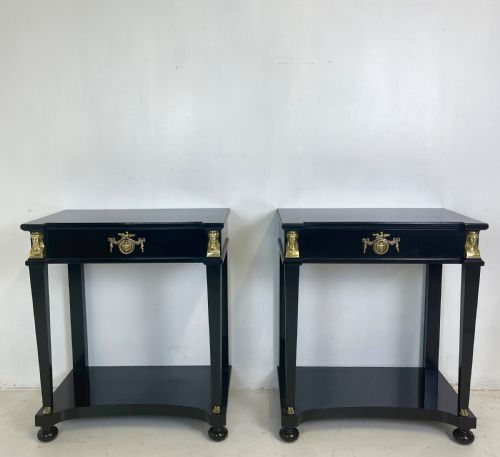

Pair Ormolu Side Lamps
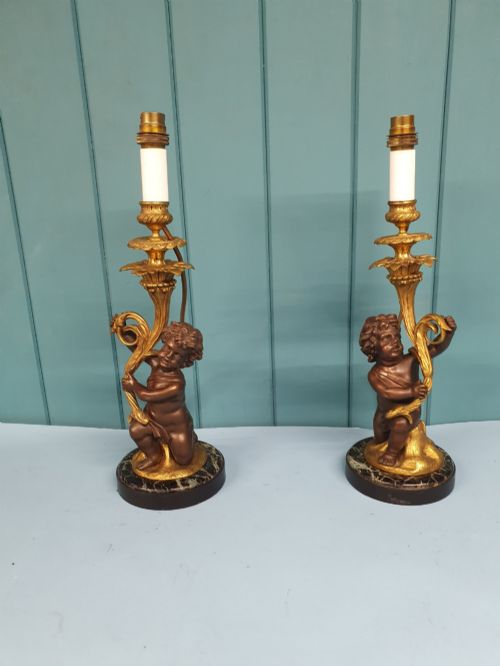
These pair ormolu side lamps bring warmth and gilded French styling to a room.
Pair Ormolu Side Lamps
When searching for pair ormolu side lamps, you encounter decorative lighting fixtures predominantly from the nineteenth century alongside later twentieth century iterations. The selection here bridges multiple historic aesthetics, ranging from Regency candlestick forms to ornate French Rococo Revival and Empire styles.
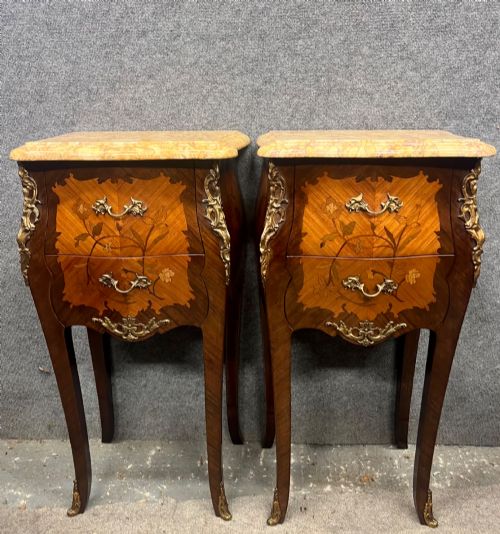
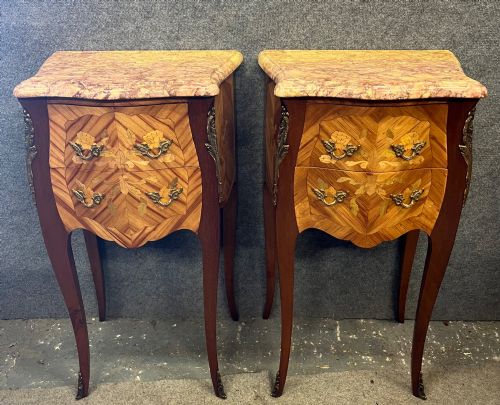
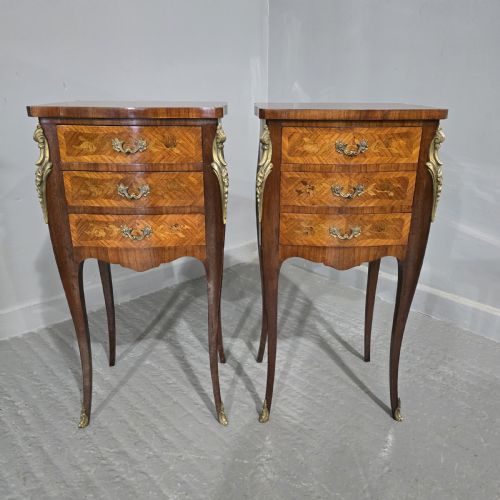
Most examples combine gilded metalwork with contrasting materials like marble or bronze, serving both as functional illumination and sculptural objects. Alongside dedicated table lamps and lamp bases, the inventory also includes companion side furniture such as marble-topped bedside chests and lamp tables designed to hold them.
Materials and construction
The manufacture relies heavily on cast bronze and brass finished with mercury gilding or modern ormolu techniques to achieve a bright golden surface. These metallic elements are frequently paired with natural stones, including Siena marble, or mounted onto wooden structures like kingwood and walnut.
Many designs incorporate detailed figural casting, such as cherubs and putti, alongside hand-painted porcelain components or fabric shades. The combination of heavy cast metal and stone requires precise joinery and mounting to ensure stability in upright lamp bases and cassolettes.
Current listings feature pieces spanning the nineteenth century through the 1930s, utilising materials like marble, kingwood, and gilt bronze.
Distinctions in quality
Quality rests primarily on the crispness of the bronze or brass casting and the depth of the gilding. Finer pieces display sharply chiselled details in the foliage, figures, and scrollwork, whereas simpler examples show softer edges from worn moulds.
The choice of secondary materials further differentiates the range, with solid marble plinths and intricate marquetry inlay elevating certain items. Superior specimens maintain original patination on the metal surfaces without excessive cleaning or modern re-plating.
The Pair Ormolu Side Lamps Glossary
- Ormolu
- A gilded bronze or brass finish applied to decorative metalwork. This technique creates a rich golden appearance popular in French decorative arts.
- Cassolette
- A decorative vessel or vase, often adapted to function as a lamp base. These pieces typically feature a removable lid or insert.
- Marquetry
- Decorative woodwork using thin veneers arranged in patterns. It appears frequently on the companion lamp tables and bedside chests.
- Putti
- Depictions of small winged infants or cherubs used in classical sculpture and metal mounts. They are a common sculptural motif on nineteenth century bases.
- Empire
- A neoclassical design style originating in early nineteenth century France. It draws heavy inspiration from ancient Roman and Greek motifs.
Pair Ormolu Side Lamps: Frequently Asked Questions
How do I clean ormolu?
Dust gently with a soft dry cloth to protect the delicate gilded surface. Avoid harsh chemical cleaners or abrasive polishes that can strip the metallic finish.
Water and moisture should also be kept away from the gilt bronze to prevent tarnishing or corrosion over time.
Can modern bulbs be used?
Most antique lamps are adapted to accept standard modern light bulbs safely. Wiring can be updated by a professional electrician while retaining the historic exterior.
Checking the internal fittings ensures compatibility with current safety standards without altering the visible decorative components.
Where should side lamps sit?
These lamps suit placement on low side tables, mantelpieces, or dedicated bedside chests. Their reflective gilded surfaces bounce natural and artificial light around a room.
Pairing them with matching tables creates a balanced aesthetic rooted in nineteenth century interior arrangement.
How are periods identified?
Stylistic clues such as Regency neoclassical restraint or ornate French Rococo curves help date the metalwork. Examining the casting technique and material composition provides further chronological context.
Comparing the mount details against documented nineteenth century design books assists in narrowing down the era.