

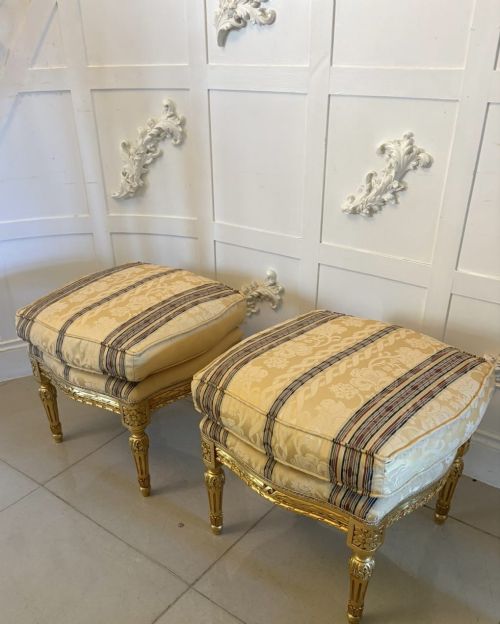
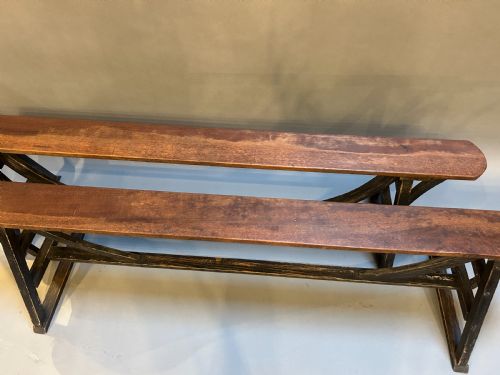
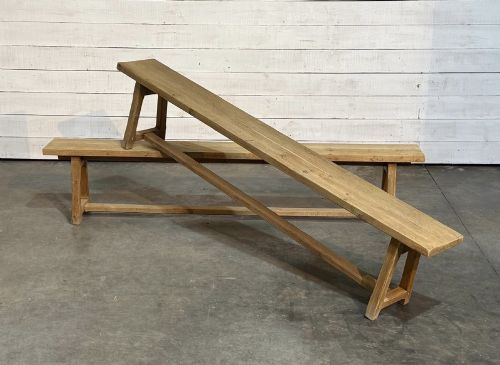
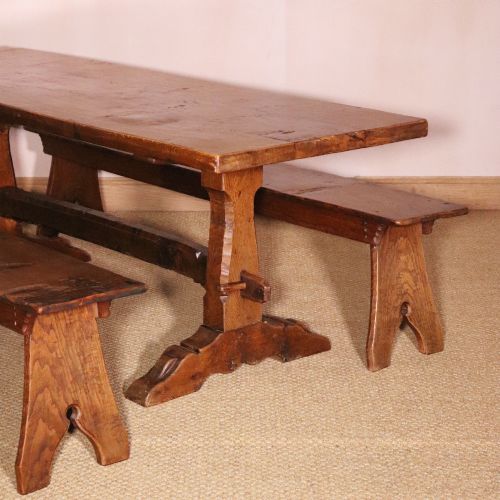
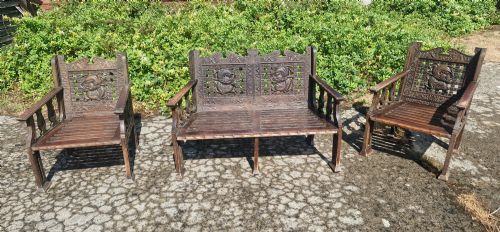
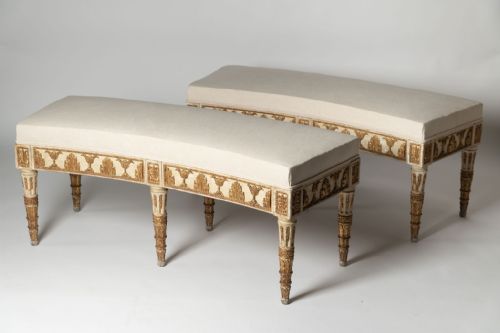

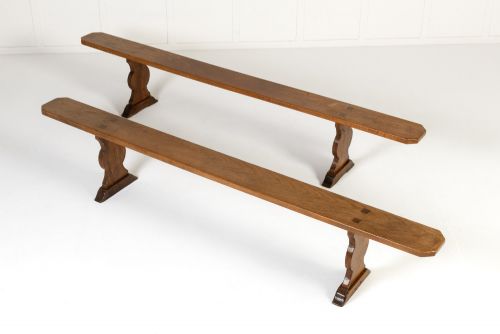
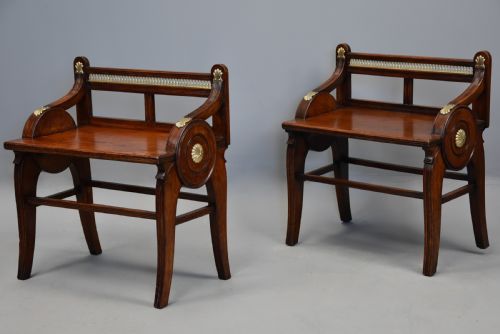


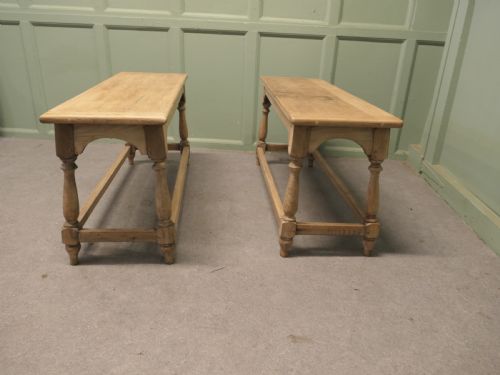
Pair of Wooden Benches
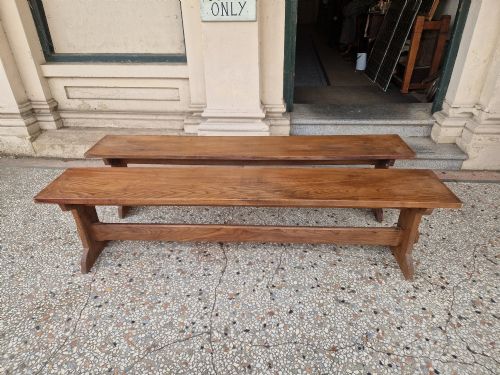
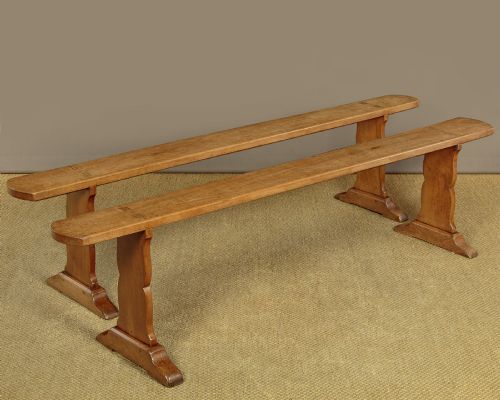
A pair of wooden benches brings practical seating and period character to a hallway, dining room or garden.
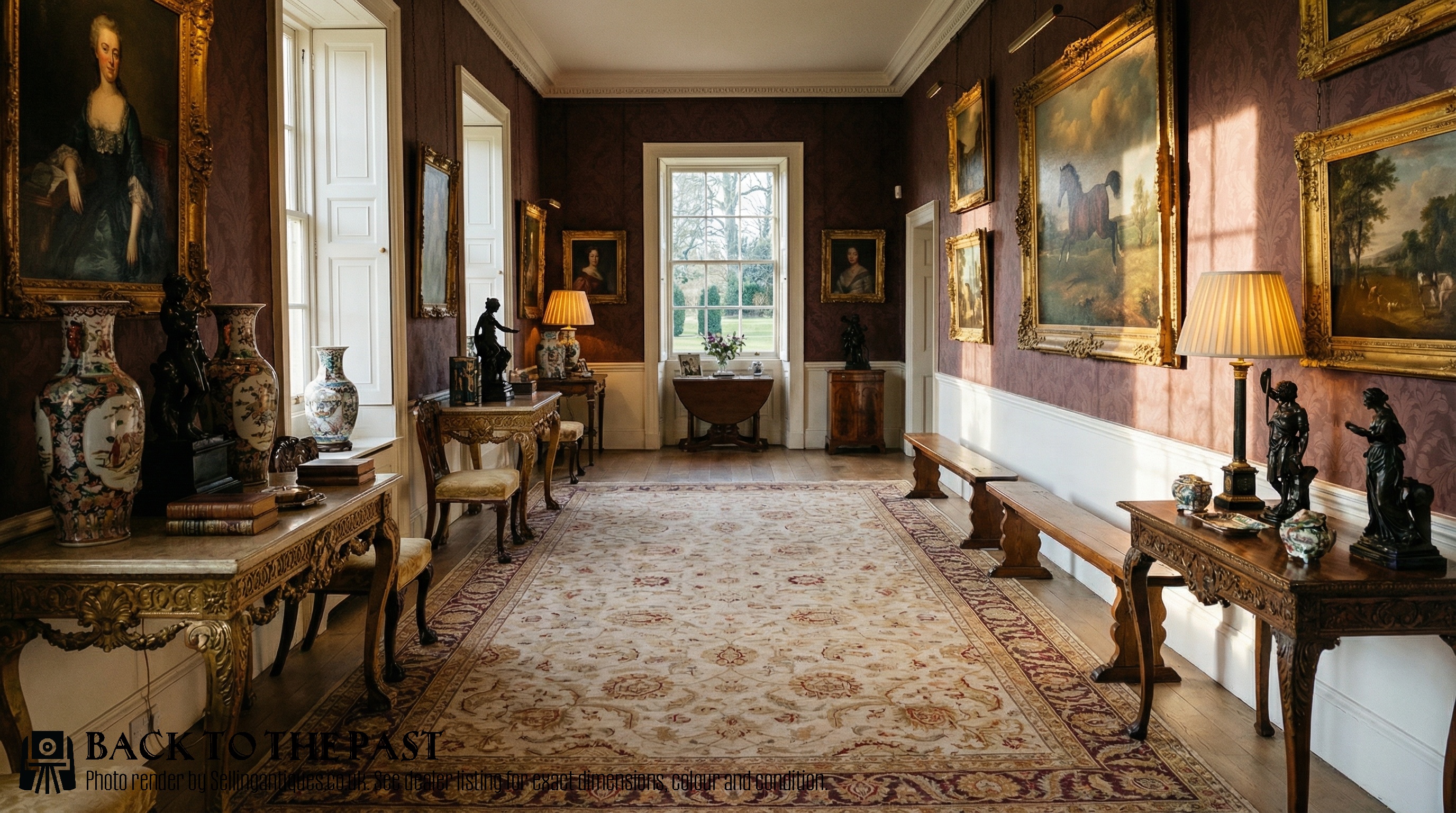
Pair of Wooden Benches
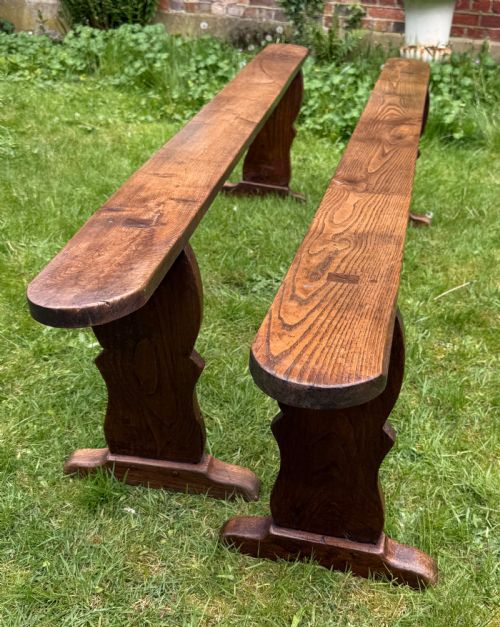
When you search for a pair of wooden benches, you find matched linear seating spanning nineteenth-century country houses to early twentieth-century rural workshops. The most common versions on this page are sturdy oak, pine or cherrywood forms built for halls, refectories and schools.
Makers and manufacturers produced these pairs in varied styles ranging from French provincial and Scandinavian country to Victorian Gothic and Aesthetic Movement designs. They served functional roles in domestic interiors, conservatories and gardens before surviving into the antique market.
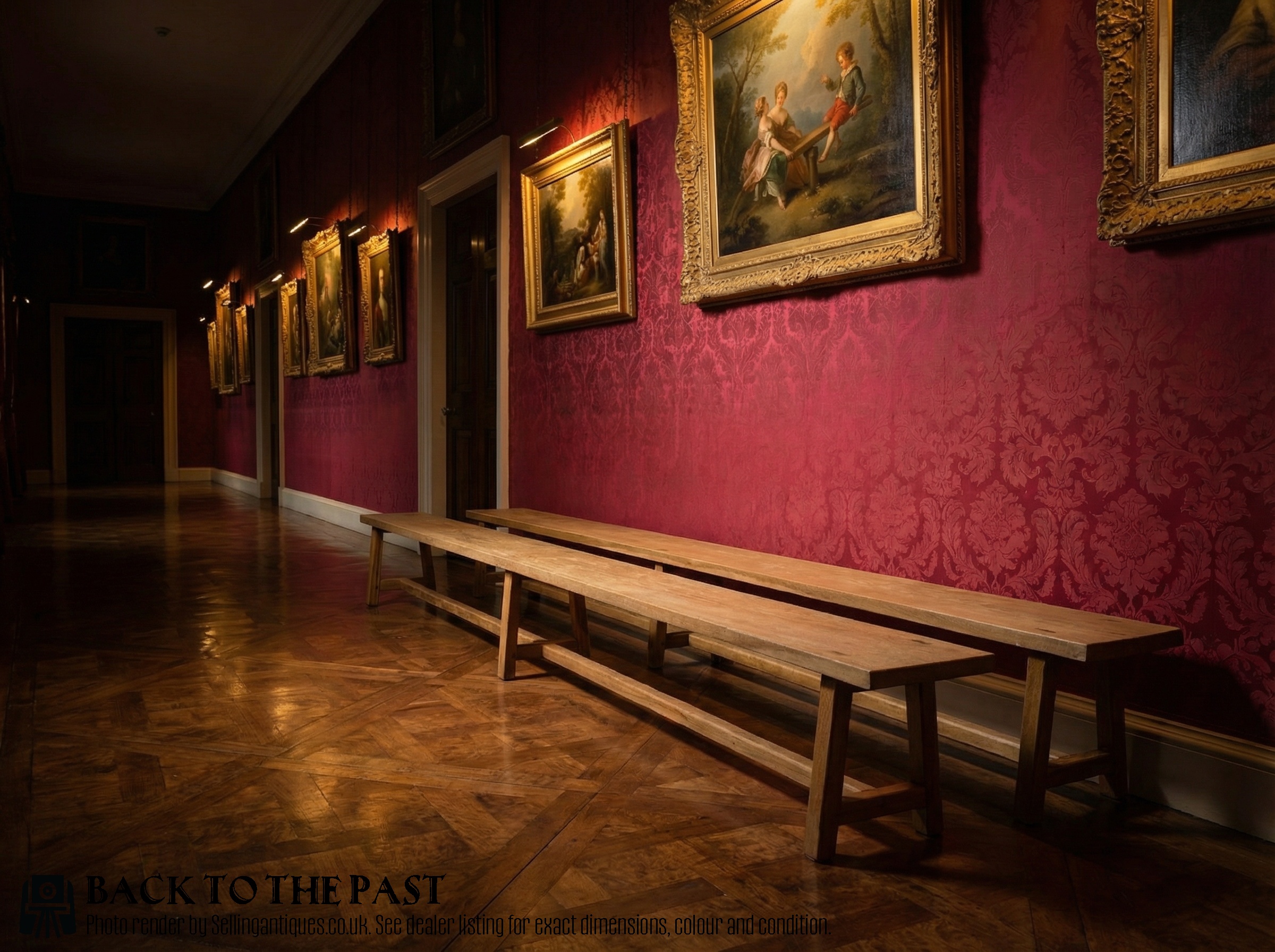
How they were made
Carpenters constructed these pieces predominantly from solid hardwoods and softwoods such as oak, pine, mahogany, walnut and cherrywood. Joinery relied on traditional pegged or jointed construction to handle heavy daily use in domestic and institutional settings.
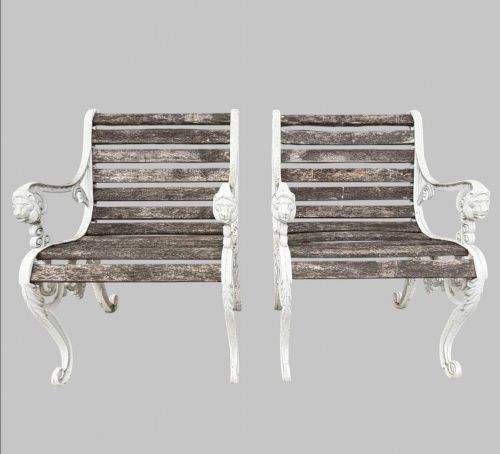
Many examples incorporate carved ornamentation, inlaid details or turned supports, while others feature painted surfaces or structural elements in cast iron. The materials reflect regional availability, ranging from British oak to Scandinavian pine and French fruitwoods.
Pair of Wooden Benches Retail Price Guide 2026
Typical asking prices for pair of wooden benches among the pieces listed under this phrase on Sellingantiques today, from the lower quarter to the upper quarter. They describe what is for sale here now, not the wider market.
Elephant seats carved with tusks and sculpted bodies bring an unexpected menagerie into the traditional lineup of wooden benches.
What varies in quality
The standard of a pair of wooden benches depends on the selection of timber and the integrity of the original construction. Dense, well-figured hardwoods like oak and walnut command attention for their durability and depth of grain.
Execution of carved details, proportion between length and depth, and the survival of untouched patination distinguish finer workshop output from utilitarian items. Matched pairs that retain their original surface finish show superior preservation.
James Shoolbred & Co
The Pair of Wooden Benches Glossary
- Joint bench
- A form of sturdy seating constructed with mortise and tenon joints, often associated with early vernacular furniture.
- Refectory bench
- A long, narrow form traditionally paired with a communal dining table in large halls.
- Hall bench
- A narrow seat designed for an entranceway, frequently incorporating a high back or panelled compartments.
- Pitch pine
- A resinous North American softwood prized for its distinct grain pattern and durability in structural furniture.
- Patina
- The surface sheen and colour developed through age, handling and natural wear over many decades.
Pair of Wooden Benches: Frequently Asked Questions
Where should I place a pair of wooden benches?
These pieces suit long hallways, narrow corridors, or the sides of a large dining table. They offer practical surface area without dominating the floor space.
In larger rooms, a matched pair can face each other or sit beneath windows to create a balanced focal point.
How do I care for antique wooden benches?
Keep the wood nourished with appropriate wax or polish applied sparingly. Avoid placing them near direct heat sources to prevent the timber from splitting.
Protect surfaces from excessive moisture by using coasters or pads if items are placed on the seats.
Are these benches comfortable for daily seating?
Many historical forms were built for utility rather than lounging, featuring upright wooden backs or flat plank seats. You can add loose cushions or pads to increase comfort.
Longer oak and pine variants provide ample space for multiple sitters during meals or gatherings.
How can I tell the period of a bench?
Examine the tool marks, joinery techniques, and the type of timber used in the construction. Hand-sawn boards and pegged joints usually point towards earlier craftsmanship.
Stylistic cues such as turned legs or carved panels often align with specific design movements recorded in the timber's origin.