


Pair of Wine Slides
A pair of wine slides protects the dining table from drips while allowing bottles to glide smoothly between guests.
Pair of Wine Slides
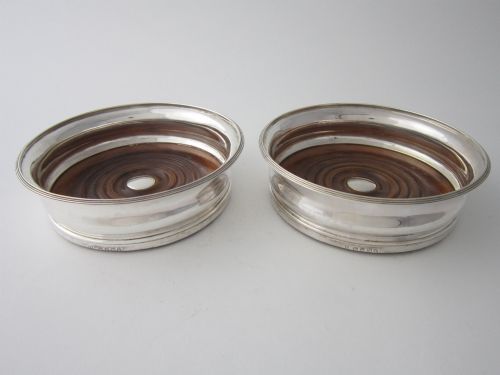
A pair of wine slides typically comprises low, circular trays designed to hold wine bottles or decanters securely during dinner. The pieces seen on this page span the Georgian, Regency, and Victorian periods, alongside later twentieth-century examples.
Forms alternate between simple metal rims and substantial wooden bases fitted with central buttons or rollers. These variations match the changing interior aesthetics from George III formality through to Edwardian revival and modern British tastes.
Materials and construction methods
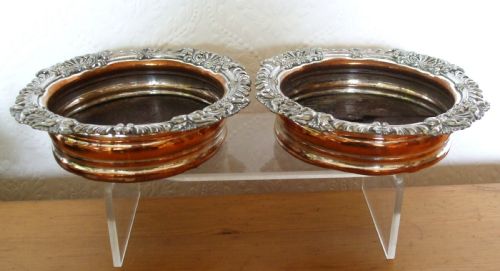
Silversmiths shaped sterling silver and old Sheffield plate into raised circular galleries, often incorporating pierced decoration or gadrooned borders. These metal frames require precise soldering and polishing to achieve a uniform circular geometry.
Wooden examples utilise turned mahogany, oak, or rosewood, frequently mounted with silver centres or shields. Carpenters turned these timbers on lathes to create stable, low-profile bases capable of supporting heavy glass decanters.
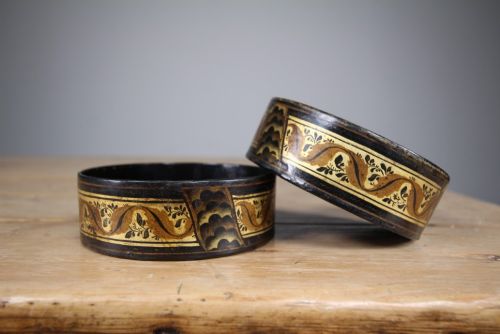
Papier-mâché and lacquer variants involve layered paper pulp compressed and treated with durable finishes, sometimes decorated with hand-painted or inlaid motifs.
Some wooden slides include tiny concealed wheels beneath their bases to ensure an effortless glide across the dining table.
Differentiating quality across examples
The weight of the metal and the crispness of the chased or pierced decoration distinguish finer metalwork from simpler production. Thicker gauge silver and well-defined hallmarks indicate superior fabrication by skilled workshops.
For wooden pieces, the grain selection of the mahogany or rosewood and the stability of the turned gallery define the standard of manufacture. Better examples integrate the metal mounts and timber bases seamlessly without visible gaps.
The survival of original felt or baize linings on the underside contributes significantly to the integrity of a pair, protecting the table surface as intended.
The Pair of Wine Slides Glossary
- Old Sheffield plate
- A composite material made by fusing a thin sheet of silver to a thicker copper base. This technique was widely utilised before electroplating became common in the nineteenth century.
- Decanter coaster
- An alternative descriptor for a wine slide, referencing the specific vessel it holds. These items keep condensation and spills away from polished dining surfaces.
- Gadroon
- A decorative carved or embossed ornamental band featuring convex curves, frequently found along the rims of silver and plated coasters. It adds texture and visual weight to the edge.
- Gallery
- The vertical outer wall of the coaster that contains the bottle. Galleries can be pierced with openwork patterns or left solid.
- Turned wood
- Timber shaped by being rotated on a lathe against cutting tools. This method creates the perfectly circular wooden bases seen in many antique examples.
Pair of Wine Slides: Frequently Asked Questions
What is a wine slide used for?
A wine slide serves to hold a bottle or decanter at the dining table. The design allows diners to push the bottle smoothly along the surface to their neighbours.
Historically, these pieces also protected polished mahogany tables from rings caused by moisture and drips.
How do I date a pair?
Dating relies on hallmarks for silver items, stylistic cues such as Regency proportions, and manufacturing techniques like old Sheffield plating. Wood and papier-mâché pieces are assessed through timber types and construction methods.
Examining the underside and the joining methods often reveals the period of manufacture.
How do I care for wooden coasters?
Wooden coasters require gentle cleaning with a dry or slightly damp cloth, avoiding excess moisture that could damage the timber or lift the lining.
Conditioning the wood periodically helps maintain the grain and finish without altering the antique surface.