


Victorian Silver Plate Coaster
These victorian silver plate coaster pieces protect dining tables in style while holding bottles of wine or champagne.
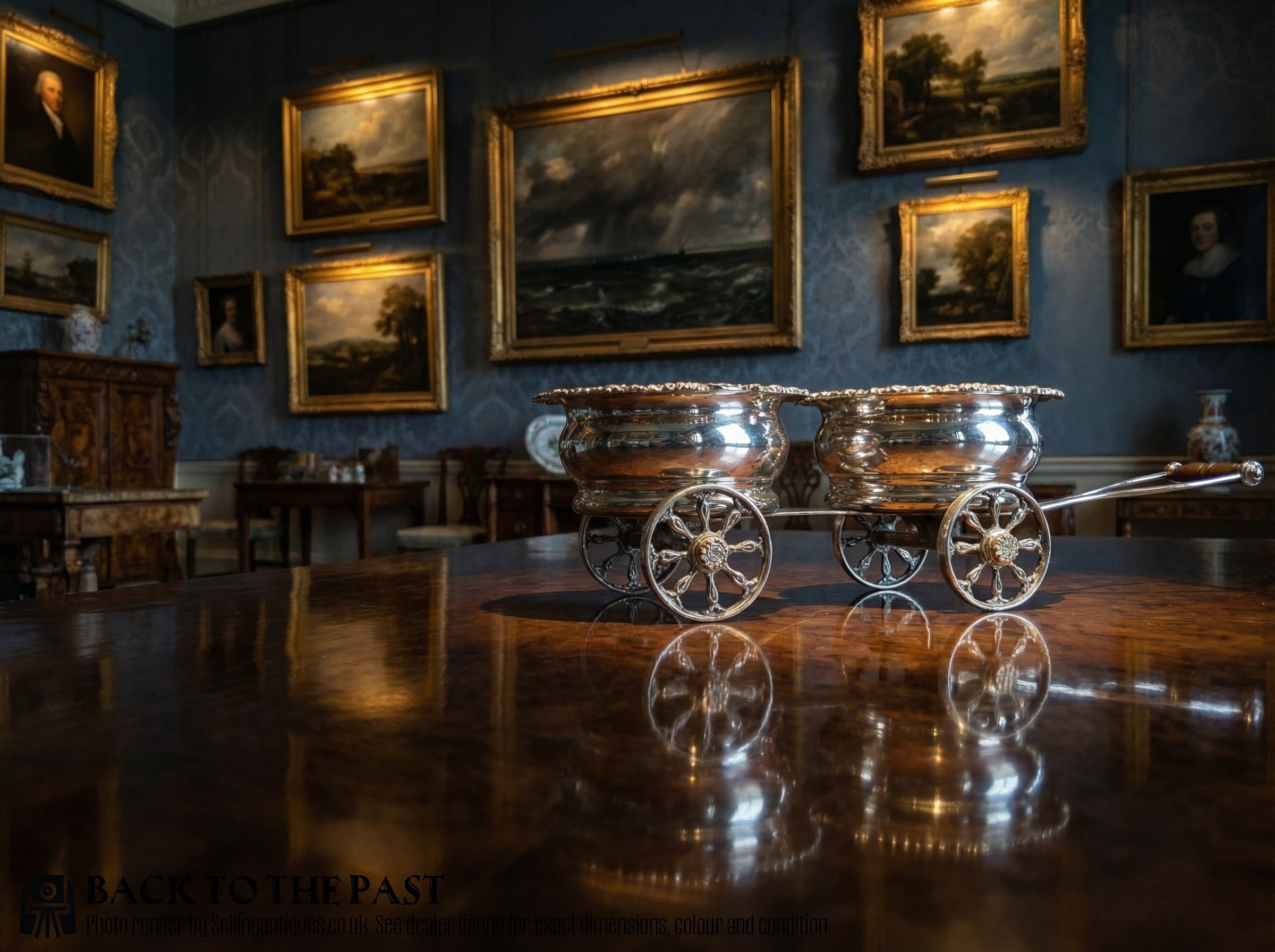
Victorian Silver Plate Coaster
A victorian silver plate coaster is a circular table accessory designed to hold wine bottles, decanters, or champagne holders securely. Most pieces meet on this page as round deep dish shapes or pierced bottle holders originating from the 19th century.
Makers and manufacturers produced these items in pairs or single large formats for dining room use. Common alternative forms include decanter carriages, trolley carts, and bottle sleeves suited for entertaining.
The dominant period represented is Victorian, alongside occasional Georgian and 19th century examples. Materials stretch beyond basic metal to incorporate wooden bases and porcelain inserts.
Manufacturing and Materials
Silversmiths applied silver plate or electroplated nickel silver over base metals like copper and Old Sheffield Plate. These techniques provided the appearance of solid silver at a lower production cost.
Many examples integrate turned wood bases, such as mahogany, to support the bottle and protect the surface beneath. Pierced metalwork, embossed vine leaf borders, and grape motifs frequently decorate the sides.
Some rolling bottle carts let diners push wine across the mahogany table like a tiny railway.
Judging Quality
Depth of piercing and crispness of embossed grape and vine motifs separate standard examples from finer works. Marked pieces associated with known makers and workshops generally command stronger interest.
The integrity of the silver plating over the underlying copper or metal base dictates long term preservation. Matched pairs and complex double carts or carriages represent higher tiers of craftsmanship.
Rupert Favell And Co·Maple·Hawksworth Eyre And Co·Elkington
The Victorian Silver Plate Coaster Glossary
- Silver Plate
- A thin layer of silver bonded to a base metal such as copper or nickel silver. This technique allowed makers to produce substantial dining wares economically.
- Old Sheffield Plate
- An early method of fusing a sheet of silver to a copper core before rolling them together. Pieces made this way display a distinct copper edge where the metals meet.
- Decanter Carriage
- A wheeled frame or trolley holding one or more bottles for movement along a dining table. These wheeled versions often feature multiple rings.
- Pierced Work
- Metal pierced with decorative openwork patterns such as lattices or scrolling foliage. This technique lightened the visual weight of heavy bottle holders.
- Electroplated Nickel Silver
- A base metal alloy of copper, nickel, and zinc coated with silver using an electrical current. It replaced older fusion plating methods in the Victorian era.
Victorian Silver Plate Coaster: Frequently Asked Questions
What is a victorian silver plate coaster used for?
These items held wine bottles, decanters, and champagne vessels on dining tables to catch drips and protect polished wood surfaces. They served both a functional purpose and a decorative role during formal meals.
Larger versions accommodated magnum bottles or functioned as wheeled carriages to pass drinks around the table. Single holders remained stationary beside the host or guest.
How do I identify a victorian silver plate coaster?
Look for typical 19th-century motifs such as embossed vine leaves, pierced grape patterns, and deep dish silhouettes. Materials usually combine silver plating with copper, mahogany bases, or porcelain.
Maker marks or stamps on the underside often provide clues to the workshop and date of production. Plating methods like Old Sheffield Plate or electroplating also point toward specific manufacturing eras.
Are these coasters sold as pairs?
Many examples survive as matched pairs or larger sets intended to serve multiple bottles at a dining table. Single pieces also appear frequently in the available selection.
Collectors often seek pairs and larger groupings like sets of four for symmetry on the table. Double carts and carriages naturally function as single combined units.
How should I clean a silver plated coaster?
Use a gentle cloth designed for silver and mild cleaning products to preserve the thin plated layer over the copper base. Avoid harsh abrasives that might wear away the silver coating.
Keep wooden bases dry and avoid submerging pieces that combine metal with wood or porcelain. Regular light dusting prevents heavy tarnish buildup.