

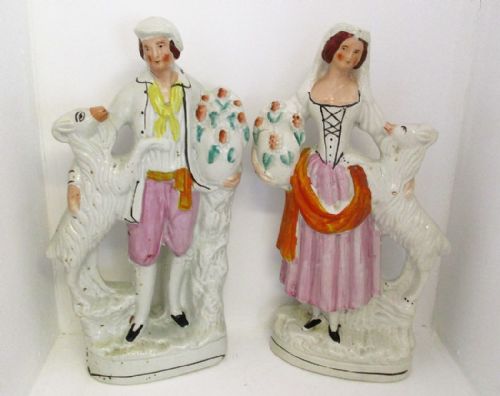
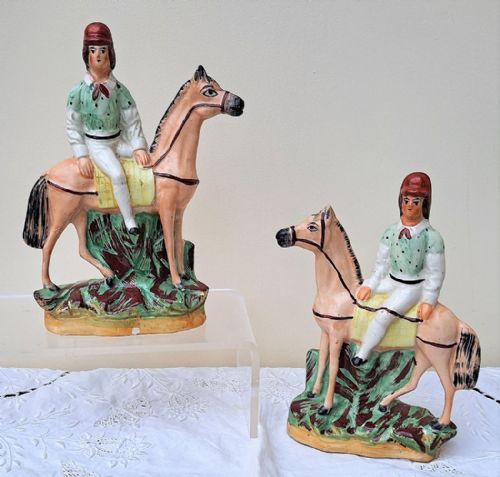
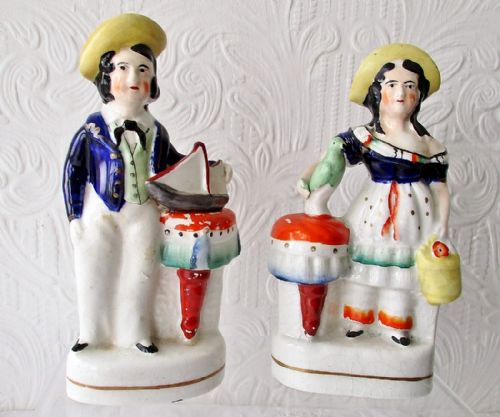
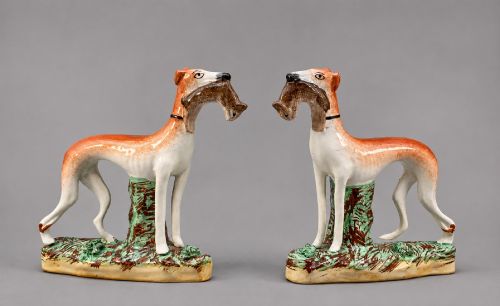
Pair of Staffordshire Figurines
A pair of staffordshire figurines brings domestic mantelpiece character into a room through moulded pottery figures made in English potteries.
Pair of Staffordshire Figurines
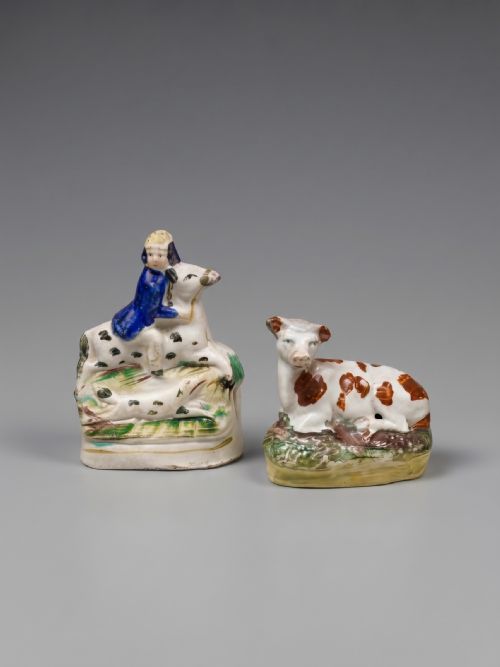
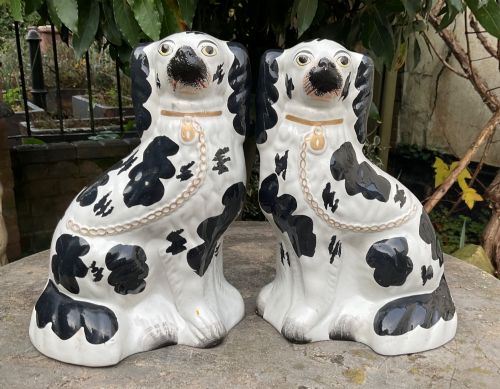
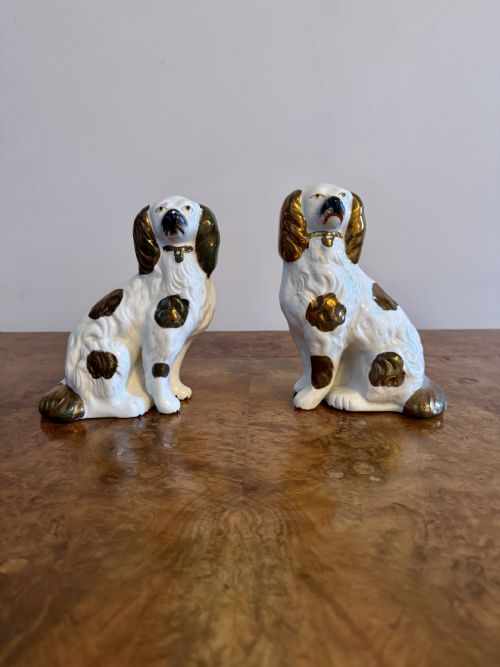
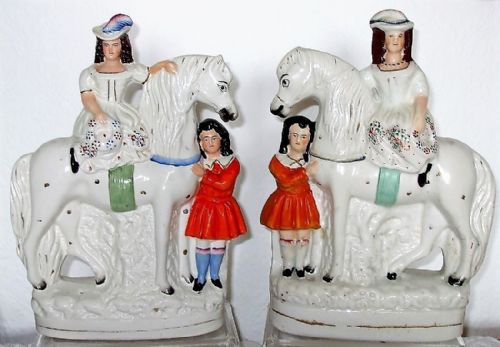
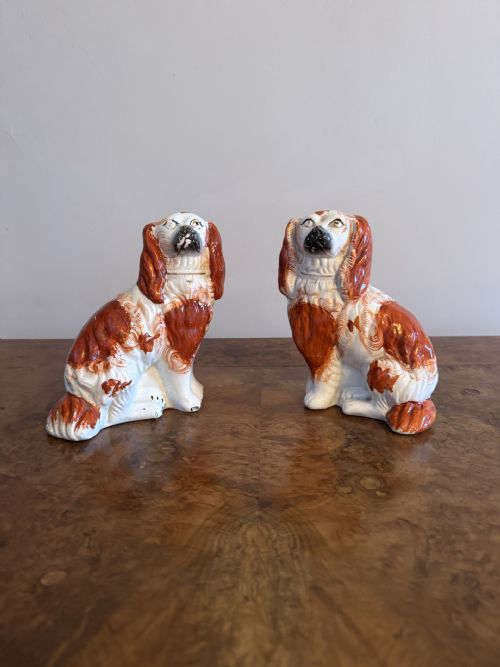
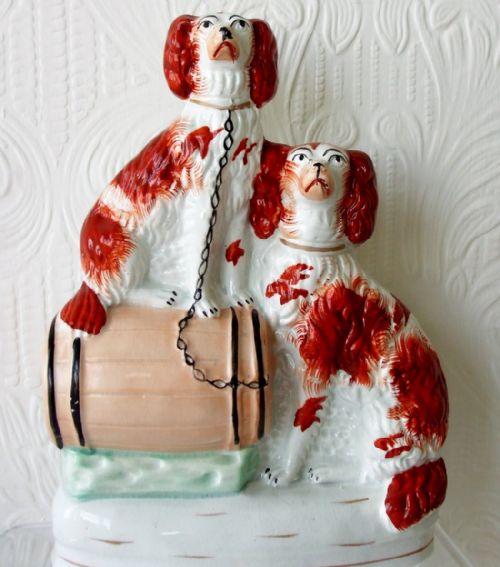
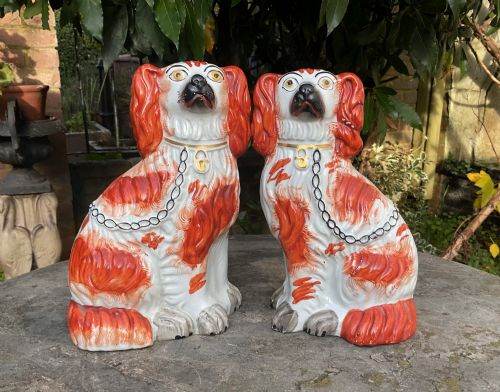
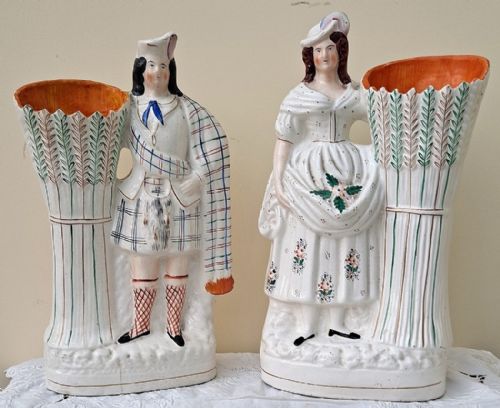
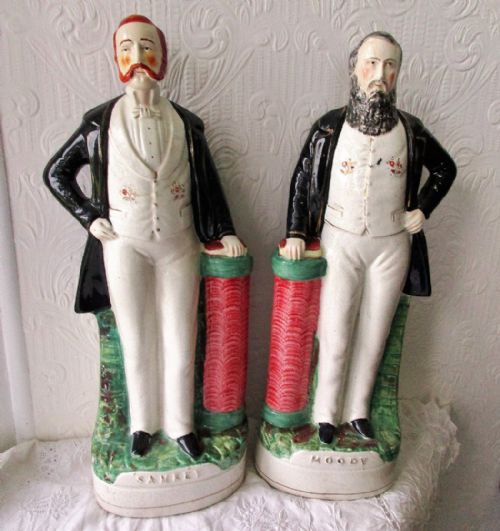
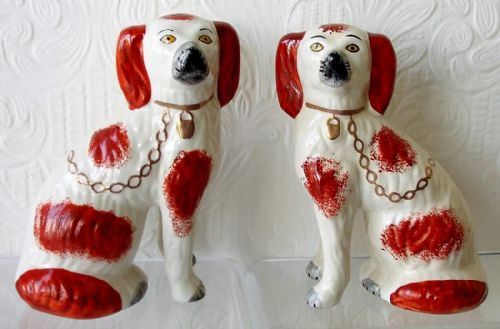
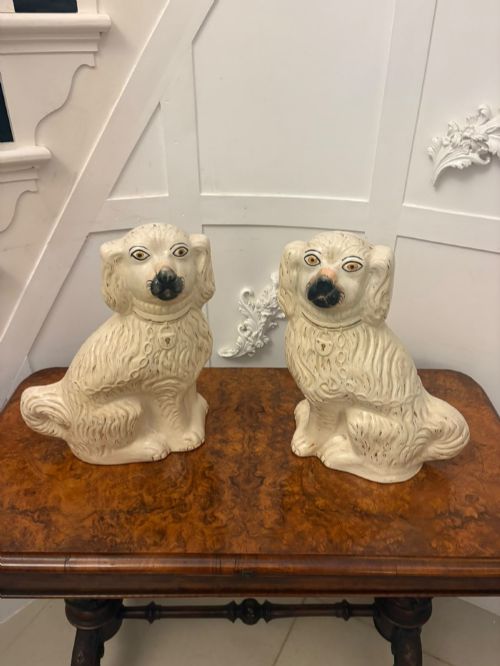
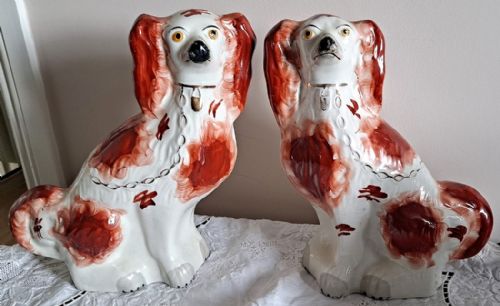
A pair of staffordshire figurines represents matching ceramic groups modelled in the nineteenth century, most frequently encountered as symmetrical pairs of seated spaniels or spaniels with barrels placed at opposite ends of a mantelpiece. These domestic ornaments range from simple dogs and sheep to narrative subjects such as royal portraits, historical figures, literary characters and pastoral workers.
The form developed across the Victorian period, drawing inspiration from contemporary events, theatrical personalities and popular prints. Many examples take the flatback form, designed to stand flush against a wall with minimal modelling on the reverse, while spill vases incorporate hollow cylinders meant to hold matches.
How They Were Made
Potters utilised earthenware bodies shaped in press moulds, joining front and back sections before applying a lead glaze to seal the surface. Figures received hand-painted enamel colours and occasional touches of gold leaf or gilt highlights prior to firing.
Moulds allowed workshops to replicate popular subjects repeatedly, though hand-finishing ensured that surface details, facial expressions and enamel washes varied between individual examples.
Pair of Staffordshire Figurines Retail Price Guide 2026
Typical asking prices for pair of staffordshire figurines among the pieces listed under this phrase on Sellingantiques today, from the lower quarter to the upper quarter. They describe what is for sale here now, not the wider market.
Listings feature earthenware materials finished with lead glaze and enamel colours across the nineteenth century.
What Varies in Quality
Proportion and matching also determine quality within a pair. Superior pieces maintain symmetry in posture and scale, whereas lesser items show significant disparity in size or careless moulding.
Sampson Smith
The Pair of Staffordshire Figurines Glossary
- Flatback
- A ceramic figure moulded with a finished front and a flat, unglazed or plain reverse designed for display against a wall.
- Spill vase
- A hollow pottery vessel combined with a figure, intended to hold wooden spills used for lighting fires or candles.
- Earthenware
- A porous, opaque pottery body fired at lower temperatures, requiring a glaze to achieve impermeability.
- Enamel
- Opaque vitreous colours applied over the glaze and fired again at a lower temperature to fix the decoration.
- Comforter
- A vernacular term applied to Staffordshire spaniel figures placed on nineteenth-century hearths.
Pair of Staffordshire Figurines: Frequently Asked Questions
Why were they made in pairs?
Potters produced these ornaments in symmetrical pairs so they could frame a fireplace mantelpiece in a balanced arrangement.
Matching subjects provided visual harmony in nineteenth-century interiors, usually facing inward toward each other.
How do I identify Victorian pieces?
Victorian examples show characteristic earthenware bodies, hand-applied enamel colours, and glaze crazing developed over time.
Subjects often reflect mid to late nineteenth-century portraiture, royalty, or domestic animals popular during the period.
What are spill vases used for?
Spill vases combine a decorative ceramic figure with an integrated hollow cylinder meant to hold wooden taper spills.
These spills transferred flames from the hearth fire to candles or lamps before matches became common household items.
How should I clean them?
Dust these ceramic surfaces gently with a soft dry cloth to prevent accumulation without damaging delicate enamels.
Avoid immersion in water, as old glaze fissures can absorb moisture and weaken the underlying earthenware body.