

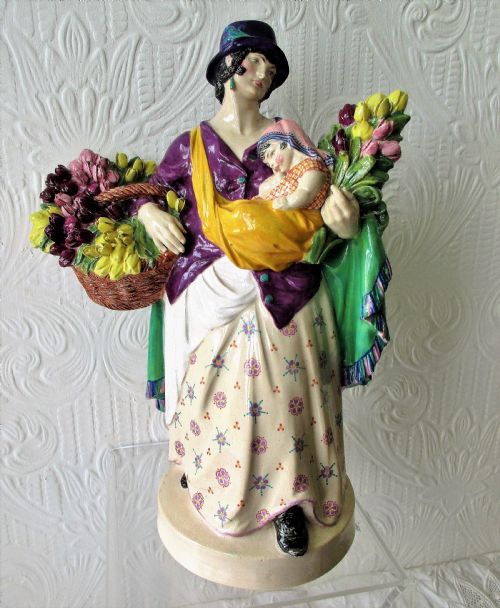
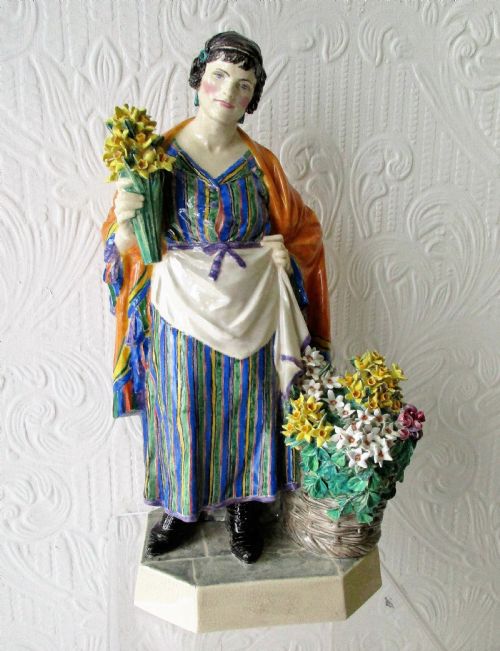


Vintage Earthenware Figurines
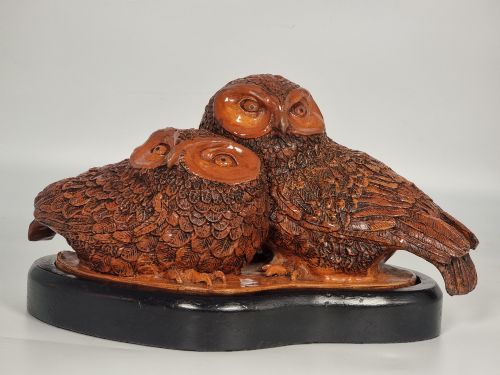
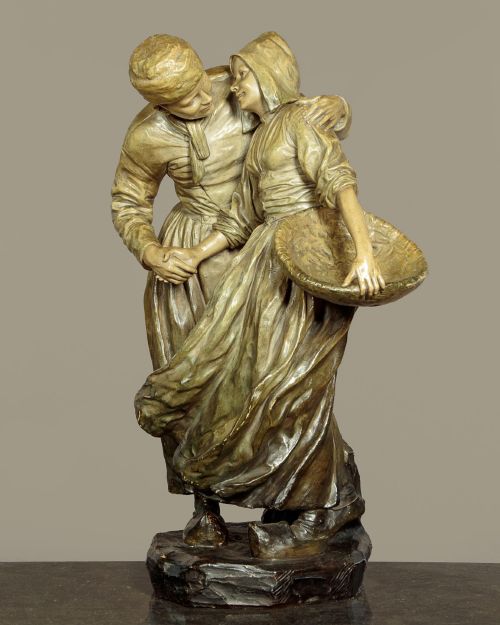
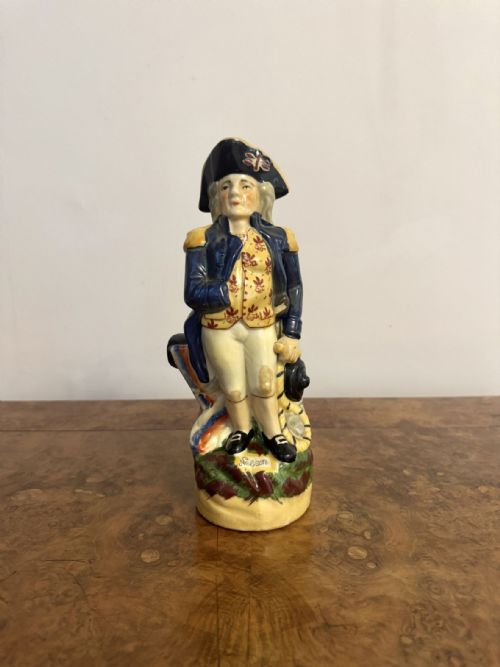
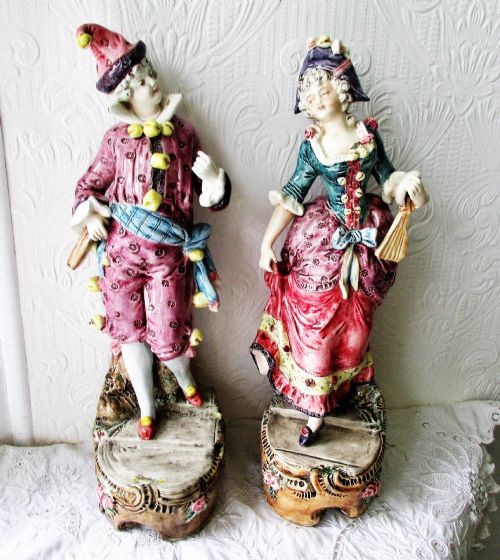
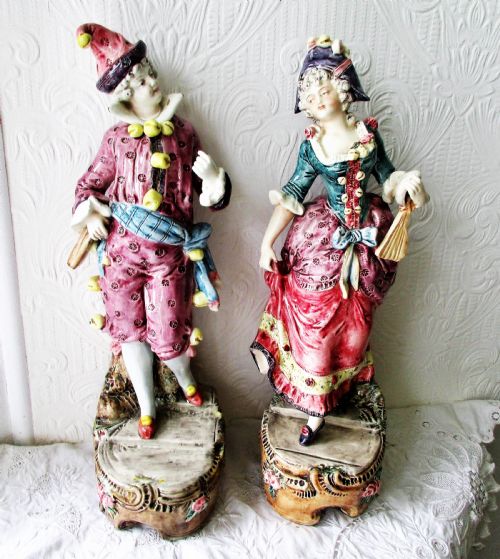
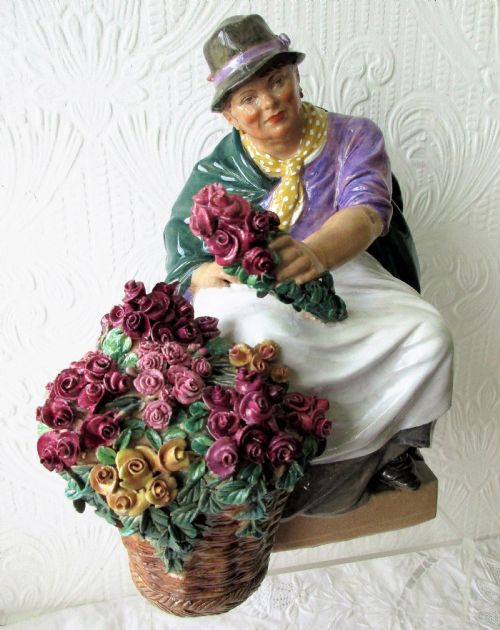
Vintage earthenware figurines bring character to a room through modelled animals, historical characters, and theatrical groups shaped from clay.
Vintage Earthenware Figurines
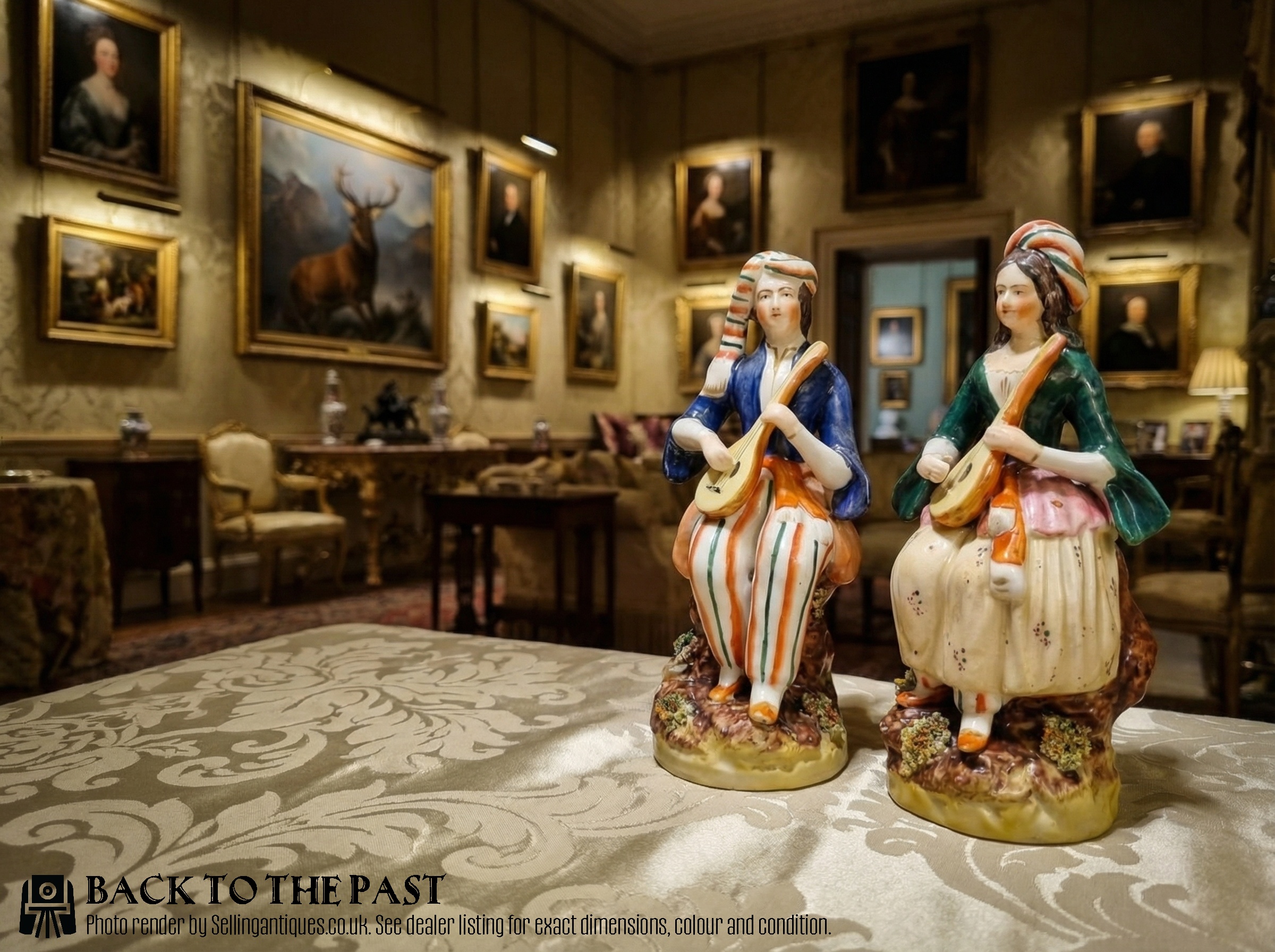
Vintage earthenware figurines encompass modelled ceramics, decorative sculptures, and utilitarian Toby jugs shaped by makers across Britain and Europe. The selection spans the nineteenth century through the Art Deco era, capturing subjects from domestic animals to figures in historical dress.
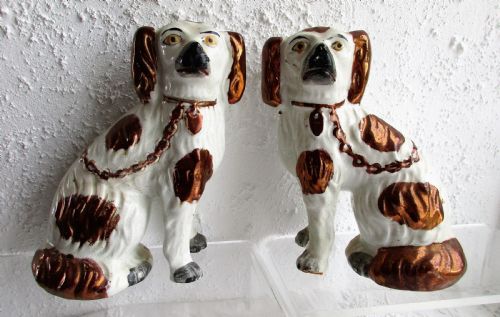
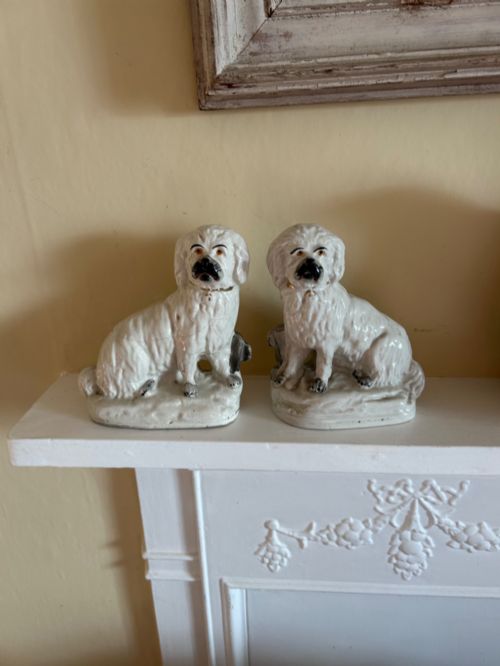
Staffordshire dogs and spaniels dominate the nineteenth-century groups, often produced as pairs for mantelpieces. Alongside these sit French terracotta figures, Dutch delftware cows, and studio pottery works from the early twentieth century.
Makers utilised earthenware, terracotta, and ceramic bodies finished with coloured glazes, slip casting, or hand painting. These objects serve purely decorative functions, though some early examples incorporate practical forms such as quill holders and powder boxes.
Materials and Construction
The foundation of these pieces rests on porous earthenware and denser terracotta bodies shaped either by hand sculpting or press moulding. Workshops employed slip casting methods for later twentieth-century productions to achieve consistent forms.
Decoration relied upon lead glazes, enamel paints, and coloured slips applied directly to the ceramic body before firing. Certain figures received highlights in gold leaf or bronze finishes to accentuate the modelled details.
Materials span terracotta, ceramic, lead glaze, enamel, and gold leaf applied across animal and human figures.
Assessing Quality and Execution
The weight and stability of the ceramic body, alongside the evenness of the glaze application, separate standard production items from superior sculptural works. Original matching pairs demonstrate greater consistency in size and colouration.
Goldscheider·Charles Vyse·Bernard Bloch·Wedgwood And Co Ltd
The Vintage Earthenware Figurines Glossary
- Earthenware
- A porous pottery type fired at relatively low temperatures and rendered waterproof through the application of a glaze. It serves as the primary material for the figures and jugs found in this collection.
- Slip
- Liquid clay suspended in water, used for coating ceramic bodies or poured into moulds to create hollow figures. It provides a smooth surface for subsequent painting and glazing.
- Toby Jug
- A pottery jug modelled in the likeness of a hearty, beer-drinking man, usually wearing eighteenth-century attire. These functional vessels doubled as decorative ornaments.
- Terracotta
- Unglazed or glazed fired clay of a brownish-red hue, valued for its ability to retain fine sculptural detail. French and Austrian workshops utilised this material extensively for figural groups.
- Sancai
- A traditional three-colour glaze technique originating in China, characterised by amber, green, and cream tones that run and merge during firing.
Vintage Earthenware Figurines: Frequently Asked Questions
How do I date an old Staffordshire dog?
Dating relies on inspecting the clay body, the depth of the glaze crazing, and the painting style on the face and collar. Earlier nineteenth-century examples often display heavier potting and simpler hand-painted details.
Later reproductions tend to have lighter earthenware bodies and cleaner, more uniform glaze finishes without the characteristic wear patterns of nineteenth-century pieces.
Where were these figures displayed originally?
Victorian households typically placed pairs of spaniels or historical figures upon mantelpieces flanking the fireplace. Smaller groups and quill holders sat on writing desks or side tables.
Twentieth-century Art Deco pieces found places on bookshelves and sideboards as modern interior decoration gained popularity.
How should I clean antique ceramic figures?
Dusting with a soft, dry brush remains the safest method for routine maintenance to protect delicate glazes and painted surfaces. Avoid submerging porous earthenware in water, especially if crazing is present.
Professional restoration advice should be sought for pieces with structural repairs or flaking enamel pigments to prevent further damage.