

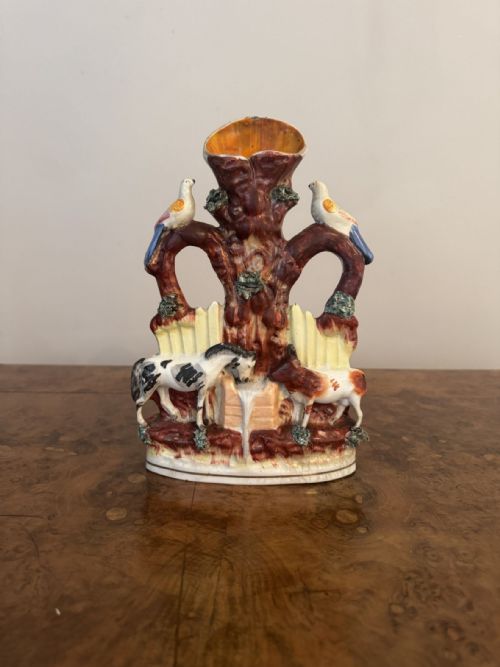


Painted Ceramic Mantle Ornaments
These painted ceramic mantle ornaments bring the hearth alive with figures, animals and spill vases from past centuries.
Painted Ceramic Mantle Ornaments
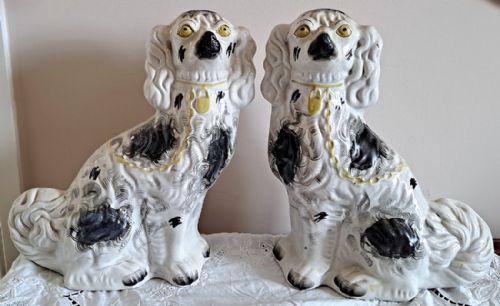
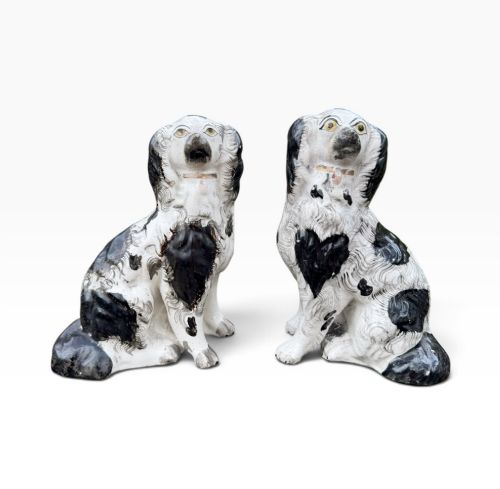
When you search for painted ceramic mantle ornaments, you find a varied gathering of decorative figures, portrait pieces, and spill vases designed to stand upon a fireplace shelf. The most common examples met on this page are Victorian Staffordshire pottery spaniels and figures, alongside French and English porcelain pairs.
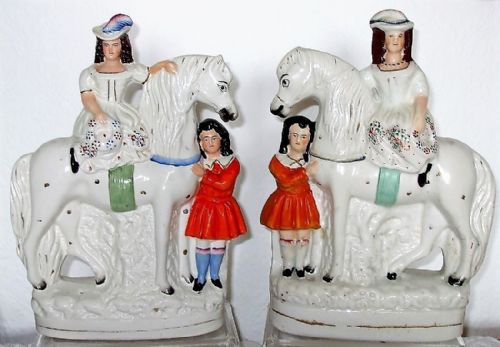
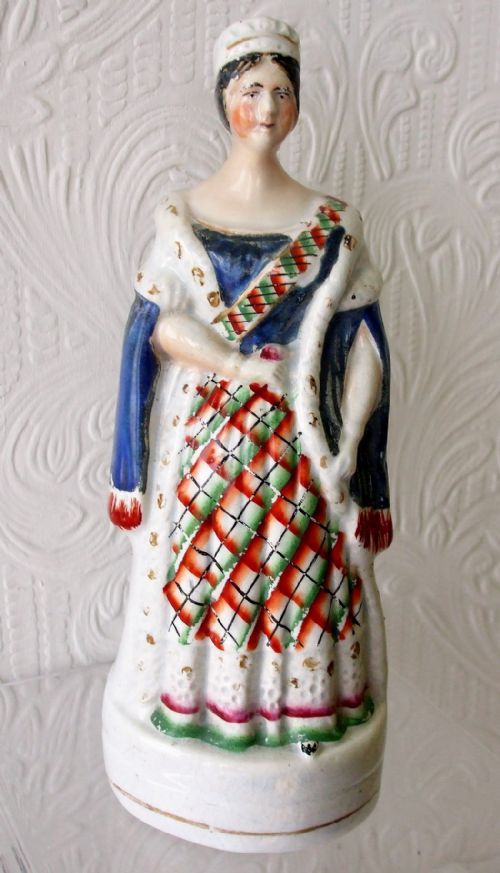
The selection ranges from Victorian Staffordshire pottery to Derby porcelain and Royal Worcester pieces. Forms include spill vases, portrait figures of royalty, children with horses, and classical subjects such as Mars and Daphne.
Originating across the nineteenth century and stretching back to the eighteenth century, these ornaments encompass earthenware and porcelain bodies. They reflect the domestic tastes of Georgian, Victorian, Art Nouveau, and Edwardian interiors.
How they were made
Potters shaped these pieces using earthenware and porcelain, employing both glazed finishes and unglazed bisque porcelain. Many items received hand-painted enamel decoration, sometimes enhanced with gilt or gold leaf applied over the ceramic body.
Lead glaze protected the earthenware surfaces of Staffordshire pottery, while finer porcelain pieces utilised specialised firing techniques to achieve smooth white bodies. Enamels were then painted onto the fired ceramic before a final low-temperature fix.
Painted Ceramic Mantle Ornaments Retail Price Guide 2026
Typical asking prices for painted ceramic mantle ornaments among the pieces listed under this phrase on Sellingantiques today, from the lower quarter to the upper quarter. They describe what is for sale here now, not the wider market.
Comforter spaniels sat in pairs on nineteenth-century hearths, guarding the home like ceramic watchdogs.
What varies in quality
Quality rests upon the precision of the hand painting and the crispness of the moulded detail in the ceramic. Finer pieces display careful brushwork on faces and clothing, whereas simpler items rely on broader, faster strokes.
The reputation of the pottery or the skill of the decorator marks the upper tier of the range. Derby figures and signed Royal Worcester works demonstrate a higher degree of sculptural refinement than standard Staffordshire output.
Ernst Whaliss·Royal Worcester·Derby Porcelain
The Painted Ceramic Mantle Ornaments Glossary
- Bisque porcelain
- Unglazed porcelain with a matte, white surface that resembles marble. This material highlights fine sculptural details without the distraction of a glossy finish.
- Spill vase
- A hollow vessel designed to hold taper spills for lighting pipes or candles. These containers sit alongside decorative figures on the mantle.
- Staffordshire pottery
- Earthenware produced in the industrial region of Staffordshire. The factories there specialised in domestic figures, animals, and portrait pieces for the British home.
- Gold leaf
- Real gold beaten into extremely thin sheets and applied to the ceramic surface for decoration. It adds a metallic shimmer to highlights and borders.
- Enamel
- Opaque vitreous paint fused to the ceramic body during firing. It provides the vibrant colours seen on figures and vases.
Painted Ceramic Mantle Ornaments: Frequently Asked Questions
Are these mantle ornaments meant to be functional?
Most of these pieces served a purely decorative purpose on the fireplace mantle, bringing colour and character to the room. Some specific forms, such as spill vases, also held taper spills used for lighting lamps or fires.
Over time, their role shifted entirely to display and collection. They remain charming examples of historic domestic ceramic art.
How do I care for antique ceramic figures?
Keep these ornaments away from direct sunlight and areas of heavy moisture to protect the enamel colours and gilt. Dust them gently with a soft, dry brush rather than using wet cloths.
Avoid moving them frequently, as older earthenware and bisque porcelain can be fragile. Stable placement on a flat surface ensures they remain safe.
How can I tell Victorian pieces from earlier ones?
Victorian pieces often display the robust earthenware forms and spaniel figures typical of mid-nineteenth-century Staffordshire. Earlier examples from the eighteenth century, such as Derby output, frequently utilise finer porcelain and classical subjects.
Glaze texture and the style of hand painting also provide clues to the period. Examining the base and the weight of the ceramic helps confirm the era.
Why are some figures left unglazed?
Unglazed bisque porcelain mimics the appearance of carved white marble, a finish that was popular for classical and portrait subjects. This matte surface allows the delicate contours of the moulding to show clearly.
Many nineteenth-century French and English workshops favoured this technique for figurative groups. It offered a refined alternative to glossy lead glazes.