

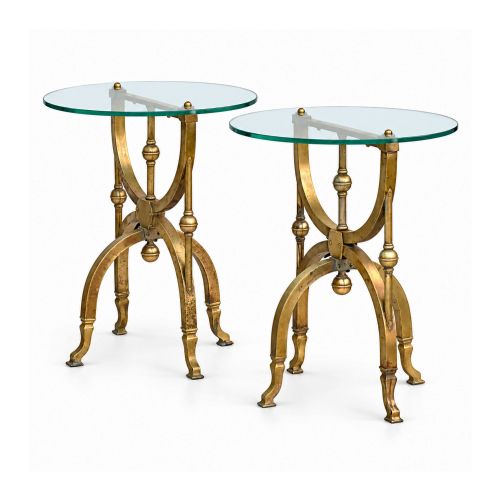
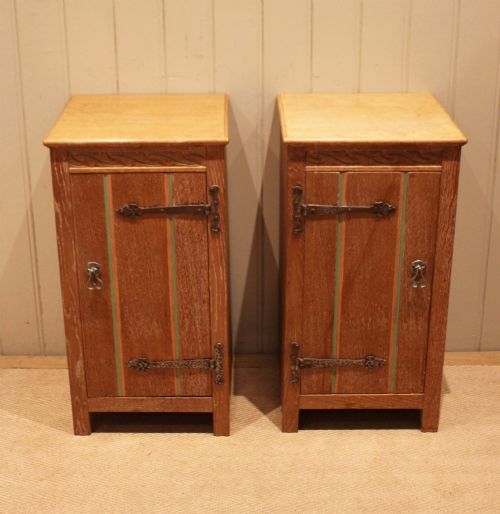
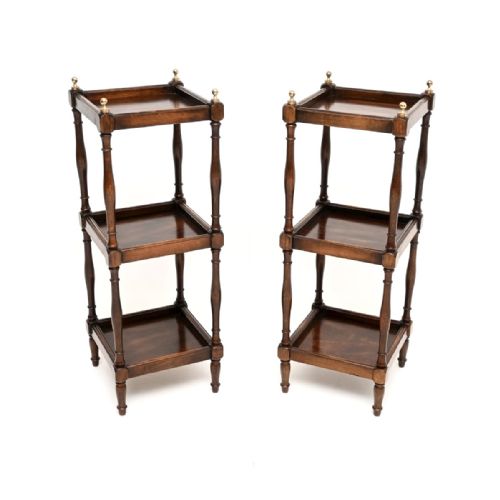
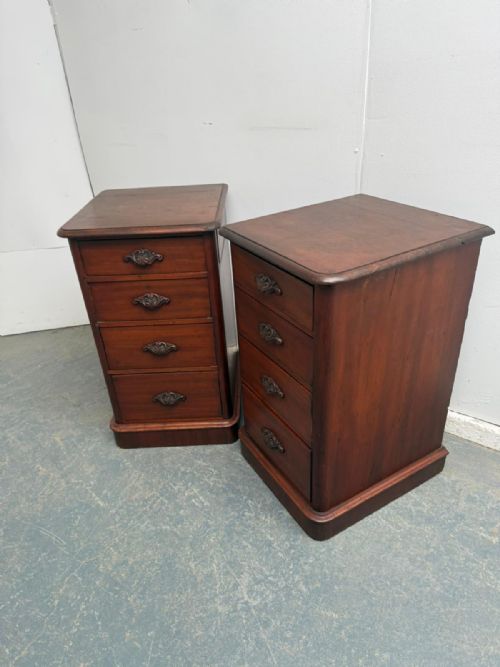
Pair of Small Tables
A pair of small tables offers symmetry and proportion, bringing matched surfaces to bedside spaces and sitting rooms.
Pair of Small Tables
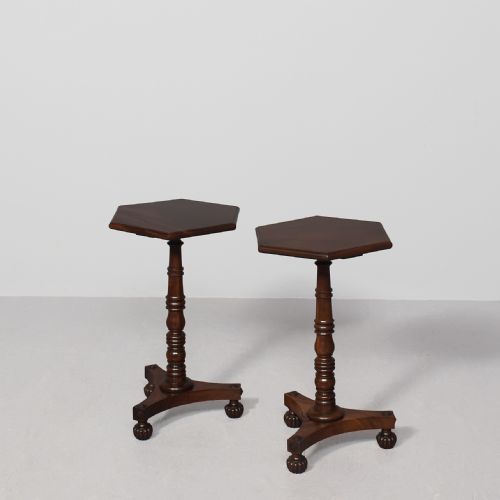
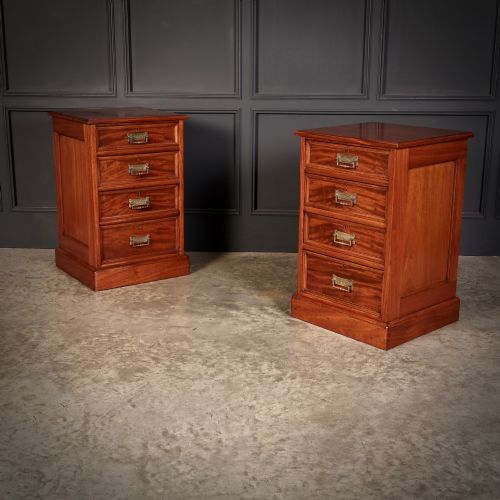
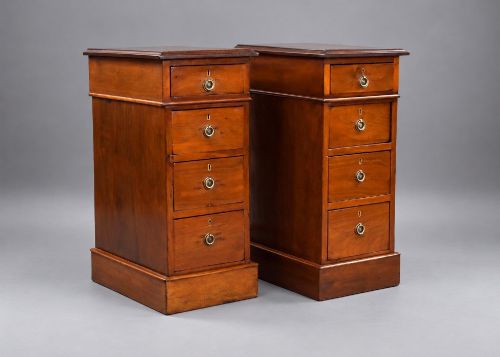
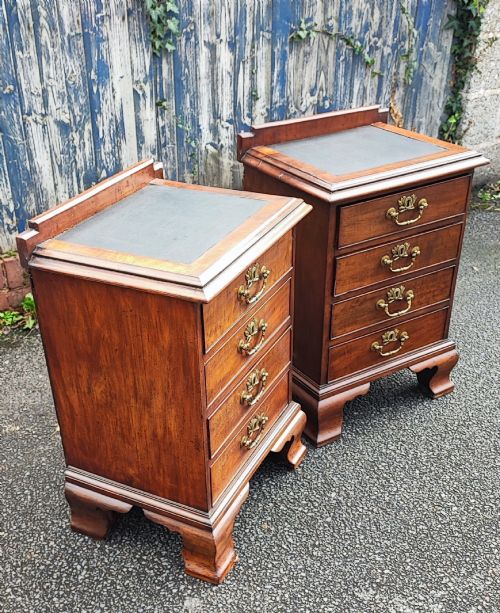
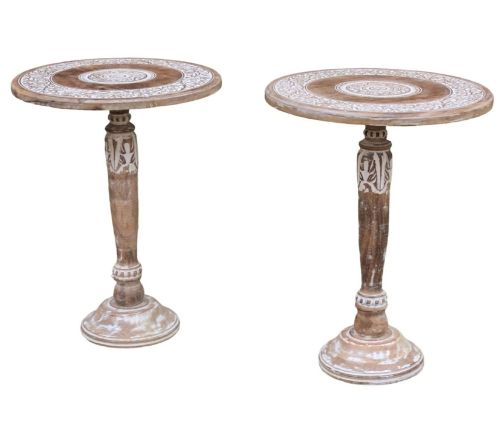
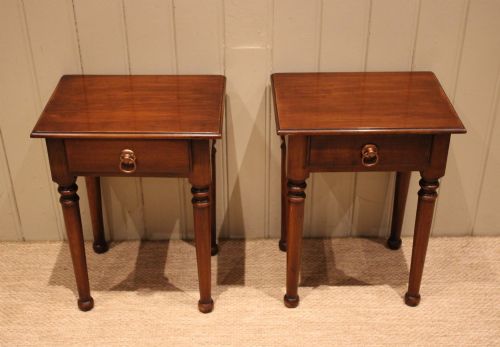
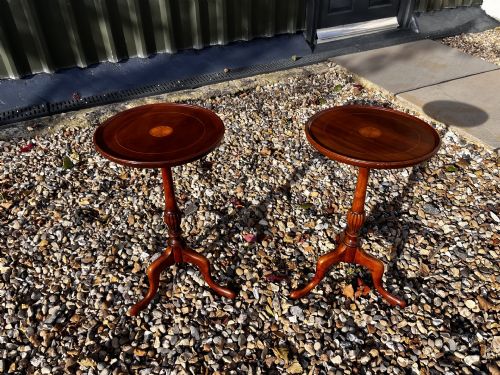
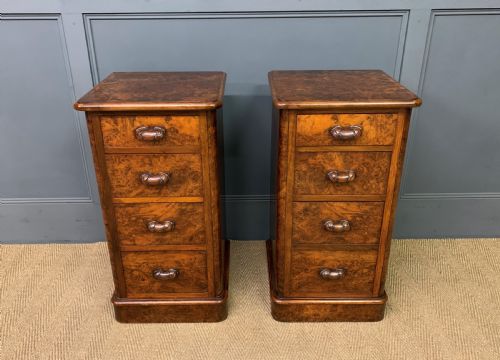
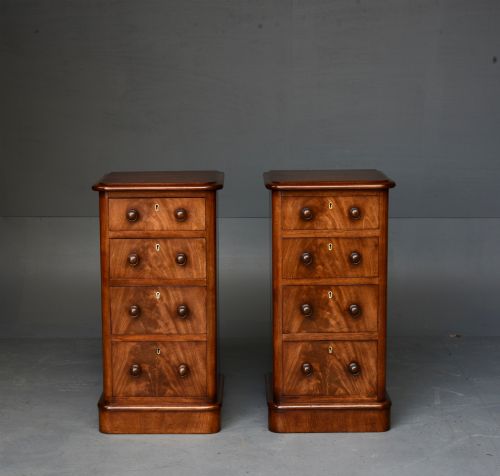
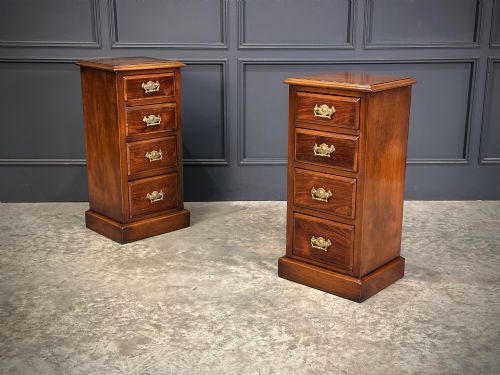
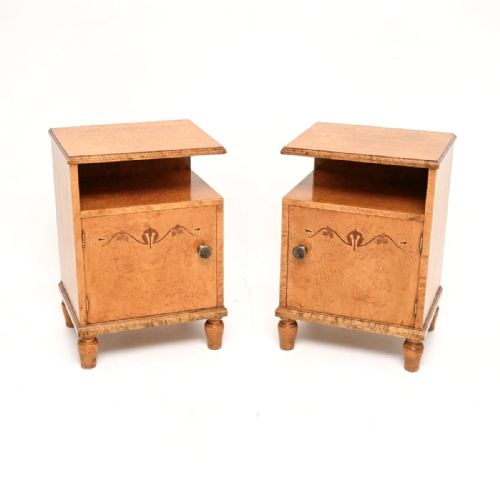
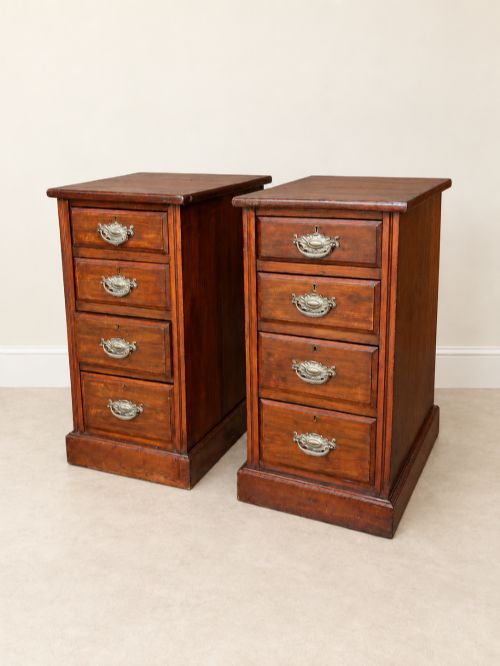
A search for a pair of small tables leads principally to bedside chests, side tables, and occasional tables designed to match in wood, height, and proportion. These pieces span the nineteenth and twentieth centuries, taking forms from Victorian mahogany nightstands to Edwardian inlaid cabinets and walnut pieces from the nineteen-twenties.
Buyers meet variations including wine tables, lamp tables, and small chests of drawers in mahogany, walnut, and burr walnut, alongside lighter pieces in satin birch, ash, and painted finishes. Styles range from strict Georgian and Regency interpretations to French Provincial, Arts and Crafts, and Art Deco designs.
The collection includes functional bedside pieces with multiple drawers alongside occasional tables on tripod or pillar supports. Many follow traditional English or French cabinetmaking traditions, while others show regional woods like Scottish oak or exotic veneers like rosewood.
Materials and Construction
Cabinetmakers constructed these tables using solid hardwoods such as mahogany, oak, and walnut, frequently applying figured veneers like burr walnut, satinwood, and rosewood to drawer fronts and tabletops. Secondary timbers like pine or ash often form internal drawer linings and structural framing.
Joinery techniques rely on traditional dovetailed drawer construction, mortise and tenon frames, and turned or carved supports. Surface treatments range from wax and French polish to decorative marquetry inlay, brass galleries, and painted or lacquered finishes.
Pair of Small Tables Retail Price Guide 2026
Typical asking prices for pair of small tables among the pieces listed under this phrase on Sellingantiques today, from the lower quarter to the upper quarter. They describe what is for sale here now, not the wider market.
Among the small tables, miniature bamboo cupboards from the late nineteenth century offer a delightful surprise for collectors of compact curiosity furniture.
Assessing Quality
Quality rests upon the selection of timber veneers, the crispness of any carving or inlay, and the integrity of the underlying construction. Superior examples maintain exact symmetry between the two pieces, with matched grain patterns and tight joinery that withstands daily use.
Finer tables display thoughtful detailing such as hand-cut dovetails, original brass hardware, and well-proportioned mouldings rather than heavier, utilitarian factory production.
The Pair of Small Tables Glossary
- Chevet
- A small bedside table or cabinet, frequently of French origin, designed to sit alongside a bed. It usually contains one or more enclosed storage compartments.
- Marquetry
- Decorative veneer work arranged in pictorial or geometric patterns using various coloured woods and shell. Craftsmen cut these elements precisely to fit flush into a prepared wooden surface.
- Tripod table
- A small occasional table supported by a pillar above three spreading legs. This design provides stability on uneven floors.
- Serpentine
- A curved furniture front characterised by a convex centre flanked by concave ends. This shape requires considerable skill in shaping solid wood and matching veneers.
- Bow front
- A convex, outwardly curved front found on chests and cabinets. It softens the linear appearance of case furniture.
Pair of Small Tables: Frequently Asked Questions
How do I style a pair of small tables in a bedroom?
Place matching bedside chests or cabinets on either side of the bed to create visual balance and practical surface space for lighting and books. Coordinate the height of the tables with the mattress level for comfortable access.
Mixing these pieces with contrasting wall colours or headboard materials highlights their timber tones and period details without crowding the room.
Can I use side tables as bedside tables?
Many side tables, wine tables, and lamp tables adapt well to bedside use, provided their height matches the bed frame. Smaller occasional tables without drawers work well if enclosed storage is unnecessary.
Checking the dimensions ensures the tabletop remains accessible from a lying position and leaves adequate clearance for bedroom doors or walking paths.
How do I identify a Georgian style piece from an original Georgian one?
Original Georgian pieces date from the eighteenth century and display period construction methods, such as hand-sawn timber boards and specific secondary woods. Georgian style pieces often date from later revival periods like the nineteenth or twentieth century, incorporating historical design motifs with contemporary manufacturing techniques.
Examining the drawer linings, timber movement, and interior fixings usually reveals the true age of the cabinetwork.