

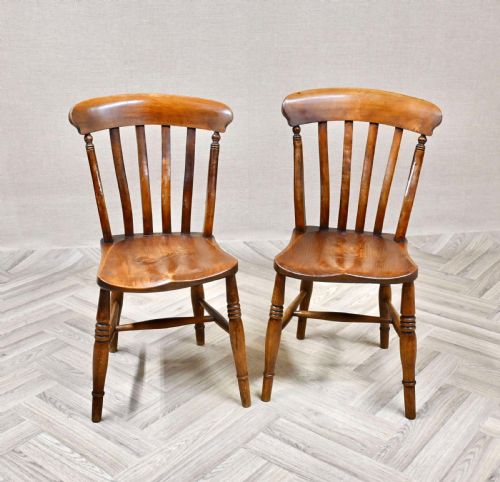
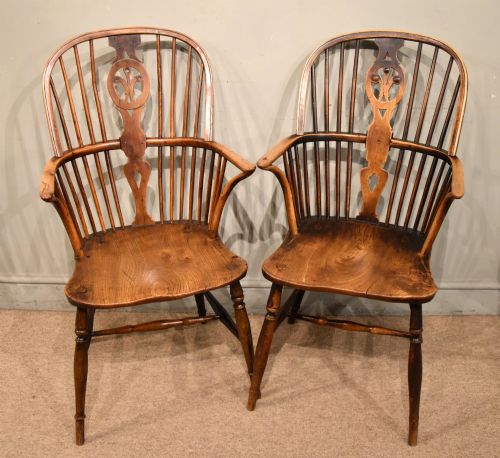
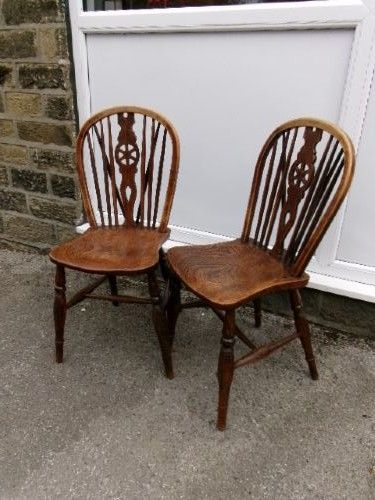
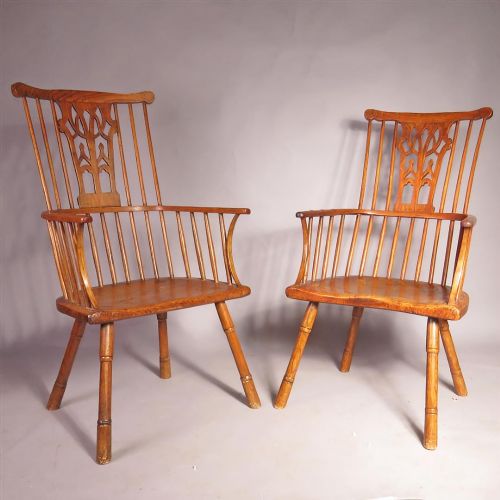
Pair of Rustic Chairs
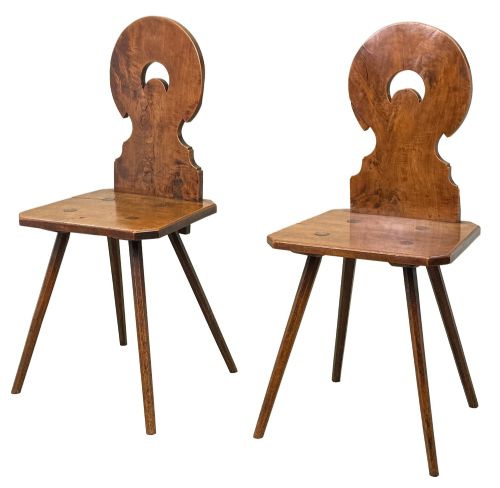
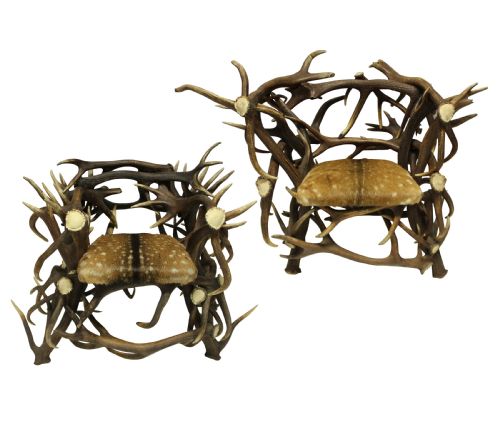
These pair of rustic chairs bring vernacular warmth to a room, combining honest regional craftsmanship with practical daily seating.
Pair of Rustic Chairs
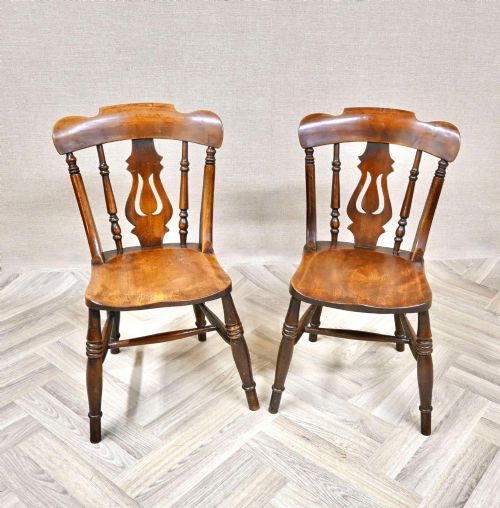
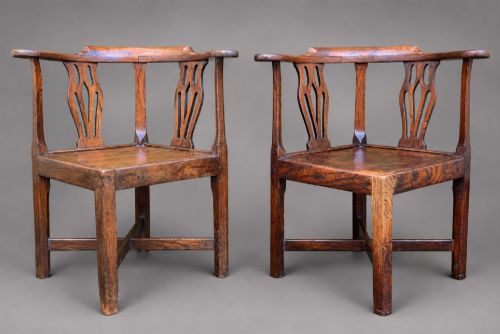
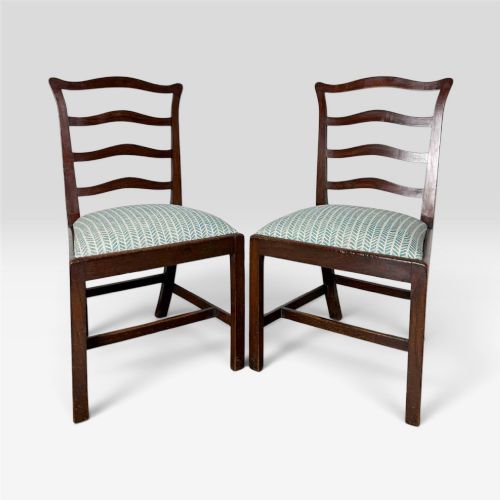
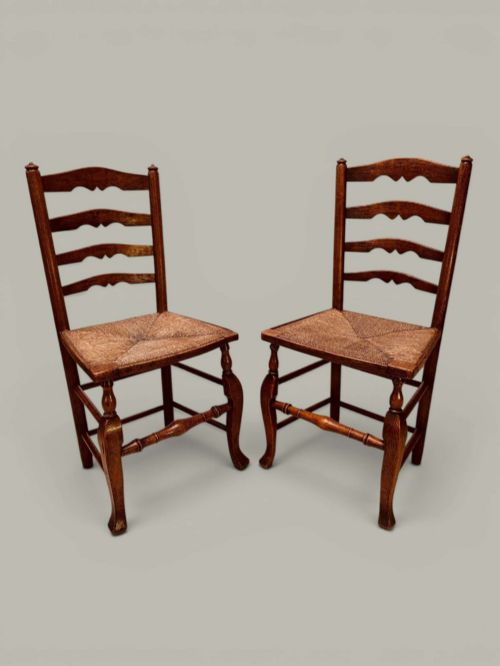
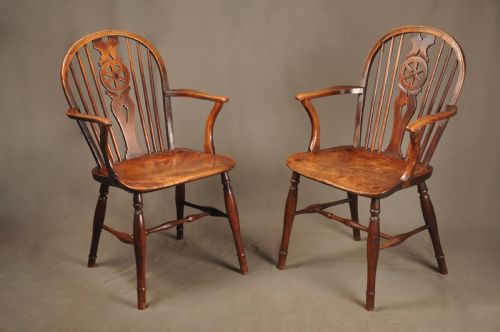
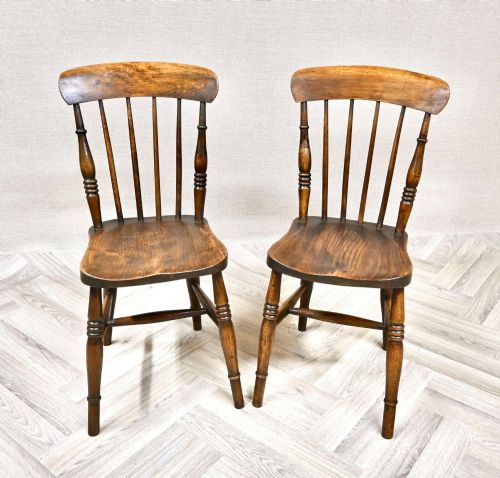
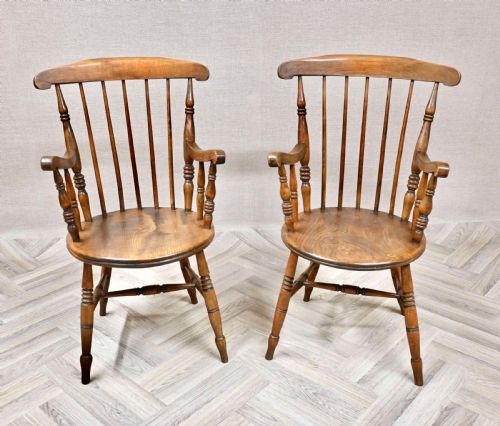
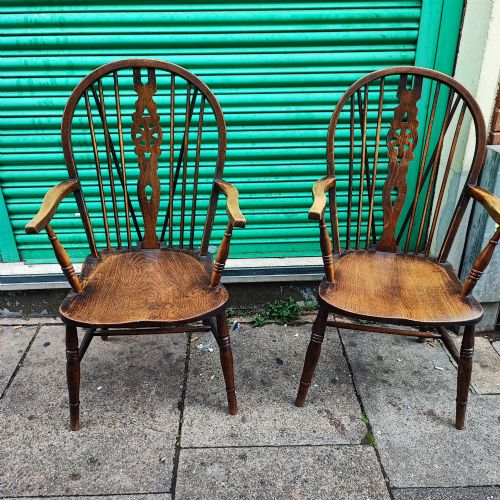
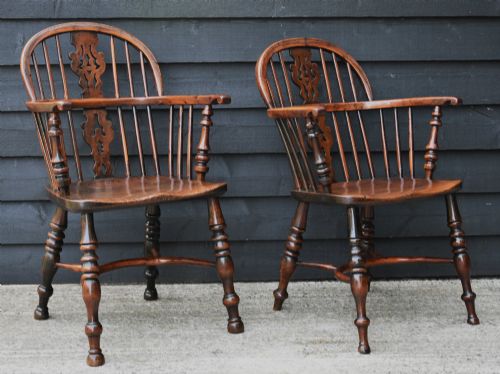
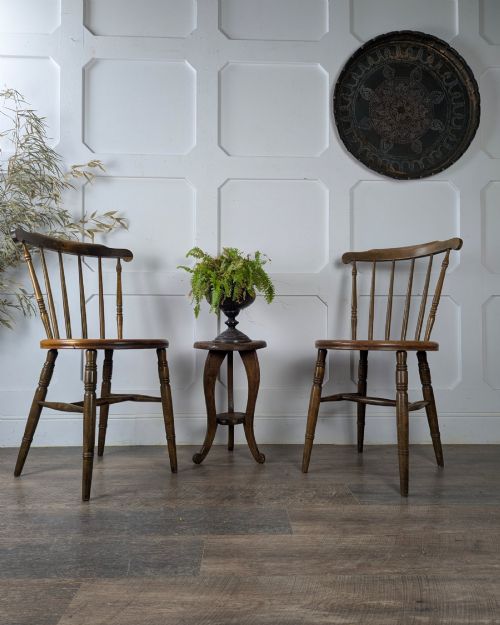
A pair of rustic chairs encompasses country seating forms designed for daily utility, spanning centuries of vernacular tradition. Buyers searching for a pair of rustic chairs will encounter regional variants such as Windsor stickbacks, wheelbacks, barbacks, and low comb backs alongside ladder backs and hall chairs.
The selections on this page draw heavily from English country traditions, alongside Scottish, Welsh, Swiss, and Austro-Hungarian vernacular outputs. Forms range from kitchen armchairs and carvers to side chairs, corner chairs, and robust benches originating across the eighteenth, nineteenth, and early twentieth centuries.
Materials and construction methods
Construction relies upon solid domestic hardwoods chosen for specific structural demands, pairing flexible ash and beech for spindles and bent legs with durable elm for solid timber seats. Selected pieces incorporate yew, oak, fruitwood, pitch pine, or rush seating to build robust country frames.
Makers utilised traditional green woodworking techniques, steam-bending timbers for bows and crest rails while wedging legs and spindles directly into thick plank seats. Surfaces often display original painted finishes or bare timber patination acquired through decades of domestic use.
Pair of Rustic Chairs Retail Price Guide 2026
Typical asking prices for pair of rustic chairs among the pieces listed under this phrase on Sellingantiques today, from the lower quarter to the upper quarter. They describe what is for sale here now, not the wider market.
Several chairs retain centuries of kitchen grease and old paint patches, bearing silent witness to countless boiled potatoes.
Distinctions in quality
Quality within these country pieces rests upon the integrity of the timber selection and the retention of original structural form. Examples featuring contrasting woods, such as yew and elm combinations, or highly figured grain patterns command greater interest.
The degree of match between the two seats dictates visual success, distinguishing true pairs from assembled near pairs. Minimal alterations and honest surface patination without aggressive sanding preserve the integrity of the original construction.
The Pair of Rustic Chairs Glossary
- Windsor chair
- A chair built with a solid timber saddle seat into which the legs and back spindles are separately bored and wedged. This form defines many traditional kitchen and farmhouse seating examples.
- Stickback
- A chair back constructed from multiple plain vertical turned spindles secured into a bentwood bow or crest rail. This simplified construction method supports robust vernacular utility.
- Comb back
- A Windsor variant featuring an extended high back topped by a horizontal headboard resembling an antique hair comb. These designs often incorporate shaped arm supports.
- Penny seat
- A saddle-shaped wooden seat base featuring a distinct circular depression carved into the centre for comfort. The term references the characteristic scooped profile of traditional plank seats.
- Vernacular
- Objects designed by local tradesmen for practical everyday use rather than following strict high-style architectural pattern books. These regional pieces reflect local material availability and custom.
Pair of Rustic Chairs: Frequently Asked Questions
What defines a true pair of chairs?
A true pair shares identical dimensions, turning details, timber selection, and construction methods executed by the same workshop at the same time.
Near pairs consist of two closely matching chairs gathered together later because they share similar heights, forms, or vernacular styles.
Where were these country chairs used?
These seating forms served primarily in farmhouses, kitchens, cottages, and vernacular dining spaces where durability mattered most.
Some refined variants appeared in halls or parlours, while regional types supported local domestic life across British and European communities.
How do I identify elm seats?
Elm timber displays a distinctive interlocking, twisting grain pattern with a rich reddish-brown tone that resists splitting under heavy daily loads.
Country makers selected this wood specifically for solid chair seats because its interwoven fibres prevented cracking when wedged.
Are these chairs comfortable for daily use?
Most country chairs feature ergonomically scooped wooden saddle seats and supportive spindle backs designed for prolonged sitting.
Adding loose cushions allows these historic wooden seats to integrate smoothly into modern dining arrangements.