
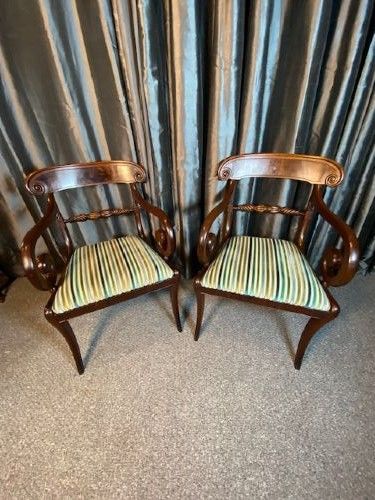
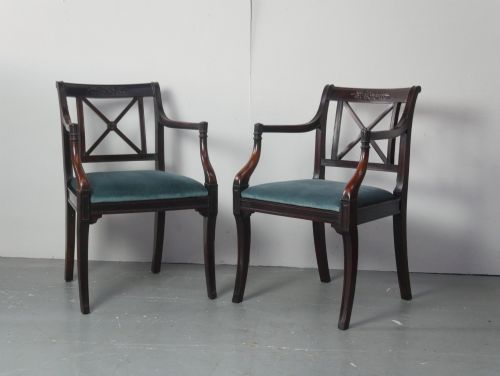
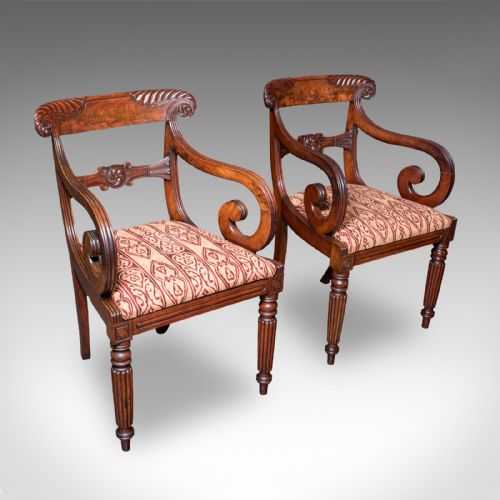
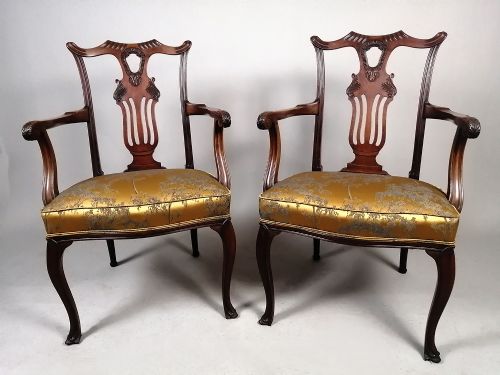




Pair of Regency Carvers
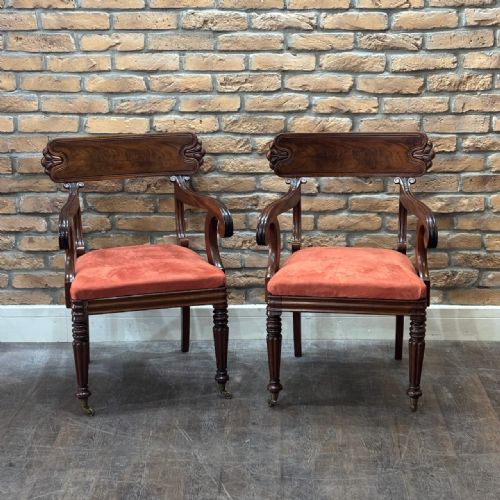
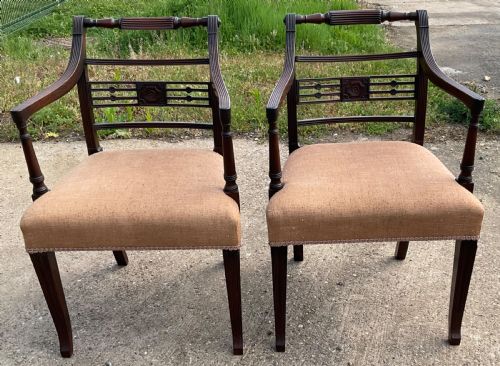
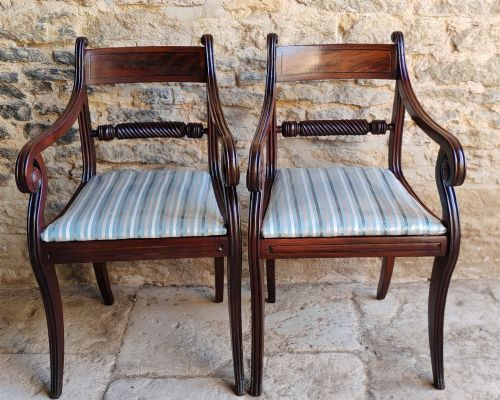
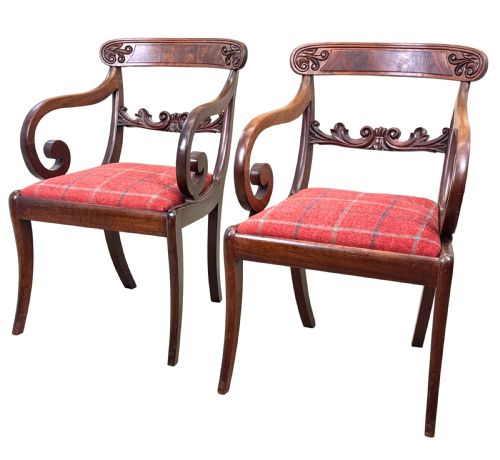
A pair of regency carvers brings balanced symmetry and substantial presence to the head of a dining table or alongside a desk.
Pair of Regency Carvers
A pair of regency carvers comprises two matching armchairs designed for use at the ends of a dining table or as substantial seating in reception spaces and libraries. The selections span actual Regency manufacture alongside later revivals from the nineteenth and early twentieth centuries, capturing the enduring demand for this specific form of elbow chair.
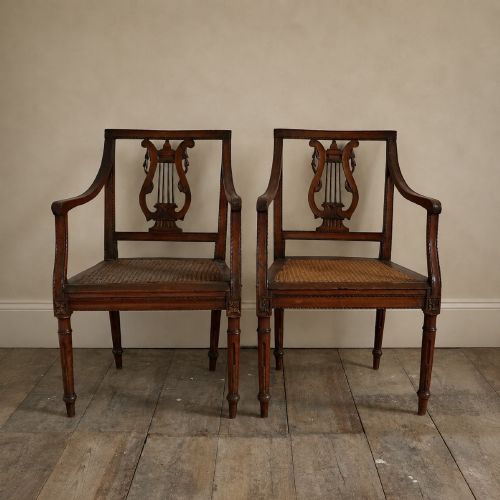
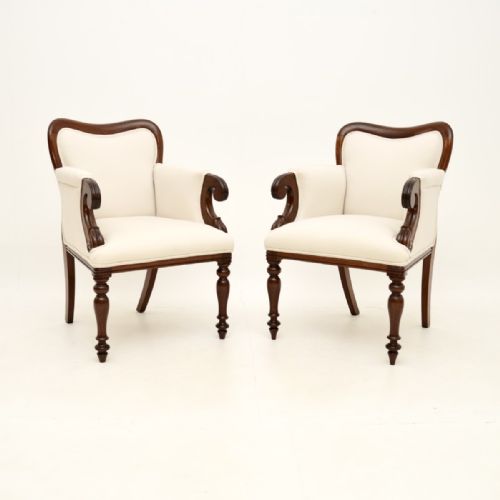
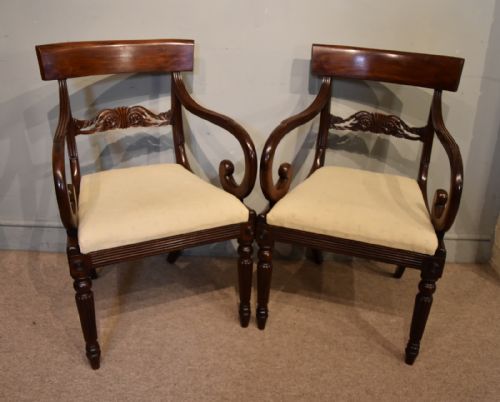
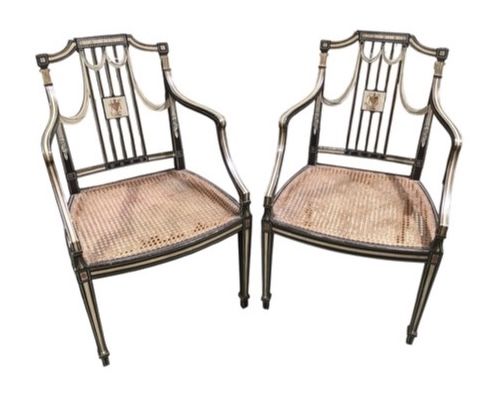
The dominant material across these seats is mahogany, often shaped into graceful lyre backs, bar backs, or scroll arm configurations. Variations include painted finishes, ebonised wood, and faux bamboo detailing, reflecting both standard English cabinet work and occasional continental or export origins.
Buyers encounter forms that range from crisp geometric lines of the early nineteenth century to later revival interpretations from the Victorian and Edwardian eras. Each pair maintains the dual armrests that distinguish carvers from standard dining chairs, offering a formal seating option.
Distinctions in craftsmanship
The degree of refinement in the carved details and the choice of timber figure set examples apart, with finer pieces displaying crisp joinery and carefully matched grain patterns across both chairs. Subtleties in the proportions of the arm supports and the sweep of the backrest dictate the visual balance of the pair.
Original period execution from the early nineteenth century carries different expectations of wear compared to later revival pieces from the nineteen hundreds, though both categories depend on the structural stability of the frame and the retention of original timber elements.
The selection encompasses authentic Regency period production alongside later revival styles from the Victorian and Edwardian eras.
Henry Thomas Peters of Genoa
The Pair of Regency Carvers Glossary
- Carver
- An armchair designed to match a set of dining chairs, traditionally placed at the table ends. These pieces feature integrated armrests to accommodate the principal diners.
- Elbow chair
- An alternative term for an armchair, often applied to seating with low or moderately proportioned armrests suitable for a desk or morning room.
- Lyre back
- A decorative chair back design shaped in the symmetrical outline of an ancient stringed musical instrument. This motif is frequently carved from mahogany in Regency seating.
- Caned
- Woven rattan or split cane panels utilised for chair seats or backrests to provide a resilient and breathable surface. It appears frequently on light framework.
- Ebonised
- Timber treated with a dark finish to imitate ebony. This technique provides high-contrast detailing alongside standard mahogany frames.
Pair of Regency Carvers: Frequently Asked Questions
What defines a pair of regency carvers?
These pieces are matched armchairs featuring lower or open elbow supports, intended originally for the ends of a dining table. They reflect design influences from the early nineteenth century through to later revival periods.
Cabinet makers utilised mahogany as the primary timber, shaping the frames with characteristic motifs such as lyre backs, scroll arms, and sabre legs. The form balances formal architectural presence with practical seating comfort.
How were these carvers used historically?
Hosts placed these armchairs at the head and foot of a dining table to distinguish the primary seats from the side chairs used by other guests. Their substantial stature also suited them for placement in libraries, morning rooms, and executive offices.
As dual-purpose furniture, they served for writing at a desk or relaxing in a reception room. The upholstered or caned seats provided support for extended periods of sitting.
How do I care for mahogany carvers?
Maintain the timber by keeping the chairs away from direct heat sources and fluctuating humidity, which can cause wood to split or veneer to lift. Regular dusting with a dry, soft cloth preserves the polish without building up residue.
Protect leather or fabric upholstery according to its specific textile requirements. Avoid harsh chemical cleaners on the polished mahogany surfaces.
How do I distinguish original Regency from revival pieces?
Original pieces dating from the early nineteenth century display construction methods, timber ageing, and tool marks consistent with Georgian and Regency cabinet making. Revival examples, often produced around nineteen hundred, typically show standardised machine-cut components and different secondary woods.
Style indicators also help differentiate eras, as strict Regency proportions differ from Edwardian interpretations. Examining the underside and joinery provides further clues to the manufacturing date.