


Early 19th Century Carvers
These early 19th century carvers are sturdy timber armchairs and dining seats that anchor a traditional room with functional period presence.
Early 19th Century Carvers
Early 19th century carvers encompass a range of seating from formal mahogany dining armchairs to rustic country Windsor chairs. When searching for early 19th century carvers, buyers encounter robust wooden armchairs designed to sit at the head of a dining table or function as desk and parlor seating.
The pieces appearing on this page bridge urban formal design and rural vernacular craftsmanship. Regional English country variations sit alongside polished Regency and George III mahogany forms.
Solid timbers dominate the selection, with elm, ash, and fruitwood shaping the country vernacular items, while mahogany defines the formal dining and desk armchairs.
Materials and Construction
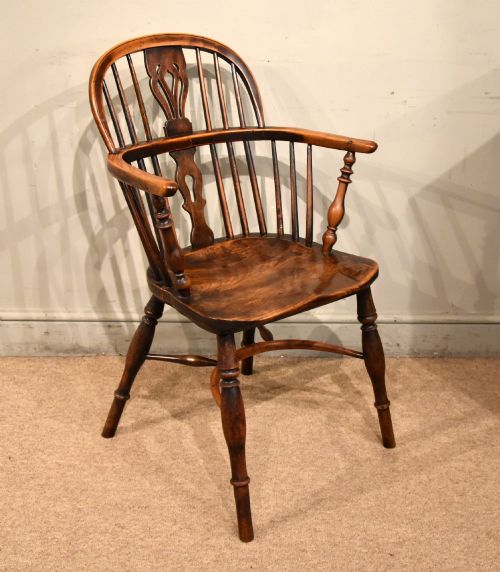
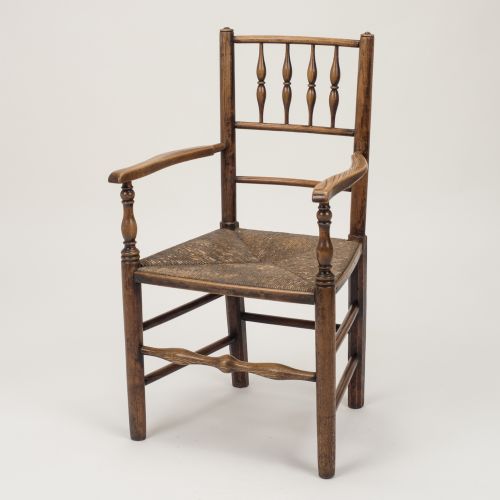
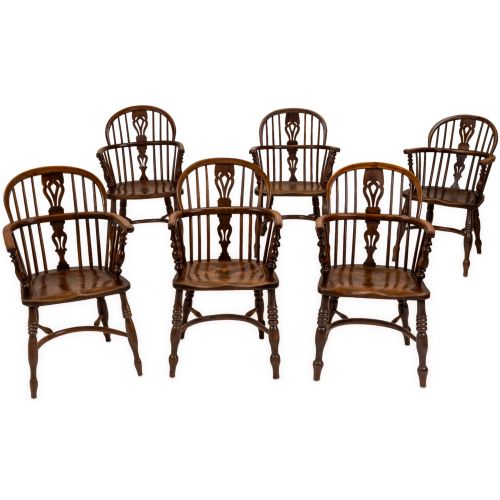
Cabinetmakers and country bodgers utilised native hardwoods such as elm, ash, and yew for Windsor frames and rush-seated armchairs, relying on steam-bending and turned spindle construction. These country pieces often incorporate crinoline stretchers for structural rigidity.
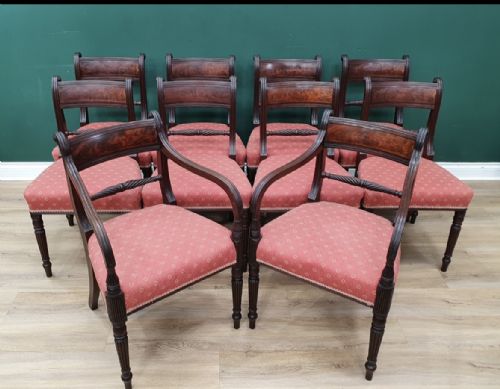
Formal dining carvers employ dense mahogany, sometimes featuring inlaid details, carved back splats with swag or lambrequin motifs, and brass fittings. Upholstery fabric provides the seat pad covering on the polished mahogany elbow chairs.
The selection includes matched sets of dining chairs paired with matching carvers alongside single armchairs.
Distinguishing Quality in Seating
The distinction between standard utility seating and superior examples lies in the crispness of the turning, the figure of the timber, and the integrity of the joinery. Mahogany carvers with carved back splats or matched dining sets represent a higher tier of formal production.
Among country Windsor and rush-seated armchairs, quality shows in the balance of the comb-back or bow, the preservation of original rush seating, and the thoughtful combination of timbers like yew and elm within a single frame.
The Early 19th Century Carvers Glossary
- Carver
- An armchair designed to match a set of dining chairs, typically placed at the table ends. These chairs provide supportive elbow rests for the seated diner.
- Windsor
- A wooden chair built with a solid saddle-shaped seat into which the legs and back spindles are direct-tenoned. They often feature bentwood bows and central splats.
- Crinoline stretcher
- An arched underframe connecting the legs of a Windsor chair to provide lateral strength. This curved brace mimics the shape of historical hooped petticoats.
- Rush-seated
- A chair seat woven from dried marsh rushes rather than upholstered fabric or solid wood. This technique provides a resilient and traditional textured surface.
- Lambrequin
- A decorative carved motif resembling draped fabric, frequently seen on Regency period back splats. It adds a formal sculptural element to the chair frame.
Early 19th Century Carvers: Frequently Asked Questions
What is the difference between a carver and a dining chair?
A carver includes armrests to provide additional support, whereas standard dining chairs are built without arms for side seating. In historic dining sets, carvers traditionally sat at the head of the table.
These armchairs work equally well as standalone desk chairs or accent pieces in a hallway or bedroom, offering greater physical presence than side chairs.
How do I identify a country Windsor chair?
Country Windsor chairs feature a thick sculpted wooden seat with turned legs and spindles locked directly into the timber. They often utilise native woods like elm, ash, and yew.
Regional variations, such as those from Nottinghamshire or general English country workshops, display distinct bow shapes and comb-back designs without relying on formal upholstery.
Can I mix these carvers with a modern dining table?
These wooden armchairs pair effectively with modern dining tables by introducing historical texture and warmth to contemporary spaces. Their traditional timber construction grounds the room.
When combining them with modern seating, ensure the arm height clears the underside of the table apron so the chair can slide in properly.
How do I care for rush-seated and upholstered carvers?
Rush seats require a dry environment and occasional gentle cleaning with a soft brush to prevent the natural fibres from drying out and splitting. Avoid excessive moisture on the woven material.
Upholstered fabric pads benefit from regular vacuuming with a soft attachment, while polished mahogany and elm frames respond well to a traditional wax polish.