
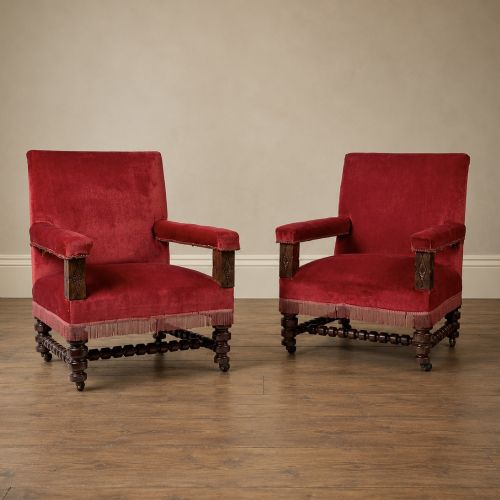
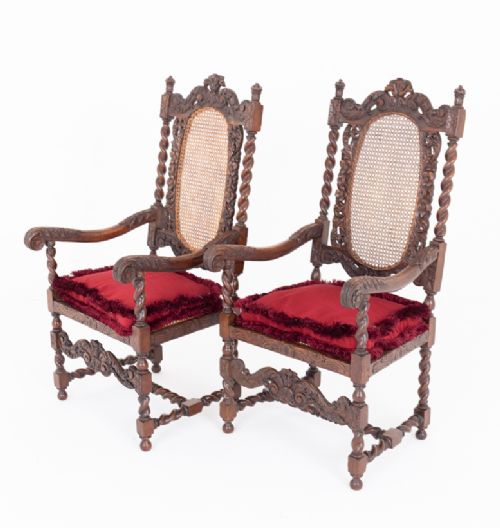
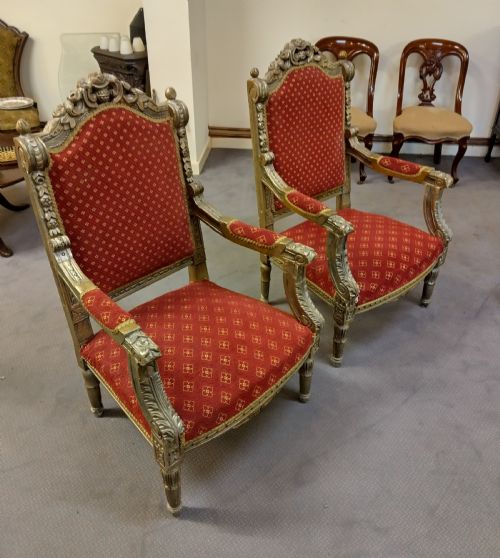
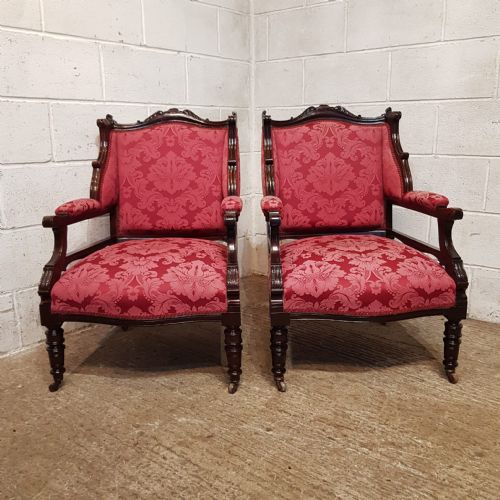
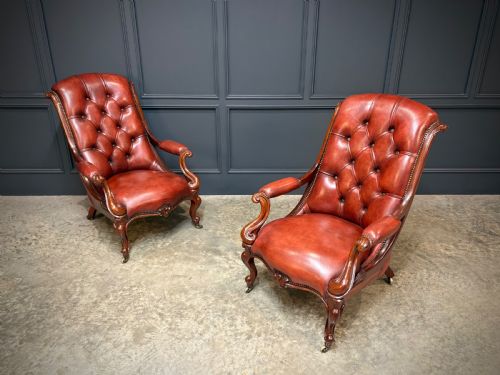
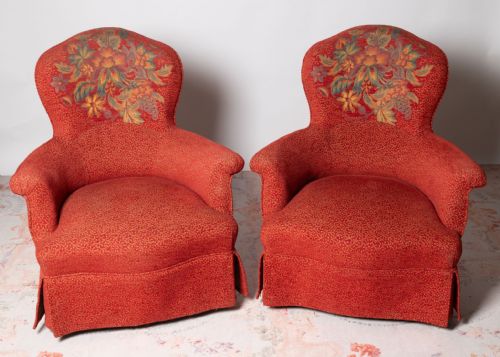
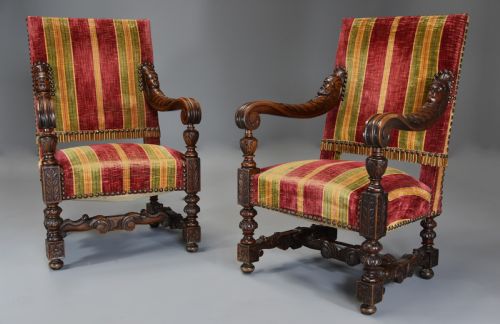

Pair of Red Armchairs
When you select a pair of red armchairs, you invite striking colour and matched seating into a room from diverse periods including the Victorian era and the Regency.
Pair of Red Armchairs
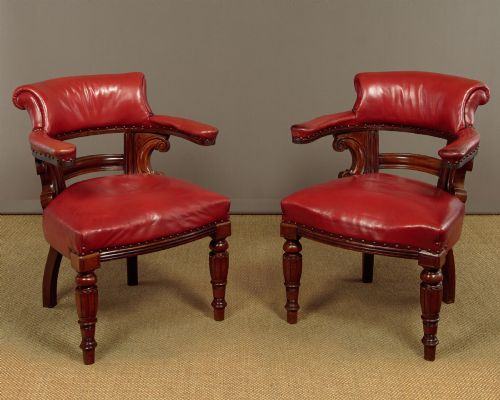
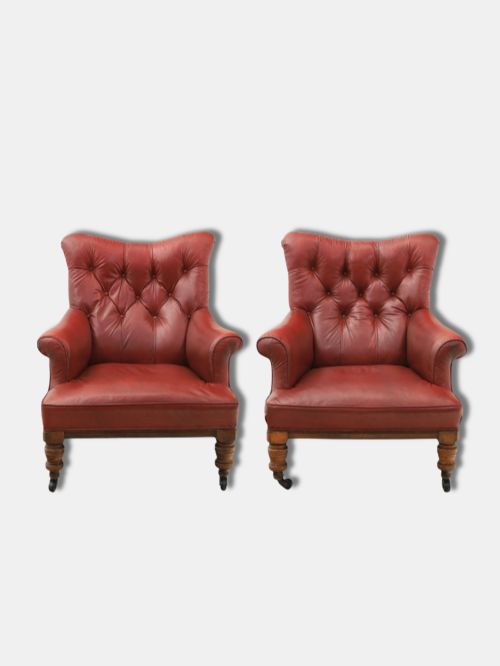
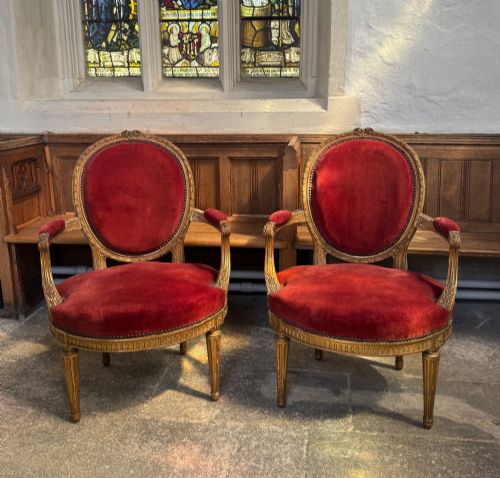
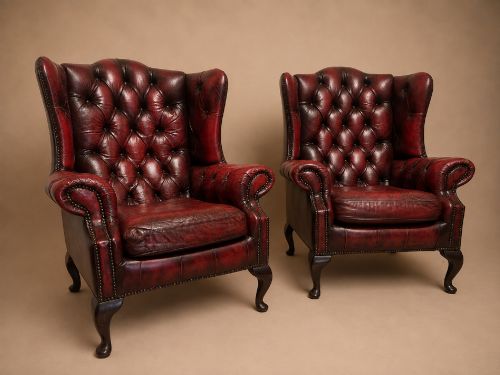
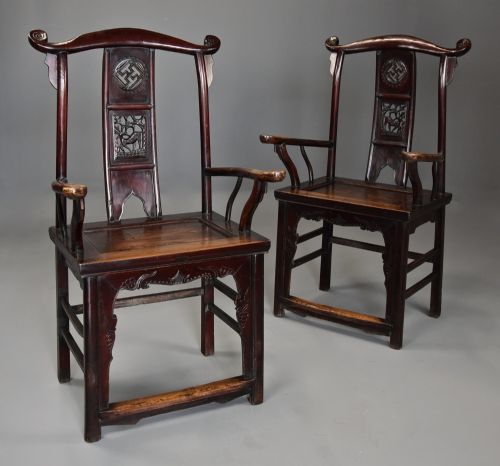
A pair of red armchairs encompasses seating designed in matched pairs, drawing from traditional library chairs, buttoned leather library seats, and wingback configurations. Buyers searching for a pair of red armchairs encounter diverse forms ranging from French giltwood armchairs and Chesterfield wing chairs to Chinese elm yokeback chairs with red lacquer.
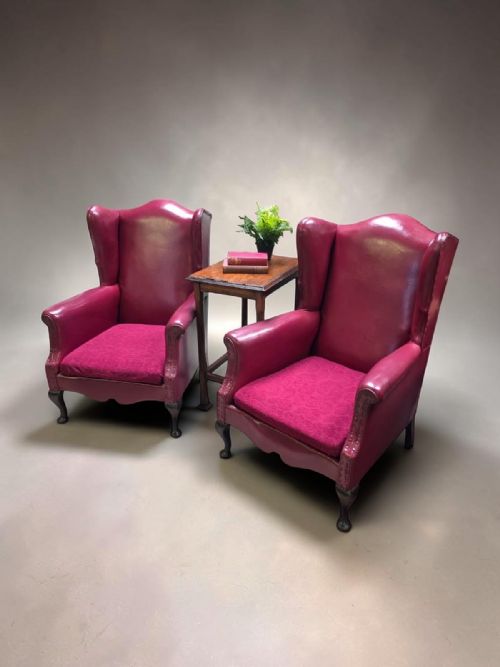
The selections span multiple historical periods, notably the nineteenth century, the Edwardian era, and the Regency period. Woods such as mahogany, walnut, oak, and elm provide the structural frames, paired with upholstery in red leather, velvet, silk, rexine, and wool.
Origin and style variations include French Louis XVI interpretations, English country house library chairs, and oriental lacquered pieces. These seating options serve functions from reception spaces and morning rooms to boudoirs and libraries.
Materials and construction methods
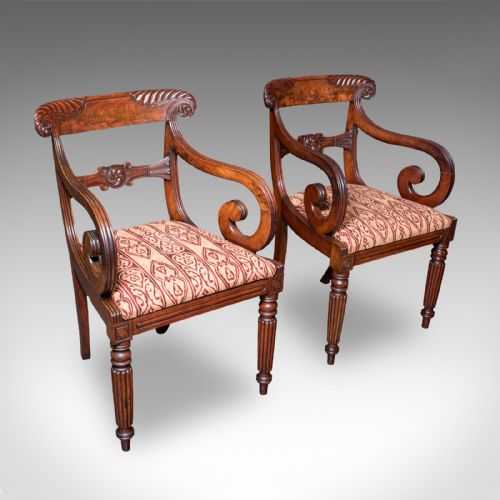
Frames are constructed from solid hardwoods such as mahogany, walnut, oak, elm, and giltwood, frequently shaped with carved details, barley twists, or turned supports. Joinery techniques secure the structural integrity of the arms, legs, and backrests across diverse revival styles and country house pieces.
Upholstery and surface finishes combine textiles like red leather, velvet, split cane, wool, and silk with applied treatments including red lacquer, gilt finishes, and buttoned detailing. Traditional stuffing and webbing support the upholstered surfaces of library chairs, wing chairs, and tub chairs.
Distinctions in quality and execution
Quality rests in the crispness of the wood carvings, the depth of the timber's patina, and the structural integrity of the matched pair. Pieces displaying refined proportions, authentic period lacquer, or substantial hardwood framing command greater regard than simpler forms.
The execution of the upholstery materials, whether supple leather, tight velvet, or integrated cane panels, influences the overall coherence of the matched pair. Original surface treatments and well-preserved gilt finishes indicate superior historic manufacture.
White, Allom & Co.·Gillows
The Pair of Red Armchairs Glossary
- Bergere
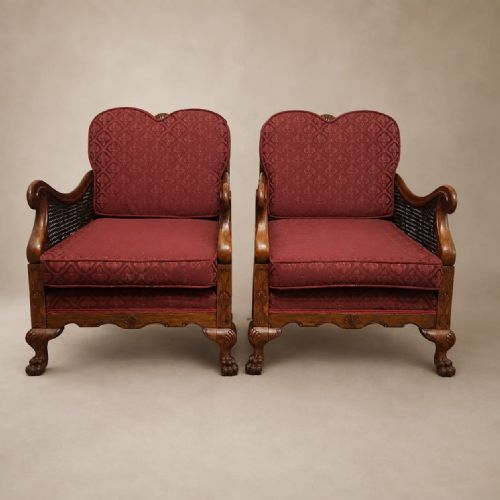
- An enclosed upholstered armchair with wooden framing, often featuring cane work to the sides and back. This French seating form dates back to the eighteenth century.
- Giltwood
- Timber treated with gold leaf or a gold-coloured finish for decorative effect. This material appears frequently on French revival armchairs.
- Yokeback
- A traditional chair design featuring a top rail shaped like an ox yoke. Chinese elm examples often display this form alongside red lacquer.
- Carver
- An armchair designed with elbow rests, traditionally used at the head of a dining table or as a reception seat. These frames match standard dining chairs in a set.
- Rexine
- A brand of leathercloth fabric manufactured from cloth coated with nitrocellulose. This material surfaces on twentieth-century Chesterfield armchairs.
Pair of Red Armchairs: Frequently Asked Questions
How do I care for antique leather armchairs?
Maintain leather upholstery by avoiding direct sunlight and excessive heat, which cause the hide to dry out and crack over time. Apply appropriate leather balms periodically to preserve suppleness and colour.
Keep wooden frames clean using a dry cloth and avoid harsh chemical cleaners on gilt finishes or polished walnut and mahogany surfaces.
Can I use these chairs in a modern room?
A matched pair of red armchairs introduces strong focal points and functional seating into contemporary interior spaces. Their distinct historical styles bridge traditional and modern design schemes effectively.
Positioning them opposite a sofa or beside a fireplace balances the room's proportions and highlights the bold red upholstery.
What is the difference between an armchair and an elbow chair?
Elbow chairs generally feature shorter or more open armrests designed to fit beneath a desk or dining table. Standard armchairs offer deeper, enclosed seating intended for lounging in libraries or reception rooms.
Both forms appear across nineteenth-century and earlier periods in matched pairs.
How do I identify a nineteenth-century French armchair?
Nineteenth-century French armchairs frequently display Louis XVI or Baroque revival styles executed in giltwood, walnut, or painted frames. Carved floral motifs, cabriole legs, and open arm designs characterise these seating pieces.
Upholstery options range from silk and tapestry covers to newly applied linen and ticking.