




Pair of Porcelain Plaques
A pair of porcelain plaques brings intense painted detail and a flash of ceramic colour to a wall or mounted directly into period furniture.
Pair of Porcelain Plaques
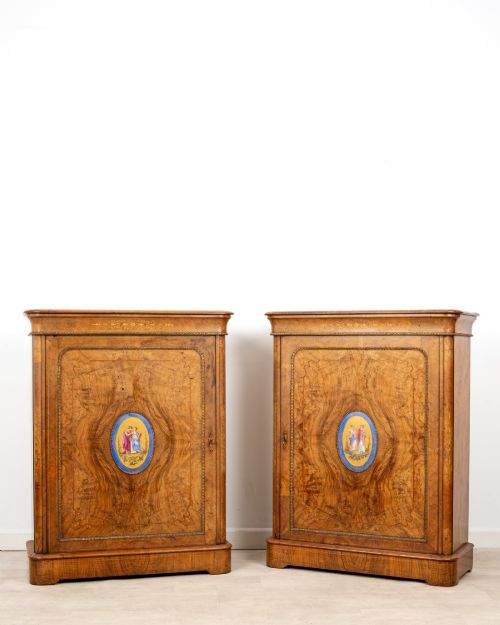
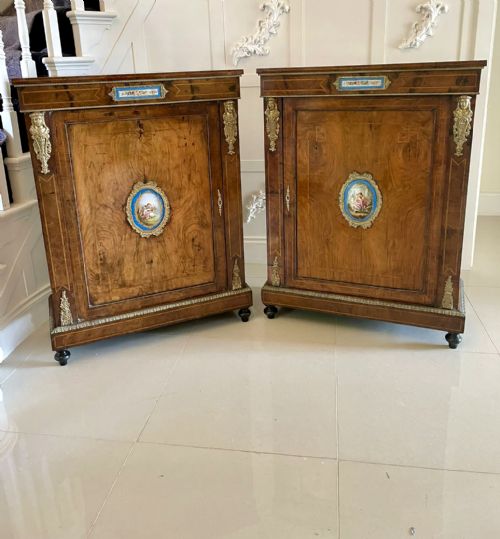
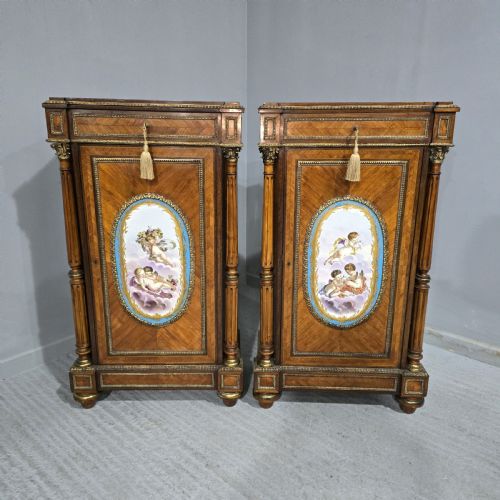
When you search for a pair of porcelain plaques, you are looking at matched sets of fired ceramic panels that were painted by hand and often framed or mounted into fine furniture. These pieces span the nineteenth and twentieth centuries, appearing both as standalone wall art and as decorative mounts on burr walnut, satinwood, and ebonised cabinetry.
The versions you are most likely to meet on this page include framed European portrait and botanical studies alongside architectural furniture mounts in the Louis XVI revival style. Chinese examples featuring painted imperial figures and Japanese Imari plates also appear among the selection.
How they were made
These pieces start as a fine white ceramic body that is painted with enamel pigments and fired repeatedly to set the colours permanently into the glaze. Many European examples are mounted in heavy cast or gilt ormolu frames, while others are set flush into the timber doors of Victorian pier cabinets and side tables.
Makers utilised rich woods such as burr walnut, satinwood, and kingwood to house the ceramics, combining cabinetmaking and porcelain painting into a single decorative object.
Several plaques stubbornly refuse to just hang on the wall, choosing instead to live embedded inside the doors of walnut cabinets.
What varies in quality
The standard of painting sets the best examples apart, marked by fine brushwork in flesh tones and garments rather than mechanical transfers. Signed work by known hands and established factories elevates a pair above standard decorative pieces.
The quality of the surrounding mount or frame matters just as much as the ceramic itself. Heavy cast ormolu, intricate marquetry in the timber cabinets, and well-preserved giltwood frames indicate higher workshop standards.
Royal Worcester·Richard Ginori·K P M
The Pair of Porcelain Plaques Glossary
- Ormolu
- Gilt bronze mounts used to frame porcelain plaques or adorn fine furniture. The technique involves applying a gold amalgam to bronze before heating.
- Pier cabinet
- A low or tall display cabinet designed to sit against a wall between windows. These frequently incorporate porcelain plaques within their timber doors.
- Imari
- Japanese export porcelain decorated in underglaze blue and iron red with gold additions. These plates and plaques were widely imitated in Europe.
- Bonheur du jour
- A small ladies writing desk featuring drawers and compartments above the work surface. Some examples incorporate porcelain plaques into the superstructure.
Pair of Porcelain Plaques: Frequently Asked Questions
How were porcelain plaques displayed originally?
Many were mounted directly into the timber of luxury furniture like side cabinets, pier cabinets, and console tables to add colour and status to a formal room.
Others were framed in wood, gilt bronze, or ormolu to hang safely on drawing room walls as standalone works of art.
How do I hang a heavy framed plaque?
Heavy ceramic panels set in cast ormolu or timber frames require proper wall fixings into masonry or structural studs rather than simple picture hooks.
Ensure the hanging wire or integrated brackets on the back of the frame are secure before committing the weight to the wall.
Can I place these pieces in direct sunlight?
Enamel painted porcelain resists fading better than textiles, but the gilt frames, timber mounts, and painted surfaces benefit from protection against harsh, direct sunlight.
Positioning them away from intense southern windows preserves the richness of the painted colours and the condition of the surrounding wood.
How do I clean antique porcelain plaques?
Dust the surface gently with a soft, dry brush or a clean feather duster to remove daily particle buildup without applying moisture to old framing or adhesives.
Avoid chemical cleaning sprays entirely, as they can damage delicate overglaze enamels and antique gilding.