


Pair of Porcelain Planters
A pair of porcelain planters brings symmetry and refined botanical display to a room, uniting functional ceramic vessels with decorative polish.
Pair of Porcelain Planters
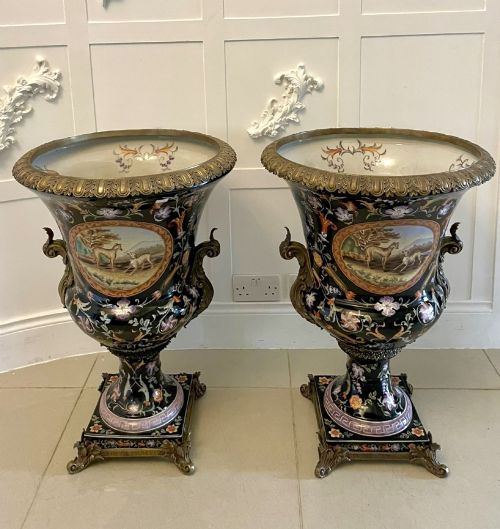
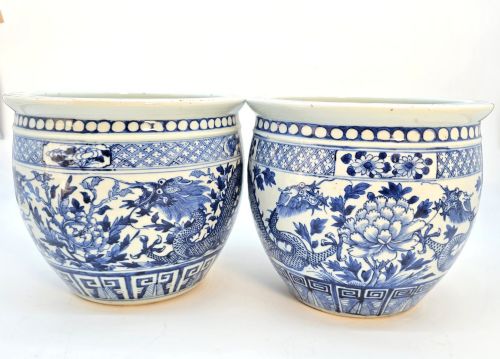
When you search for a pair of porcelain planters, you encounter dual decorative vessels designed to house plants or stand as sculptural ornaments in an interior. The selection here spans French urns and cache pots, Chinese blue and white jardinières, Japanese Imari pieces, and German figural flower carts.
Most examples date from the late nineteenth century, reflecting periods such as the Victorian era, the Meiji period, the Qing dynasty, and the French Rococo Revival. These items function as jardinières, vases, or chariot forms, often accompanied by associated hardwood stands.
The aesthetic vocabulary encompasses Japonisme alongside European revival styles, showing how diverse regional traditions shaped domestic ornamentation during the late nineteenth century.
Materials and construction methods
The construction relies on porcelain, earthenware, and glazed ceramic bodies shaped into vessels and figures. Cobalt underglaze and hand-painted enamel details provide the surface colour and pictorial decoration.
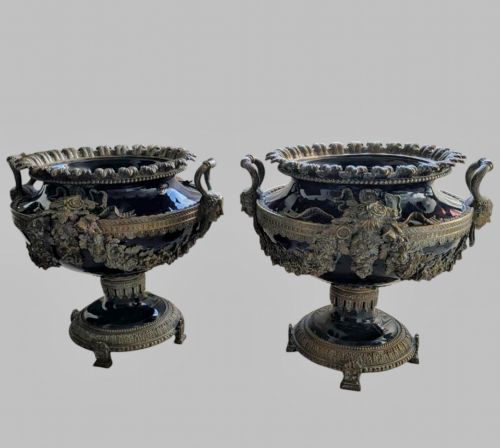
Metal mounts in gilt bronze and brass frequently secure the rims, bases, or handles of European examples. Gilding enhances specific areas, while separate hardwood stands support certain Japanese jardinières.
Several listings include chariot vases and figural flower carts, proving that nineteenth-century plants occasionally travelled in unexpected transport.
Distinctions in quality and execution
The distinction between standard and superior pieces rests on the precision of the hand-painted decoration and the crispness of the porcelain or ceramic moulding. Finer examples display deliberate brushwork in cobalt or enamel, whereas simpler items show more routine application.
The integration of metal mounts, such as cast brass or gilt bronze elements, dictates the overall refinement of the piece. Rigorous alignment and solid construction elevate the status of mounted European urns and cache pots.
Kister·Scheibe-Alsbach·Samson
The Pair of Porcelain Planters Glossary
- Jardiniere
- A large ornamental pot or stand for holding plants or flowers. These vessels form the majority of the ceramic pairs on this page.
- Cache pot
- An ornamental container used to conceal an ordinary flowerpot. The French examples frequently adopt this form alongside faux bamboo decoration.
- Imari
- A style of Japanese porcelain decorated in underglaze blue, iron red, and gold. Pieces in this style reflect export wares popular in the nineteenth century.
- Gilt bronze
- Copper alloy coated with a thin layer of gold, often used for mounts. This material frames and supports the porcelain bodies of French urns.
- Cobalt underglaze
- A blue pigment applied to ceramic before glazing and firing. It defines the decoration on Chinese and Japanese blue and white pieces.
Pair of Porcelain Planters: Frequently Asked Questions
What is a pair of porcelain planters used for?
These dual vessels serve primarily as jardinières or cache pots for housing indoor plants, adding botanical greenery to interior spaces. They also function as standalone ornamental urns, vases, or figural flower carts.
Placed symmetrically on tables, pedestals, or hearths, they provide balanced visual weight and introduce decorative colour through hand-painted glazes and metal mounts.
How do French and Japanese pieces differ?
French examples from the nineteenth century often incorporate Rococo Revival or Napoleon III styling, frequently featuring brass or gilt bronze mounts and hand-painted floral motifs. Japanese pieces from the Meiji period typically display blue and white designs or Imari palettes, sometimes accompanied by associated hardwood stands.
While the European items lean towards classical revival mounts and cache pot forms, the Japanese works focus on intense cobalt underglaze patterns and traditional pictorial compositions.
Can these planters hold plants directly?
Many of these antique vessels were originally designed as jardinières or cache pots to hold potted plants within their ceramic interiors. However, the presence of delicate glazes and historical materials means many owners prefer using a secondary inner pot to protect the ceramic.
Evaluating the interior condition helps determine whether a vessel is suited for direct planting or safer utilisation with a liner.
How are these nineteenth century styles identified?
Dating relies on stylistic markers such as Rococo Revival curves, Victorian hand-painted floral details, and the distinct aesthetic of Japanese Meiji export wares. Materials like cobalt underglaze, earthenware bodies, and gilt bronze mounts further anchor the objects in the late nineteenth century.
Comparing the decorative motifs against known periods clarifies whether an item aligns with Victorian production, Qing dynasty influence, or European revival movements.