


Gilded Porcelain Planters
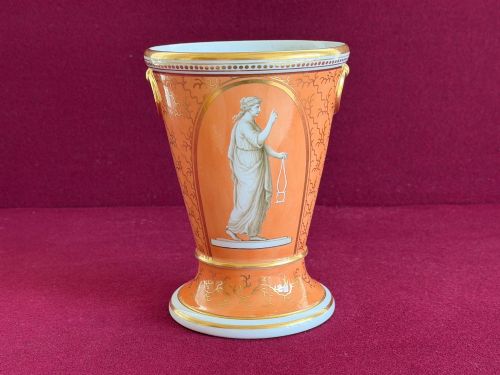
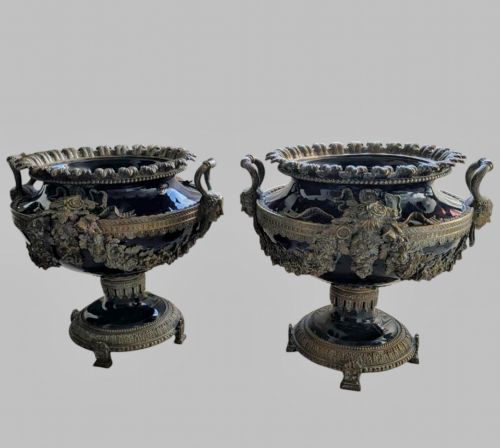
These gilded porcelain planters combine ceramic bodies with metallic enrichment, offering a decorative vessel for interior flora that dates across the nineteenth and twentieth centuries.
Gilded Porcelain Planters
Gilded porcelain planters encompass decorative vessels such as jardinieres, cachepots, and campana vases designed to house plants within domestic interiors. These pieces frequently appear in styles ranging from Georgian English factory work to French Rococo revival designs and later Victorian productions.
Buyers encountering this selection will most often find nineteenth century French and English examples featuring glazed ceramic bodies augmented with gilt bronze, ormolu mounts, and hand-painted enamel details. Forms vary from traditional footed bowls to figural flower carts and pedestal stands constructed from materials like kingwood.
Origins span notable European ceramic centres including Worcester, Dresden, and Thuringia, alongside nineteenth century Japanese Satsuma production. The selection demonstrates how makers adapted traditional porcelain forms into functional display pieces for domestic greenery throughout the Victorian and Edwardian eras.
Materials and construction
The foundation of these objects relies on fired porcelain or glazed ceramic bodies, shaped either through throwing or moulding before receiving hand-painted enamel decoration. Artisans applied gold leaf and gilding to accentuate moulded surface details, floral motifs, and armorial designs.
Many nineteenth century French and English pieces incorporate metalwork components, securing porcelain plaques and bodies within cast ormolu and gilt bronze mounts. Timber elements such as kingwood also appear in supporting stands, combining cabinetmaking techniques with ceramic arts.
Several Victorian ceramic gardeners appear immortalised mid-task, holding flower carts while standing steadfastly on porcelain legs.
Assessing quality
The standard of execution in the painted decoration and the crispness of the porcelain moulding define the upper tier of these pieces. Hand-painted botanical or figural scenes executed with fine brushwork distinguish superior examples from standard factory output.
The integration of secondary materials dictates overall refinement, particularly the weight and chasing of ormolu mounts or gilt bronze fittings. Superior specimens demonstrate precise fitting between the ceramic body and its metal framework, reflecting the skill of the original workshop.
Flight & Barr·Barr, Flight & Barr·Royal Worcester·Royal Doulton·Kister, Scheibe-Alsbach·Vion & Baury·Coalport
The Gilded Porcelain Planters Glossary
- Jardiniere
- A large ornamental pot or stand designed to hold a plant or flower arrangement. These vessels often feature decorative handles or footed bases.
- Cachepot
- An outer decorative pot, typically unvented, used to conceal a plain flowerpot holding a plant. The term derives from the French for hiding a pot.
- Ormolu
- Gilt bronze ornamentation applied to furniture, porcelain, and clocks. The technique involves creating a finely chased bronze object coated in a layer of gold amalgam.
- Campana vase
- A bell-shaped vessel with a flared rim and footed base, modelled on classical antiquity. These forms were frequently produced in porcelain during the nineteenth century.
- Blush ivory
- A porcelain body finish developed by late Victorian manufacturers to create a soft, matte cream ground. This technique often served as a backdrop for delicate floral painting.
Gilded Porcelain Planters: Frequently Asked Questions
What is a jardiniere used for?
A jardiniere serves as an ornamental container designed to hold potted plants or cut flowers within a domestic interior.
Historically, these vessels stood on tabletops, pedestals, or dedicated stands to bring greenery into principal rooms.
How do I care for gilded porcelain?
Maintenance requires gentle dusting with a soft, dry cloth to protect delicate enamel work and metallic surface applications.
Moisture and harsh cleaning agents should be avoided to prevent tarnishing the gilding and damaging porous ceramic glazes.
What is the difference between a cachepot and a jardiniere?
A cachepot typically acts as an outer container designed to hide a standard plant pot inside its body.
Jardineres often function as the primary vessel for planting directly or holding larger arrangements within integrated bowls.
How do I identify nineteenth century porcelain?
Identification relies on examining factory marks, glaze characteristics, and stylistic traits associated with specific periods like the Victorian or Georgian eras.
Hand-painted details and mounting techniques also provide clues regarding the geographic origin and manufacturing date of the piece.