

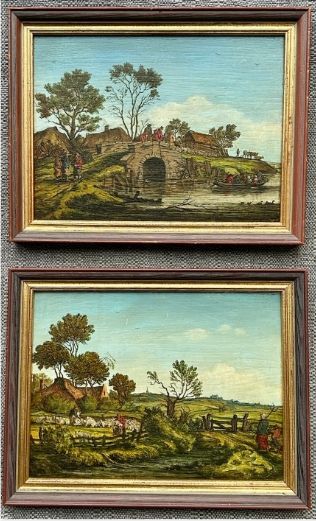


Pair of Pastoral Paintings
These pair of pastoral paintings bring rustic countryside charm and bucolic scenery directly into an interior.
Pair of Pastoral Paintings
A pair of pastoral paintings captures rural landscapes, agricultural scenes, and country life designed to be displayed together as matching artwork. These pieces draw heavily on subjects like herdsmen, cattle, sheep, and tranquil valleys.
The selections available range from 18th-century enamel oval plaques and French Rococo influenced works to Victorian watercolours and oils on wood panels. Most examples originate from the 19th century, reflecting sustained domestic interest in idyllic rural views.
Buyers encounter subjects such as animal paintings, Highland cattle, and framed artwork by named artists or skilled regional hands. Each matched pair offers balanced composition intended for symmetrical placement on a wall.
Qualities of distinction
The ability of the artist to render animal anatomy, atmospheric lighting, and natural depth separates standard decorative items from finer works. Masterful brushwork brings movement to herds and realism to the rolling landscape backgrounds.
The survival of original matching frames contributes significantly to the integrity and visual harmony of a pair. Mismatched or later framing alters the historic balance intended by the maker.
Attribution to documented artists or schools adds authority and confirms the technical competence invested in the creation of the pair.
Pair of Pastoral Paintings Retail Price Guide 2026
Typical asking prices for pair of pastoral paintings among the pieces listed under this phrase on Sellingantiques today, from the lower quarter to the upper quarter. They describe what is for sale here now, not the wider market.
Listings feature 19th century, Victorian, and 18th century periods expressed through oil on canvas, watercolour, and enamel materials.
Francois Boucher·Johann Friedrich Voltz·Frederick James Knowles·Sidney Pike·Robert Watson·Alfred Vickers Senior·John W Morris·Alfred Rimmer
The Pair of Pastoral Paintings Glossary
- Pastoral
- Depicting country life, shepherds, and idealized rural scenes. This genre focuses on the peaceful harmony of nature and agriculture.
- Oil on Canvas
- Pigment mixed with drying oil applied to a stretched fabric surface. This medium allows for rich blending and textured application.
- Watercolour
- A paint consisting of pigment suspended in a water-based solution applied to paper. It yields transparent, luminous washes of colour.
- Giltwood
- Wood carved and covered with a thin layer of gold leaf or gilt. It provides an ornate and reflective border for traditional frames.
- Enamel
- A glassy substance fused to a metallic or ceramic substrate through firing. This technique creates a smooth, glossy, and durable surface for painted details.
Pair of Pastoral Paintings: Frequently Asked Questions
How should I hang a pair of pastoral paintings?
Display the two pieces at eye level with equal spacing to maintain the intended visual balance of the composition. Symmetrical placement works best above furniture like sideboards or mantelpieces.
Ensure the artwork avoids direct sunlight to protect pigments, particularly watercolours and paper elements, from fading over time.
What subjects appear in these pastoral works?
Common subjects include agricultural scenes, sheep grazing in the highlands, cattle herds, and bucolic country landscapes. Artists frequently depicted animals alongside human figures engaged in rural labour.
These motifs reflect a romanticized view of country life popular during the Georgian and Victorian periods.
How do I identify a 19th-century oil painting?
Examine the canvas texture, stretcher bars, and the ageing of the oil paint layer. Nineteenth-century works often display fine craquelure and traditional hand-stretched linen.
Signatures, artist inscriptions, and original gilt wood frames provide further clues regarding the date and origin of the piece.
Are watercolours different from oil paintings?
Watercolours use water-soluble pigments on paper and require glass protection for longevity. Oil paintings utilise oil-bound pigments on canvas or wood panels and remain exposed to the air.
Both mediums offer distinct visual textures, with oils providing heavier impasto and watercolours delivering delicate transparency.