


Antique Belgian Art
Antique belgian art encompasses oil paintings, bronze plaques, glass vessels, and metalwork spanning the nineteenth century through the early decades of the twentieth.
Antique Belgian Art
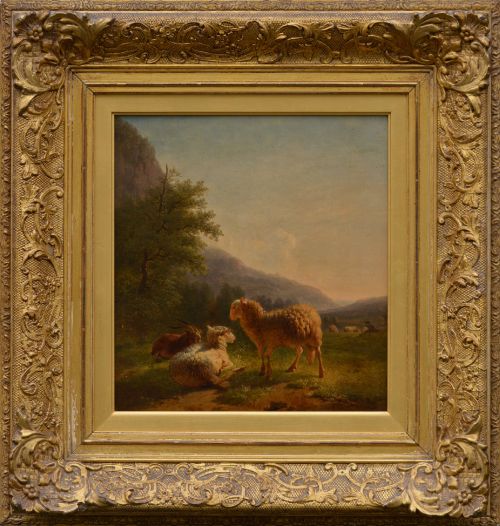
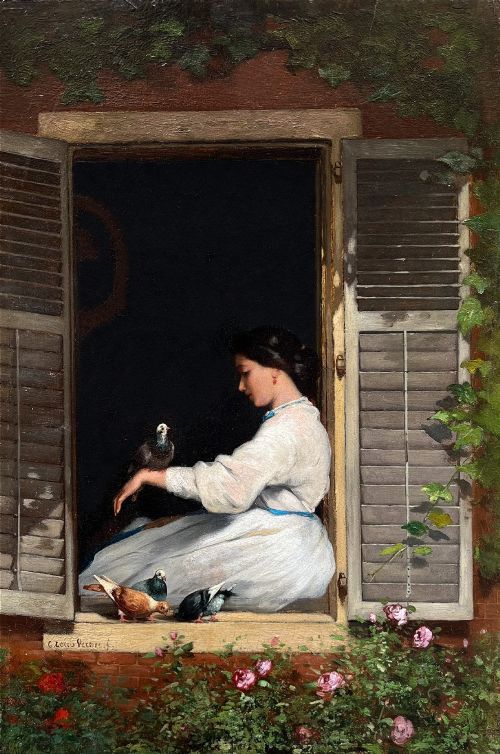
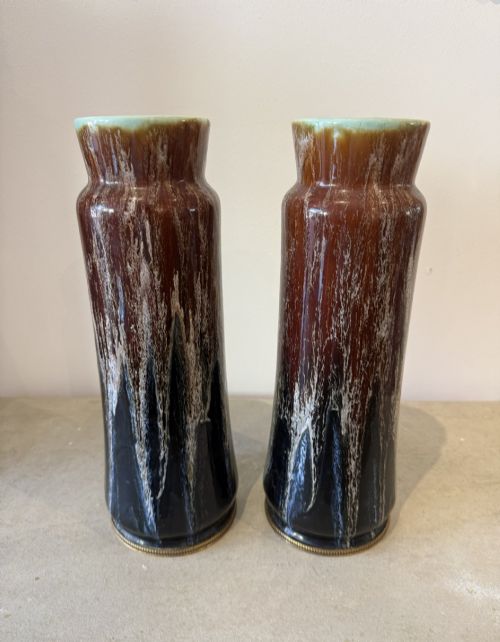
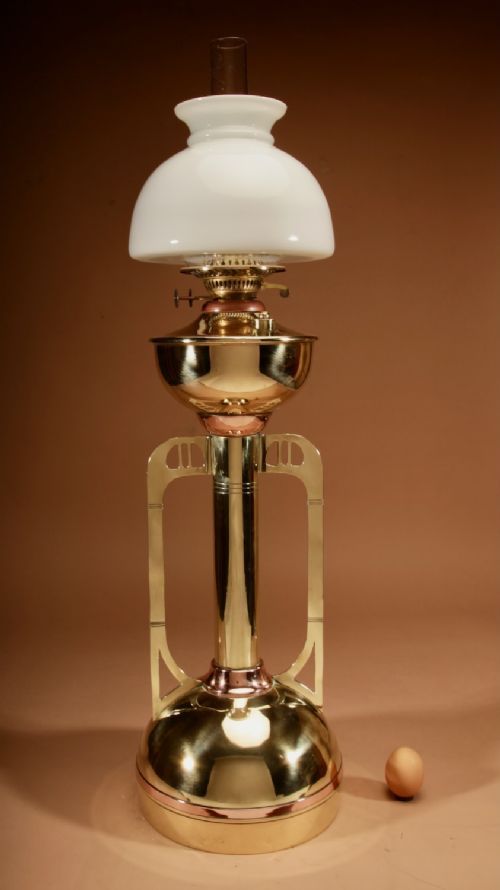
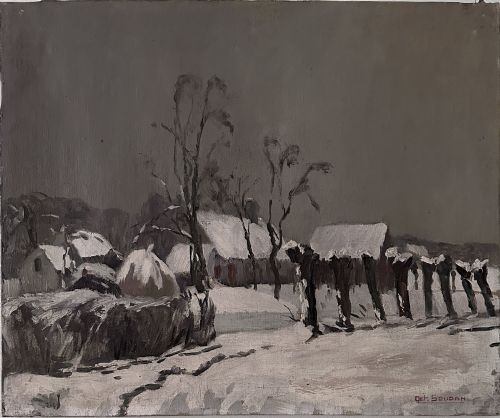
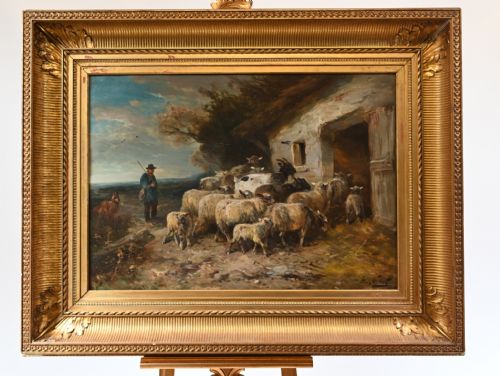
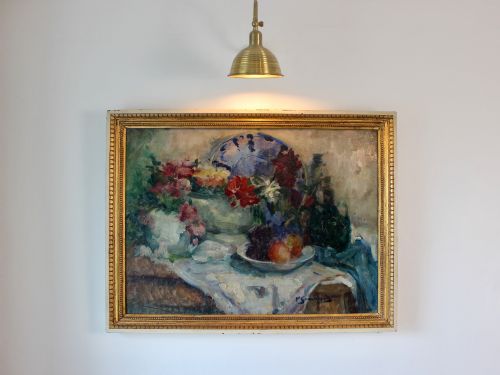
The most common items met on this page are oil paintings depicting pastoral scenes with sheep and cattle, maritime views, and still lifes. Alongside these canvases appear distinctive glass vases and bowls from Val Saint Lambert, together with Secessionist brass lighting and Art Nouveau metalwork.
Makers and artists range from academic painters to local figures working within specific regional traditions across Belgium. Works span historical subjects, landscapes, portraits, and decorative household objects created during periods of distinct artistic expression.
Materials and methods
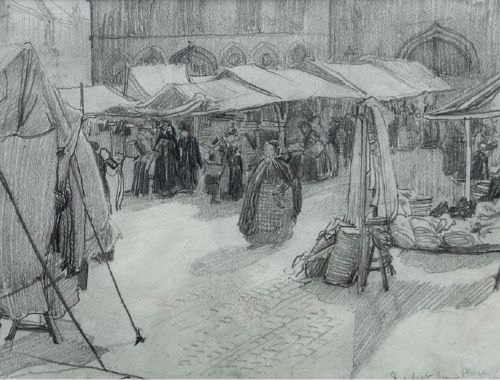
Painters utilised oil paint and watercolour on canvas, board, and paper, frequently applying gesso preparations to build surfaces before executing the final composition. Drawings rely on charcoal and pencil media applied to textured paper sheets.
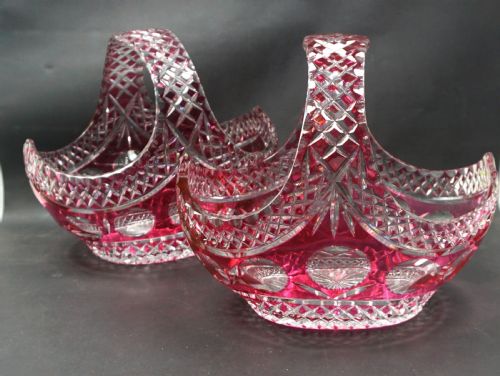
Sculptural works and decorative items demonstrate cast bronze with patinated finishes, alongside brass and copper construction for lighting fixtures and umbrella stands. Glass objects utilise layered over-crystal techniques, involving coloured glass cased in clear crystal layers.
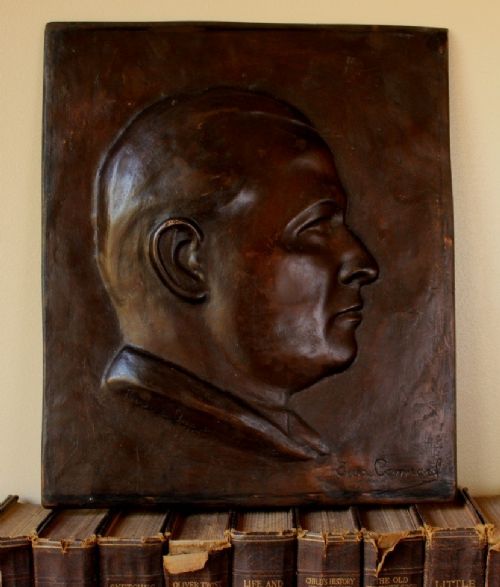
Moulded and blown glass production incorporates factory marks and acid etching, while metal plaques feature detailed relief casting. Framing relies on wood construction, often housing works behind protective glass panels.
Listings feature oil paintings, watercolours, bronze plaques, glass vessels, and brass lighting spanning the 1860s to the 1930s.
Factors determining quality
Quality separates through the handling of medium and compositional depth, distinguishing master canvases from follower pieces or student works. The precision in brushwork, tonal control, and the liveliness of rendered figures dictate the standing of a painting.
Decorative glass varies according to the complexity of the crystal casing, the depth of the colour overlay, and the presence of factory signatures or distinct Art Deco marks. Metalware quality rests on the crispness of the cast relief in bronze plaques and the structural integrity of brass and copper joints.
The prominence of the recording artist or workshop heavily influences standing, alongside the preservation of original framing and surface patination.
Eugène Verboeckhoven·Boch Freres·Gustave Serrurier Bovy·Henry Schouten·Val St Lambert·George Minne·Paul Delvaux·Wolfers
The Antique Belgian Art Glossary
- Secessionist
- A style of decorative arts and architecture emerging around 1900 that rejected academic traditions in favour of geometric simplification and clean lines.
- Art Nouveau
- An international decorative style characterised by flowing, organic lines and floral motifs, prominent in metalwork and lighting around the turn of the twentieth century.
- Over-crystal
- A glass manufacturing technique involving layers of coloured crystal encased within clear glass, creating depth and rich chromatic saturation.
- En Grisaille
- A painting executed entirely in shades of grey or neutral monochrome, often used to simulate sculpture or create a starkly focused study.
Antique Belgian Art: Frequently Asked Questions
What subjects appear in antique belgian oil paintings?
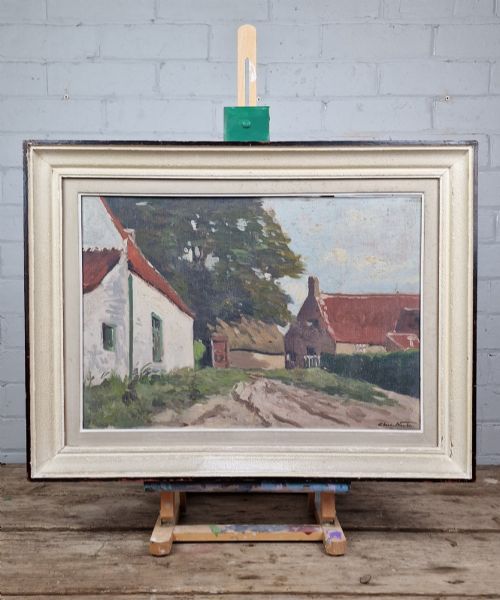
Landscapes featuring sheep, cattle, and coastal ponies form a significant portion of the painted works, alongside farmyard scenes and maritime harbour views. Portraiture and still life compositions also occur frequently across the inventory.
Artists frequently recorded rural life and coastal regions, capturing shifting light and atmospheric conditions through realist and impressionist techniques.
How do I identify Val Saint Lambert glass?
Val Saint Lambert pieces typically feature coloured crystal overlaid with clear glass, creating vibrant vessels in red, green, or blue tones. Many items carry specific factory marks or acid-etched signatures dating from the Art Deco period.
The glassworks produced distinct vases, bowls, and liquor services characterised by heavy crystal walls and precise cutting.
What is trench art from Belgium?
Trench art comprises items fashioned by soldiers and civilians during World War I from available materials like spent shell casings and metal fragments. Framed charcoal drawings and engraved metal plaques from this era document battlefield locations and military service.
These pieces serve as direct historical records of the conflict centered in towns like Arras and Ypres.
How do Art Nouveau and Secessionist pieces differ?
Art Nouveau works rely on fluid, organic curves inspired by natural forms, visible in umbrella stands and decorative bronze figures. Secessionist items favour more austere, geometric structures and functional utility, seen in brass and copper table lamps.
Both movements developed around 1900 as departures from historicist design.