





Pair of Oval Paintings
A pair of oval paintings brings balance and a distinct historical presence to a wall, working well in symmetrical arrangements.
Pair of Oval Paintings
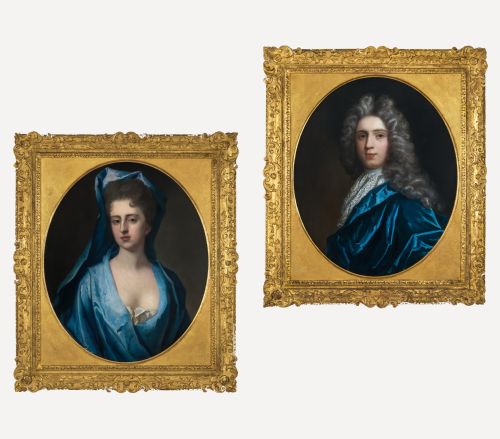
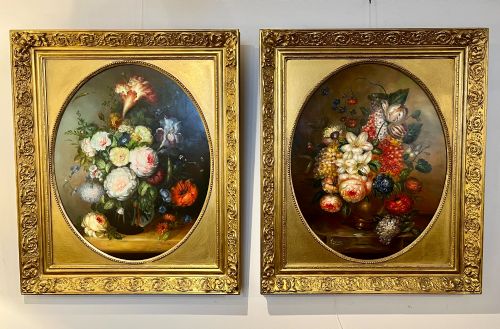
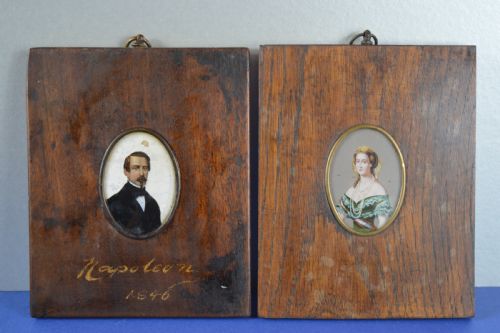
When you search for a pair of oval paintings, you encounter matched works executed across the seventeenth, eighteenth, and nineteenth centuries. These items range from small portrait miniatures and porcelain plaques to larger oil on canvas works and gouaches.
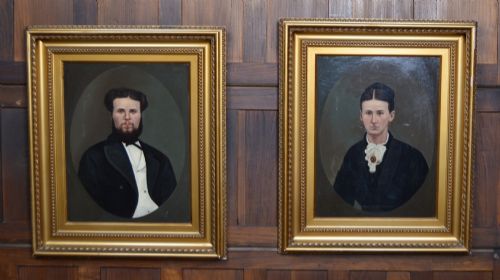
Portraiture dominates the selection, depicting subjects such as children, husband and wife companions, and historical figures. You also find still life compositions and architectural views of locations like Naples and the Thames.
The format itself dictated the composition, drawing the eye toward the centre and softening the hard angles of a traditional room layout. Most examples arrive complete with their original or period frames.
How they were made
Makers applied oil paint, watercolour, gouache, or enamel onto supports of canvas, wood, paper, glass, or ceramic plaques. The curved borders required custom framing solutions using materials such as giltwood, gesso, brass, and gilded wooden frames.
Artists often worked in companion pairs to ensure the palette, scale, and subject matter matched precisely. Frames were carved or moulded specifically to house the curved edges, applying gold leaf to highlight the decorative contours.
Materials recorded across the selection include giltwood, glass, wood, gold leaf, gesso, brass, and paper.
What varies in quality
The skill of the brushwork and the psychological depth of portraiture separate standard decorative items from superior artistic works. Finer examples display meticulous detail in facial expressions, textiles, and background elements.
The craftsmanship of the housing also dictates value, with heavy carved giltwood frames and intact glass elements showing superior preservation. Companion pieces that retain their original historical documentation or clear attribution to known artists command greater attention.
James Sharples·Michael Dahl·Thomas Murray·George Hargreaves·Francis Moltino·Royal Worcester
The Pair of Oval Paintings Glossary
- Oil on canvas
- Pigments bound in a drying oil applied to stretched fabric. This medium allowed artists to achieve rich colour depth and subtle tonal shifts.
- Portrait miniature
- A small, highly detailed painting, often executed on ivory, vellum, or card. These intimate works were frequently mounted in protective cases or frames.
- Giltwood
- Wood that has been coated with a thin layer of gold leaf or gold paint. This finish provided a reflective, ornate border for formal artworks.
- Gesso
- A paint mixture consisting of a neutral binder mixed with chalk, gypsum, or pigment. It served as a smooth base for gilding on wooden frames.
- Enamel plaque
- A smooth surface created by fusing powdered glass to a metal base at high temperatures. This technique produced durable, glossy images resistant to fading.
Pair of Oval Paintings: Frequently Asked Questions
How do I hang a pair of oval paintings?
Hang them at eye level with equal spacing between them to maintain the intended visual balance. Because the curved frame shape draws the eye inward, positioning them symmetrically enhances the room's composition.
Ensure the hanging wire or brackets on the back of the frames support the weight securely. Wall anchors help keep these matched pieces level over time.
Were these always framed as ovals?
Most works created in this format were intended specifically for curved housings from the beginning. Artists composed their subjects to fit within the boundaries of the curved format.
Some examples utilise mats or mounts inside rectangular frames to create the visual effect of an oval view. Examining the backing and rabbet helps reveal whether the frame is original to the artwork.
What subjects are most common?
Portraits of individuals and companion pairs representing husbands and wives dominate the surviving examples. These often served as family records or commemorative pieces.
Still life arrangements, architectural scenes, and classical subjects also appear frequently across different centuries. Each subject type utilises the curved border to focus attention on the central elements.
How do I care for antique painted surfaces?
Keep these items away from direct sunlight and sources of extreme heat to prevent the canvas, wood, or paint from drying out. Stable indoor humidity protects both the pigments and the wooden frames.
Dust the frames gently with a soft, dry brush and avoid using chemical cleaning agents on the painted surfaces. Professional conservators should handle any cleaning of the actual paint layer.