

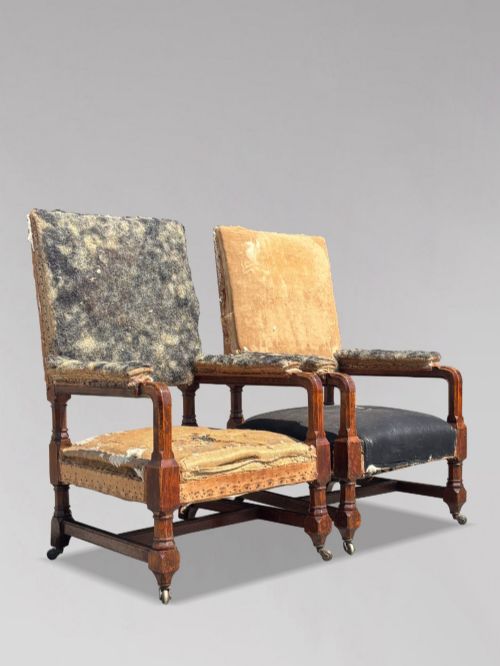
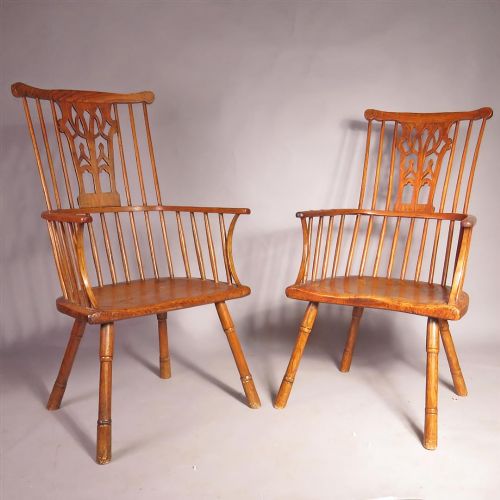
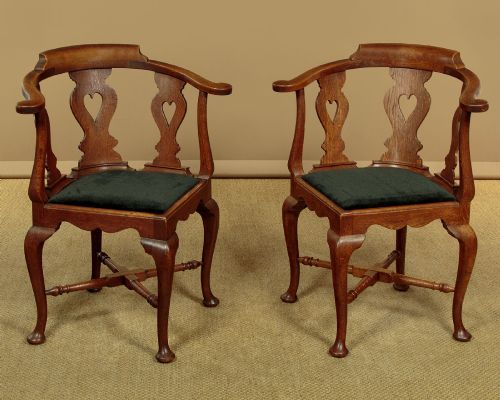


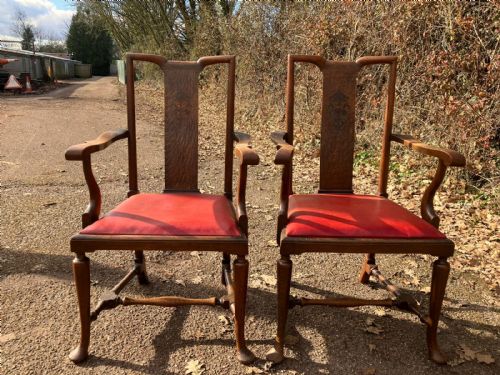


Pair of Oak Elbow Chairs
These pair of oak elbow chairs offer sturdy seating and handsome timber grain, making them a practical and enduring choice for any room.
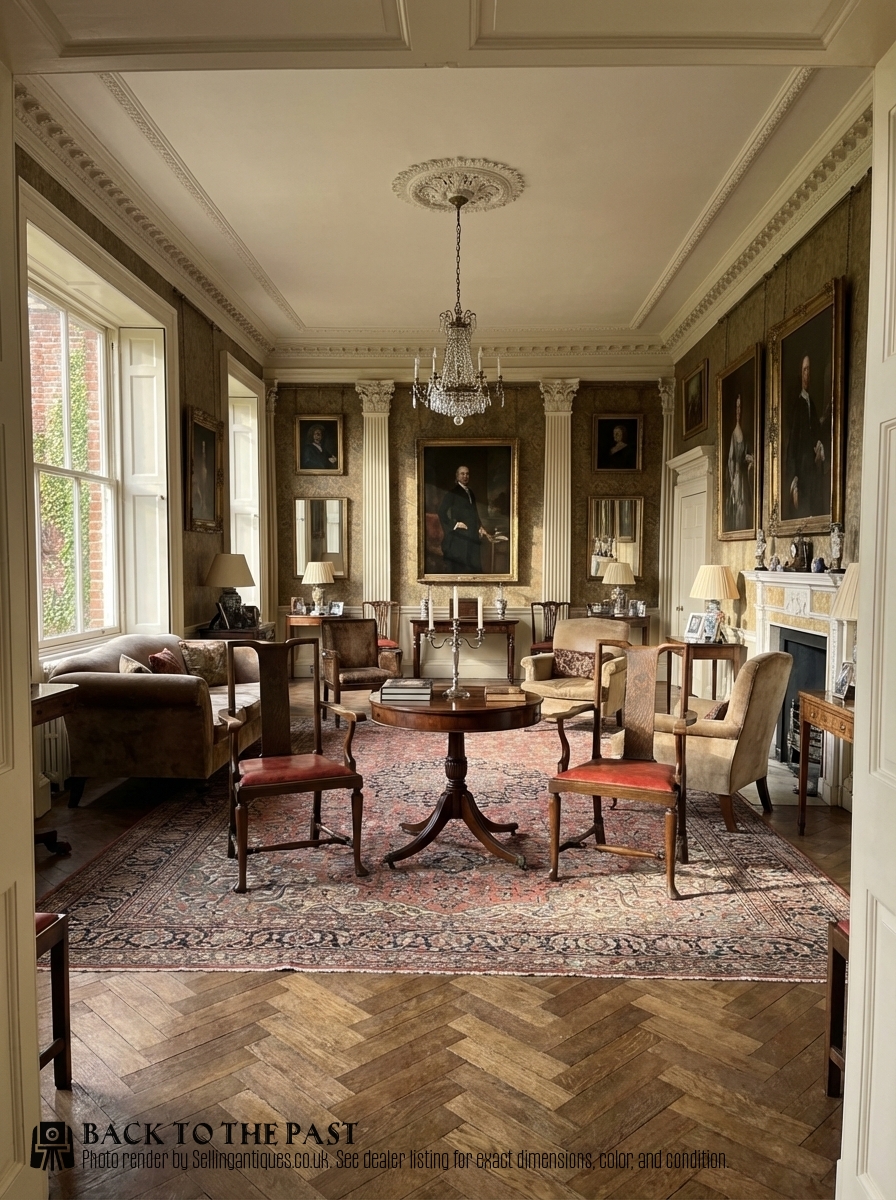
Pair of Oak Elbow Chairs
A pair of oak elbow chairs brings substantial seating into a room, often taking the form of robust armchairs, carver armchairs, and occasional dining chairs. You will encounter various styles ranging from 18th century country designs to 19th century Gothic revival pieces and Edwardian Arts and Crafts models.
Most pieces date across the 18th, 19th, and early 20th centuries, showing how domestic seating evolved from heavy structural joints to lighter aesthetic movements. These chairs function well as fireside seating, desk chairs, or decorative architectural elements.
How they were made
Craftsmen built these frames primarily using solid oak, occasionally combining secondary timbers like elm, ash, yew, and alder for seats or structural supports. Joinery relied on traditional techniques such as pegged mortise and tenon joints to ensure the heavy frames endured daily use.
Upholstered versions incorporate materials like leather, fabric, tapestry, and hessian fastened over stuffing or dropped into wooden frames. Decorative enrichment includes hand carving, turned stretchers, and exposed brass fixings.
Pair of Oak Elbow Chairs Retail Price Guide 2026
Typical asking prices for pair of oak elbow chairs among the pieces listed under this phrase on Sellingantiques today, from the lower quarter to the upper quarter. They describe what is for sale here now, not the wider market.
Some hefty Welsh elbow chairs double as miniature thrones, ideal for presiding over the family hearth.
What varies in quality
The standard of carving and the crispness of turned details define the finer examples, separating plain utility pieces from masterwork workshop productions. Superior construction shows in the tightness of the timber joints and the preservation of original patination on the oak surfaces.
Quality also rests on the integrity of secondary materials, such as well-preserved original leather or hand-woven rush and tapestry seats. Chairs retaining their original structural components without extensive timber replacement command greater appreciation.
Shapland & Petter
The Pair of Oak Elbow Chairs Glossary
- Carver armchair
- A sturdy wooden chair with armrests, traditionally placed at the head of a dining table or used as a desk chair. These pieces often feature matching side chairs in larger dining sets.
- Comb back
- A Windsor chair variation where the vertical spindles of the back extend up through a horizontal headpiece, resembling the teeth of a comb. This construction provides resilient back support.
- Wainscot chair
- An early heavy wooden armchair constructed with panelled backboards and solid seat platforms. These forms derive from domestic wall panelling traditions.
- Glastonbury chair
- A folding armchair style with X-shaped framing supporting a sloping seat and flat armrests. The design originates from mediaeval ecclesiastical prototypes.
Pair of Oak Elbow Chairs: Frequently Asked Questions
Where should I put a pair of oak elbow chairs?
These chairs suit living rooms as fireside seating, studies as desk chairs, or hallways where their substantial timber presence creates an immediate focal point.
Because they feature armrests and sturdy frames, ensure you allow sufficient floor space so the chairs do not crowd the surrounding furniture.
How do I care for antique oak timber?
Maintain the wood by applying a quality beeswax periodically to nourish the grain and protect the surface from drying out.
Keep the chairs away from direct heat sources and strong sunlight to prevent the timber from warping or splitting over time.
What is the difference between an armchair and a carver?
Carver chairs typically feature lower, more restrained armrests designed to slide underneath a dining table without obstruction.
Standard armchairs usually offer higher or more enveloping arms intended for lounge comfort rather than dining seating.
Are these chairs comfortable for daily use?
Many examples provide solid upright support suited for reading or desk work, while upholstered versions offer softer seating.
Adding loose cushions can improve comfort on wooden or woven seats without altering the original frame.