



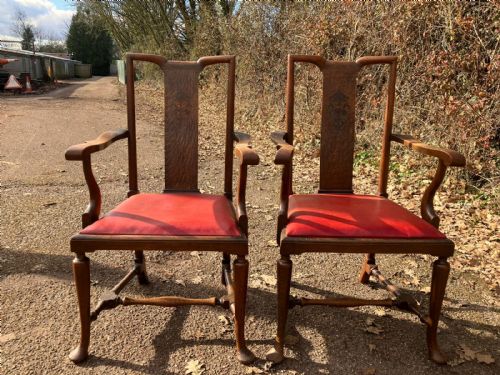

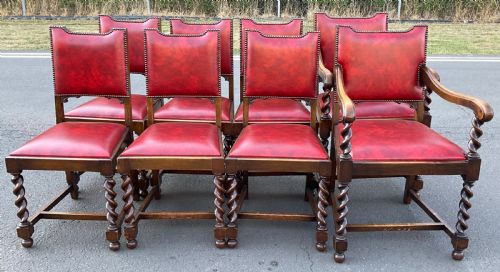
Red Leather Oak Armchair
A red leather oak armchair brings rich texture and enduring timber strength to a study or library.
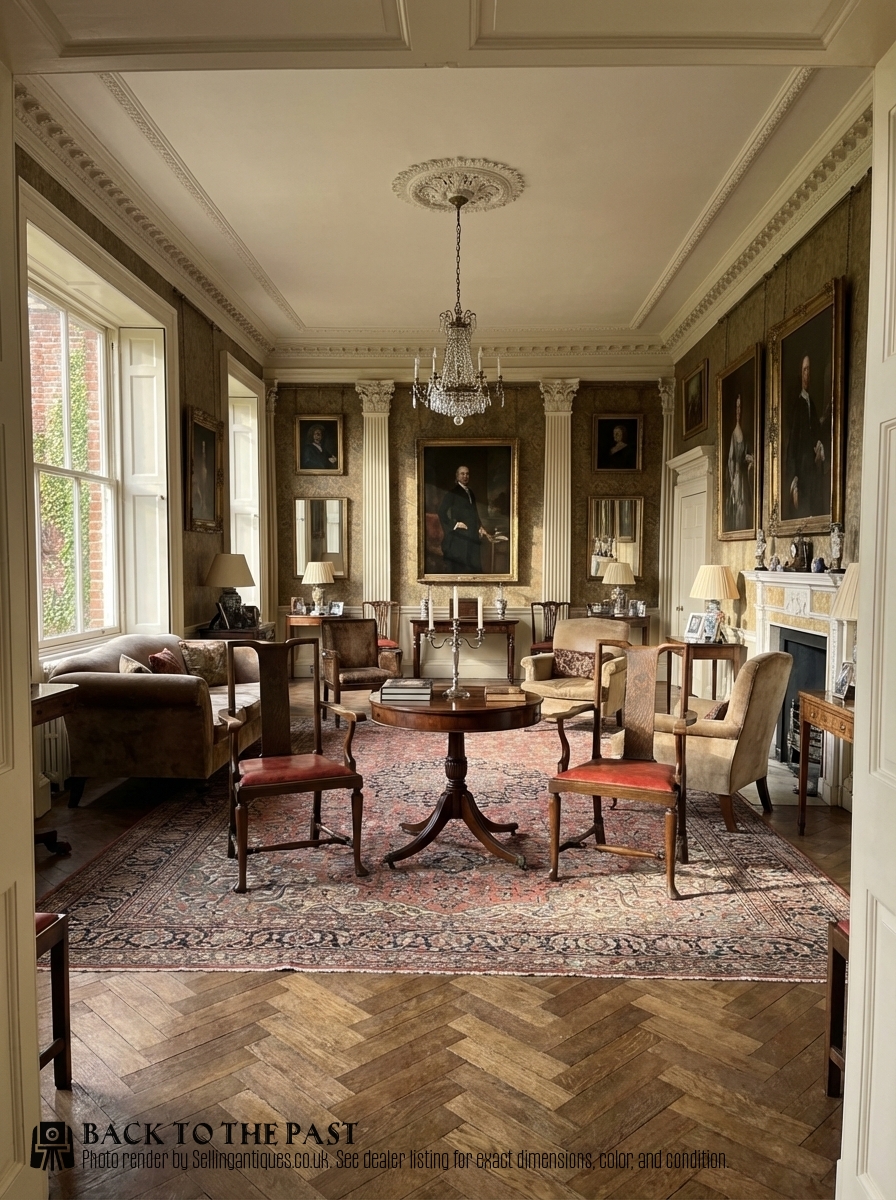
Red Leather Oak Armchair
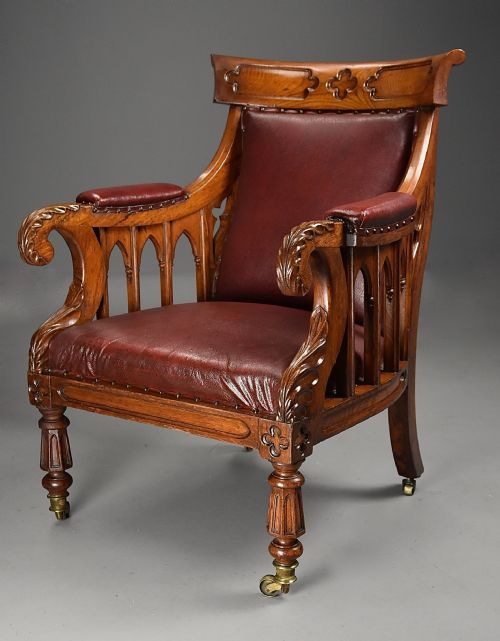
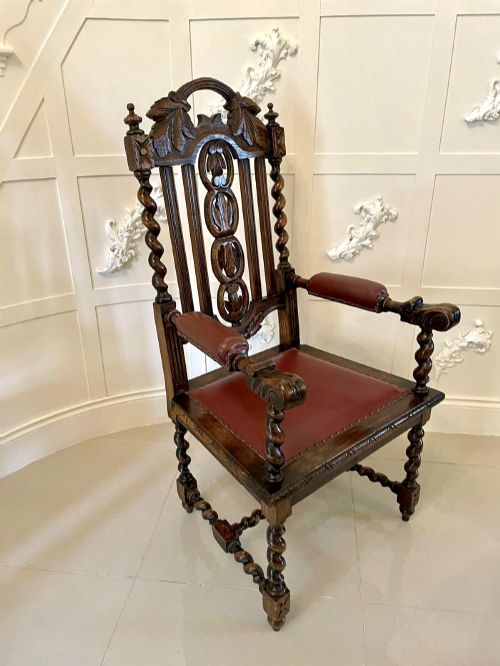
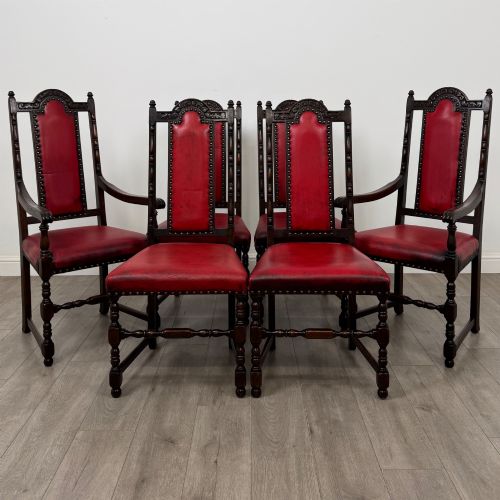
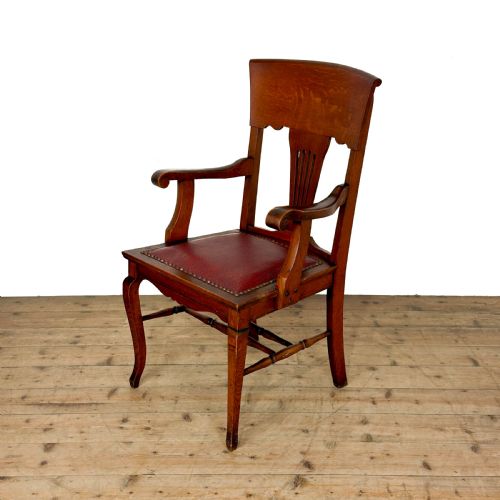
A red leather oak armchair combines sturdy timber frames with supple hide upholstery, creating a robust seat suited for libraries, studies, and offices. The red leather oak armchair typically appears across the Victorian and Edwardian periods, stretching from the mid nineteenth century into the nineteen thirties. These pieces take various forms, including revolving desk chairs, library armchairs, and dining chairs, often bearing deep red or burgundy leather seats.
The materials unite heavy native timber with durable animal hide, frequently accented by brass studs or iron mechanical components. Makers utilised robust construction methods to support daily use, resulting in surviving examples that retain their structural integrity. Buyers often find swivel and tilt desk chairs alongside larger carvers and library armchairs.
Stylistic influences range from Gothic Revival and Arts and Crafts to Jacobean and Renaissance revivals. The combination of dark timber and red leather provides a commanding presence that anchors a room's interior scheme.
Materials and construction methods
Frames are constructed from solid oak, sometimes shaped through carving, turning, or steam bending to form arms, legs, and backrests. Joinery relies on traditional methods such as mortise and tenon joints to ensure stability under heavy use. Iron and brass hardware appears on swivel mechanisms, castors, and decorative studwork.
Upholstery involves fitting leather over padding, secured traditionally with individual brass tacks or studs along the borders. Revolving and tilting office chairs incorporate metal spindles and cast iron bases to allow movement. Polished finishes protect the timber while highlighting the natural grain of the oak.
Red Leather Oak Armchair Retail Price Guide 2026
Typical asking prices for red leather oak armchair among the pieces listed under this phrase on Sellingantiques today, from the lower quarter to the upper quarter. They describe what is for sale here now, not the wider market.
Common functional forms include revolving desk chairs, library armchairs, and matching sets of dining carvers.
Factors that separate examples
Quality shows in the depth and crispness of the timber carving and the weight of the oak frame. Finer pieces display careful selection of grain matching and robust joinery that resists loosening over decades of movement. The integration of mechanical swivel and tilt functions also marks out superior workshop production.
The grade of the leather and the neatness of the hand-applied studwork distinguish workshops. Well-executed upholstery maintains firm support and even tension across the seat and backrest without sagging.
S&H Jewell·Kendrick & Jefferson·Gregory&Co
The Red Leather Oak Armchair Glossary
- Revolving desk chair
- A seat fitted with a central spindle and base allowing the upper portion to turn. These versions often include tilting mechanisms for adjustable seating angles.
- Gothic Revival
- A nineteenth century design movement drawing inspiration from medieval architecture and motifs. Pieces display pointed arches, tracery, and heavy carved details.
- Arts and Crafts
- A design movement valuing hand craftsmanship and simple utility over mass production. Furniture from this tradition emphasises honest construction and visible structural joints.
- Carver chair
- An armchair designed to match a set of dining chairs, typically featuring open arms and a wider proportions. They often stood at the head of a dining table or served as occasional seating.
- Barley twist
- A type of woodturning resembling a rope twisted into a helix. This decorative form appears frequently on the legs and stretchers of late nineteenth and early twentieth century chairs.
Red Leather Oak Armchair: Frequently Asked Questions
How do I date a red leather oak armchair?
Dating relies on stylistic clues, hardware, and construction techniques visible in the frame and mechanism. Victorian pieces often feature heavier carved detailing and simpler swivel assemblies, whereas Edwardian and later examples frequently incorporate more refined tilt mechanisms and lighter proportions.
Examining the type of screws, castors, and under-seat construction helps narrow the decade of production. Patent marks or maker stamps stamped into the timber or leather provide definitive dates.
Are swivel desk chairs sturdy enough for daily work?
Original period swivel chairs were engineered for heavy office use and constructed from dense oak with iron mechanisms. When joints remain tight and the central spindle is secure, they offer reliable support for regular daily seating.
Maintenance involves checking the under-seat ironwork and ensuring the castors roll freely without straining the wooden base. Periodic tightening of screws keeps the revolving action smooth and stable.
How do I care for the red leather upholstery?
Leather upholstery benefits from gentle cleaning with a damp cloth and occasional application of appropriate leather balms to maintain flexibility. Avoiding direct sunlight and strong heat sources prevents the hide from drying out and cracking over time.
Regular dusting keeps abrasive particles out of the grain and creases. Preserving the natural patina requires avoiding harsh chemical detergents.
What is the difference between a library armchair and a desk chair?
Library armchairs are built for stationary reading and relaxation, featuring generous padding, low fixed bases, and wide armrests. Desk chairs prioritize utility and mobility, often incorporating swivel mechanisms, adjustable heights, and more compact proportions.
Library versions lean towards aesthetic comfort with deep buttoning and expansive wooden frames, while desk variants focus on ergonomic support for working at a table.