


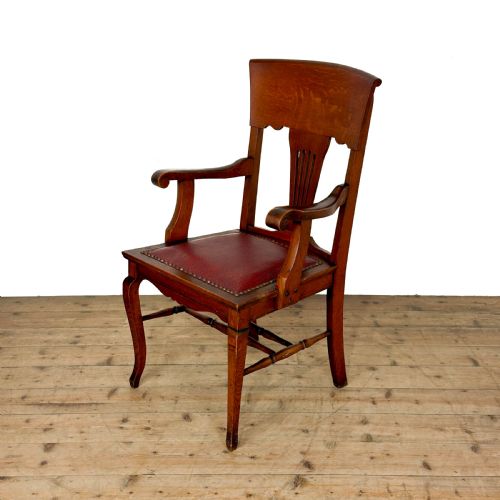


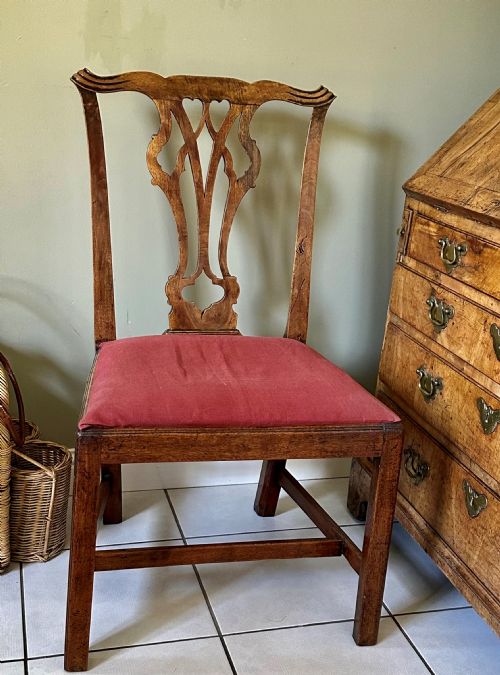
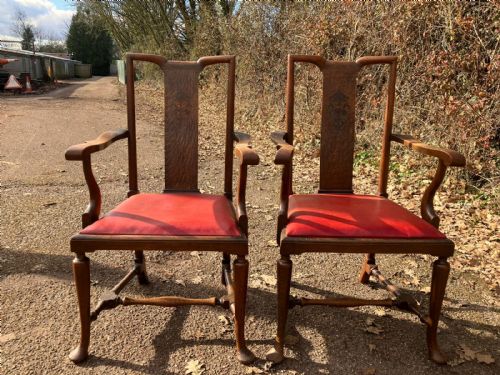


Oak Desk Chair Red Seat
An oak desk chair red seat brings sturdy practicality and a striking splash of colour to a study, built to last generations in solid timber.
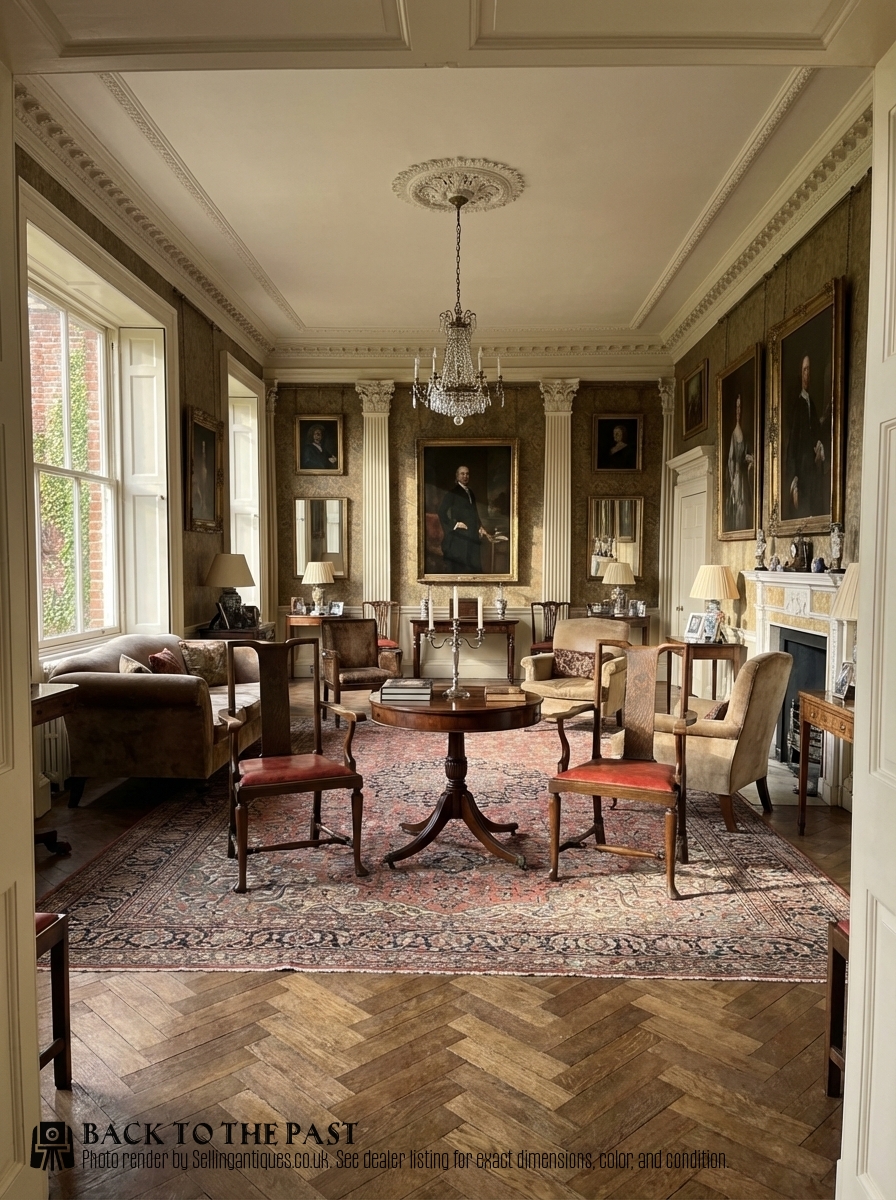
Oak Desk Chair Red Seat
An oak desk chair red seat combines the robust framing of traditional hardwood seating with distinctive upholstery in shades of red. The pieces gathered under this description range from late Victorian swivel models to Edwardian side chairs and earlier library armchairs.
Most examples encountered here date from the nineteenth and early twentieth centuries, spanning Victorian, Edwardian, and Arts and Crafts periods. Forms include revolving swivel chairs, captain's chairs, and library armchairs designed for sustained daily use.
The combination of heavy timber construction and vibrant red upholstery serves both utilitarian and decorative purposes in domestic or professional interiors. Buyers seek these forms for their historical character and mechanical functionality.
How they were made
Makers utilised solid oak for the primary framework, often employing traditional joinery such as mortise and tenon to ensure rigidity under heavy use. Turning, carving, and steam-bending shaped the arms, spindles, and legs into structural and decorative elements.
Upholstery materials for the red seat panels include leather, velvet, and textile fabric, frequently secured with decorative brass studs. Iron and brass hardware components provided the swivel, tilt, and revolving mechanisms seen on the later desk models.
Oak Desk Chair Red Seat Retail Price Guide 2026
Typical asking prices for oak desk chair red seat among the pieces listed under this phrase on Sellingantiques today, from the lower quarter to the upper quarter. They describe what is for sale here now, not the wider market.
Listings feature oak combined with leather, brass, iron, and velvet across Victorian, Edwardian, and earlier historical periods.
What varies in quality
The standard of carving and timber selection determines the baseline merit of each piece, with dense grain and crisp hand-detailing distinguishing superior workshops from utilitarian production. Proportions also dictate comfort and visual balance, particularly in larger library armchairs and revolving desk seats.
The integrity of mechanical parts, such as iron swivel mechanisms and tilt adjustments, separates functional office pieces from decorative survivors. Originality of surface finish and the preservation of period upholstery materials further influence the standing of an individual item.
The Oak Desk Chair Red Seat Glossary
- Swivel chair
- A seat mounted on a central pivot that allows it to rotate fully around. This mechanism became common in office furniture during the Victorian period.
- Gothic Revival
- A nineteenth-century style that revived medieval architectural motifs. Pieces often feature pointed arches, heavy tracery, and dark finishes.
- Captain's chair
- A sturdy wooden armchair with a low, curved back rail supported by spindles. These forms originated to provide stable seating on ships and in offices.
- Arts and Crafts
- A design movement valuing handcraftsmanship and simple vernacular forms over mass production. Furniture from this tradition highlights plain oak construction and visible joinery.
- Corner chair
- A seat designed to fit into the corner of a room, featuring a diagonal orientation with a backrest wrapping around two adjacent sides.
Oak Desk Chair Red Seat: Frequently Asked Questions
Are these chairs comfortable for daily working?
Many of these pieces were built for sustained office or library work, featuring supportive backrests and ergonomic curves.
Revolving and tilting models offer adjustable positioning, while upholstered red leather or fabric pads provide adequate cushioning for regular use.
How do I identify a Victorian desk chair?
Victorian examples often display turned wooden spindles, dark polished oak surfaces, and functional iron or brass swivel hardware beneath the seat.
Details like carved crest rails and studded leather upholstery frequently point toward late nineteenth-century manufacture.
What is the difference between oak and other woods?
Oak is a dense, hard timber known for its prominent grain patterns and exceptional structural durability.
This strength allowed makers to construct slim yet resilient frames that withstand decades of weight and movement.
Can I use these chairs in a modern room?
The combination of warm wood tones and vibrant red upholstery allows these pieces to anchor both traditional studies and contemporary workspaces.
Their compact footprints make them practical additions to modern desks without overwhelming the room.