


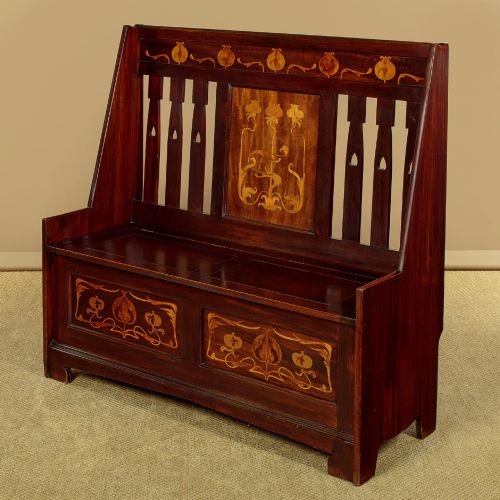

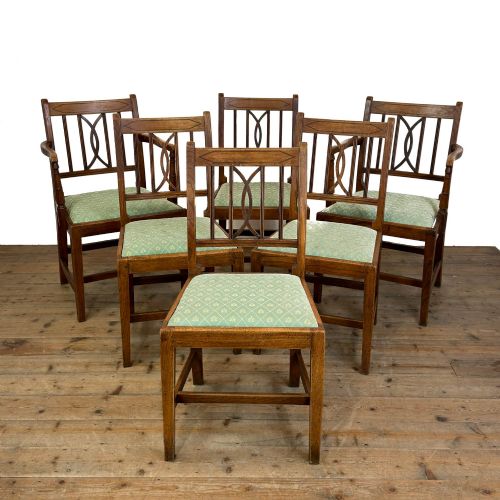


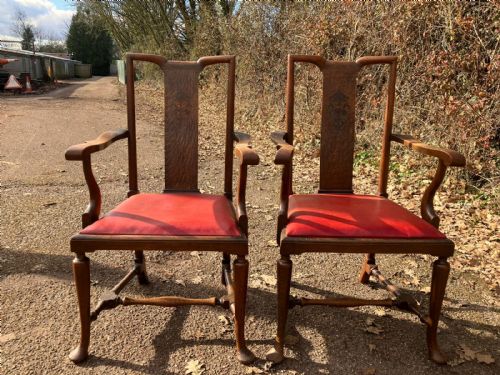


Arts and Crafts Inlaid Chair
These arts and crafts inlaid chair pieces combine honest timber construction with decorative marquetry, offering practical seating imbued with the spirit of the movement.
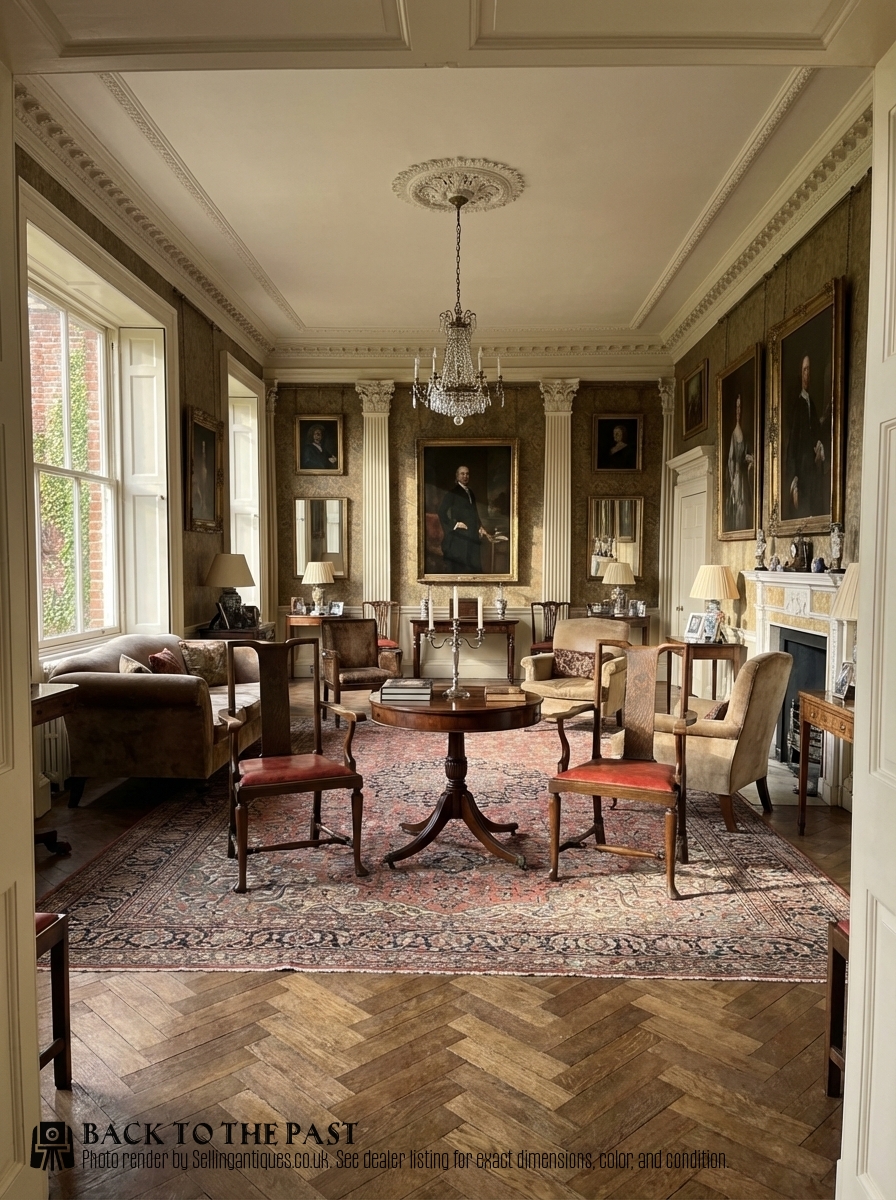
Arts and Crafts Inlaid Chair
An arts and crafts inlaid chair bridges the gap between utilitarian furniture and decorative art, appearing in forms from simple side chairs to robust armchairs and settles. You will encounter pieces dating principally from the late nineteenth and early twentieth centuries, spanning the Victorian, Edwardian, and Art Nouveau eras. The domestic seating options on offer include high-backed library models, open armchairs, and occasional chairs designed for the parlour or study.
The construction draws heavily on traditional woodworking methods while embracing stylistic flourishes such as boxwood, satinwood, and general wood inlay. Oak and mahogany serve as the primary structural timbers, though rosewood and ebonised finishes also appear within the selection. These pieces reflect a period of transition in British design, moving away from heavy industrial production towards handcrafted or carefully detailed craftsmanship.
Materials and construction
Makers built these chairs using solid timbers like oak and mahogany, relying on traditional joinery techniques to ensure structural longevity. The decorative surfaces incorporate contrasting boxwood and satinwood inlay, carefully fitted into recesses carved directly into the primary wood.
Upholstery forms an integral part of the finished piece, utilising period fabrics such as velvet alongside contemporary replacement textiles. The integration of wood inlay requires precise hand-fitting, distinguishing these items from simpler mass-produced factory seating.
Arts and Crafts Inlaid Chair Retail Price Guide 2026
Typical asking prices for arts and crafts inlaid chair among the pieces listed under this phrase on Sellingantiques today, from the lower quarter to the upper quarter. They describe what is for sale here now, not the wider market.
Listings feature structural timbers spanning solid oak, rich mahogany, and dark rosewood.
Evaluating the craftsmanship
Quality in these chairs rests upon the crispness of the timber joinery and the precision of the inlay work. Finer examples display tightly fitted marquetry with minimal filler, whereas lesser pieces show wider gaps around the contrasting wood elements.
The integrity of the underlying frame determines daily usability, separating decorative showpieces from sturdy functional furniture. Grain selection in the primary oak or mahogany also dictates the visual appeal, with well-figured timber elevating the overall presence of the chair.
James Shoolbred and Co
The Arts and Crafts Inlaid Chair Glossary
- Marquetry
- The art of applying pieces of veneer to a structure to form decorative patterns. This technique creates the floral or geometric motifs seen on the backs and panels of these chairs.
- Satinwood
- A durable, lustrous timber native to India and Sri Lanka, prized for its pale yellow colour. It is frequently employed for contrasting inlay work.
- Boxwood
- A dense, pale wood commonly used for fine stringing and delicate inlay details. Its tight grain allows for sharp, clean lines in decorative patterns.
- Settle
- A wooden bench with a high back, solid arms, and often a storage box beneath the seat. These form part of the broader seating selection alongside standard chairs.
Arts and Crafts Inlaid Chair: Frequently Asked Questions
How do I clean an inlaid chair?
Dust the timber regularly with a soft, dry cloth to prevent dirt accumulation in the recessed inlay. Avoid harsh liquid cleaners that might loosen the veneer or damage the polished surface.
Feed the wood periodically with a traditional wax polish to maintain its lustre. Take extra care around the inlaid sections so that moisture does not seep beneath the decorative veneer.
Are these chairs suitable for daily use?
Most sturdy oak and mahogany examples handle everyday seating comfortably if the joints remain tight. High-backed or delicate salon chairs function better in lighter use settings.
Check the stability of the frame and legs before placing the chair in a high-traffic area. Periodic checks by a professional restorer can secure loose joints.
What distinguishes Art Nouveau from Arts and Crafts?
Arts and Crafts design emphasises honest construction, simple forms, and visible hand-craftsmanship. The decoration often draws inspiration from medieval motifs and domestic nature.
Art Nouveau introduces flowing, organic lines and stylized whiplash curves into the decorative scheme. Many pieces on this page blend both influences, featuring structural simplicity alongside sinuous inlaid patterns.
How do I date an Edwardian piece?
Edwardian furniture spans the period from nineteen hundred to nineteen ten, building on the legacy of Victorian design while lightening proportions. The timber choices often lean towards satinwood inlay on polished mahogany.
Examine the construction methods underneath the seat for machine-cut components alongside hand-finished details. The presence of specific hardware and upholstery webbing styles also helps narrow the manufacturing decade.