





Pair of Marble Vases
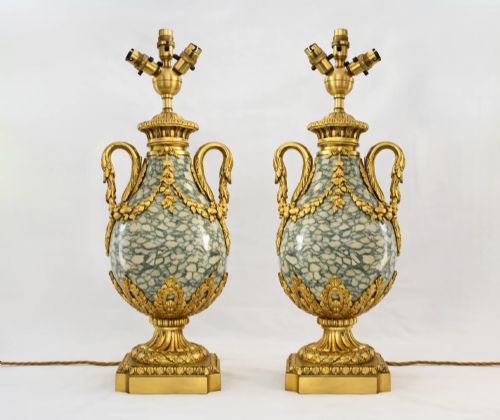
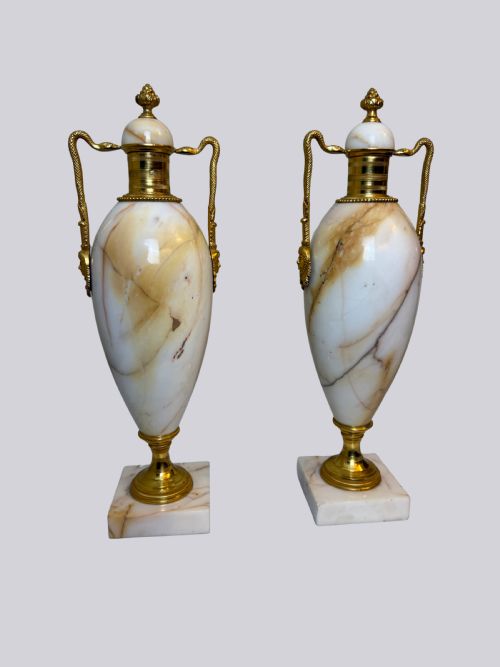
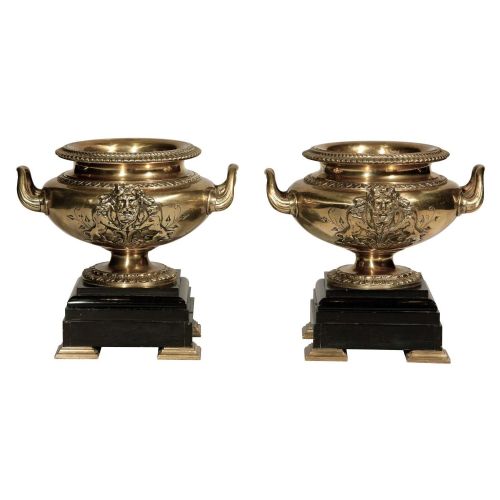
Selecting a pair of marble vases introduces classical sculptural form and variegated stone into an interior through matching decorative urns and cassolettes.
Pair of Marble Vases
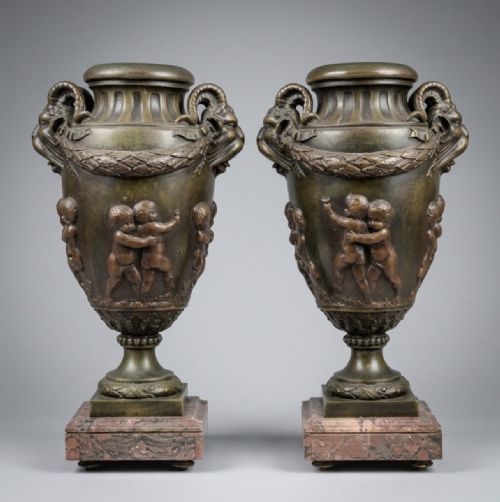
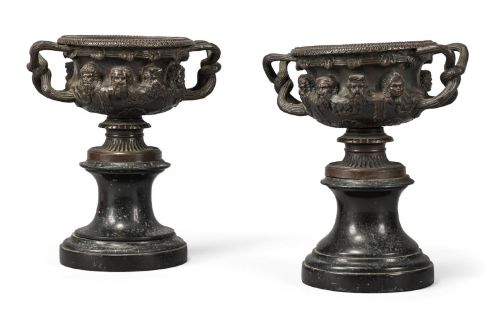
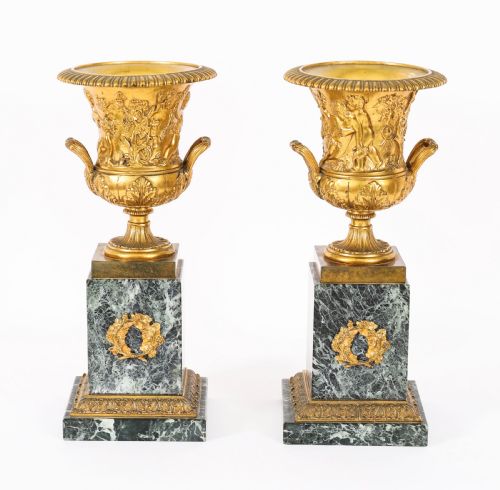
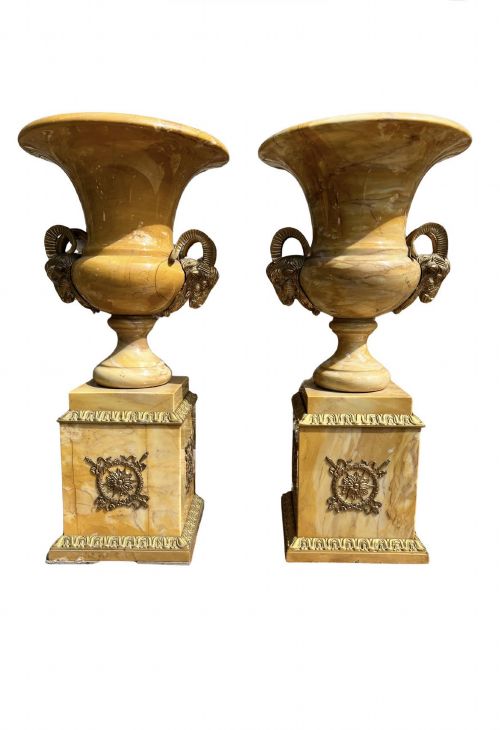
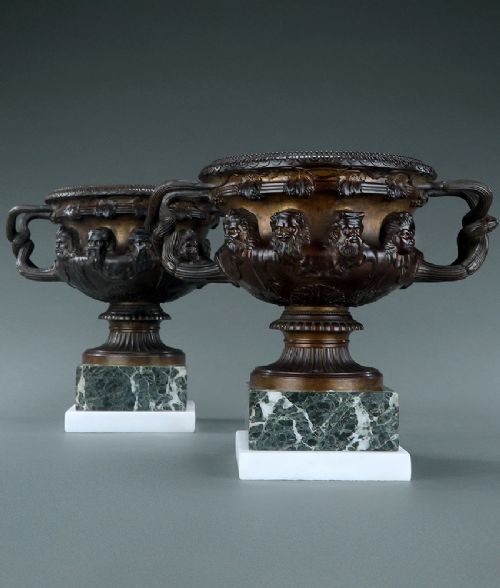
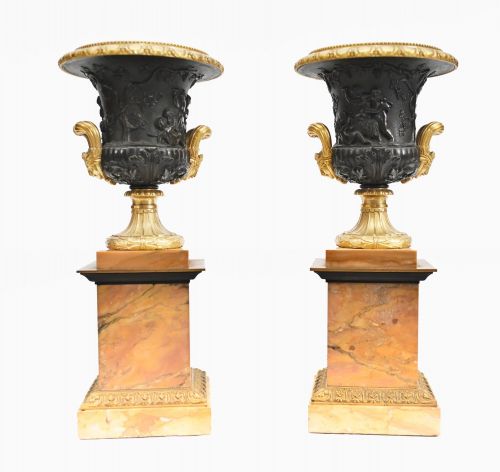
A search for a pair of marble vases uncovers decorative urns, campana-shaped vessels, and cassolettes originating predominantly from the nineteenth century. These ornamental objects draw directly from classical antiquity and the Grand Tour tradition, often combining turned stone bodies with cast metal mounts.
The specimens met on this page span the Victorian era, the French Empire, and the Louis XVI revival styles. Workshops in France and Italy produced the majority of these symmetrical pairs for domestic display on mantelpieces, pedestals, and side tables.
Variations in function appear among the listings, with standard decorative urns sitting alongside convertible cassolettes featuring reversible lids for use as candle holders. Alongside solid stone vessels, collectors encounter mounted lamps and architectural plant stands incorporating marble elements.
Materials and Construction
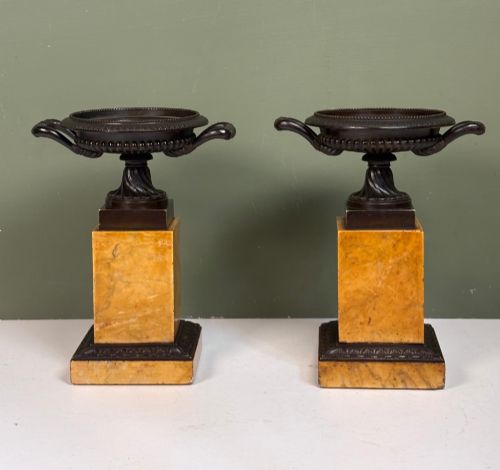
Makers utilised a diverse palette of natural stones, turning blocks of white marble, green marble, siena marble, onyx, and breccia upon lathes to shape the bodies. Variegated marbles such as rosso, nero portoro, and alabastro fiorito provided striking geological patterns that appealed to nineteenth-century buyers.
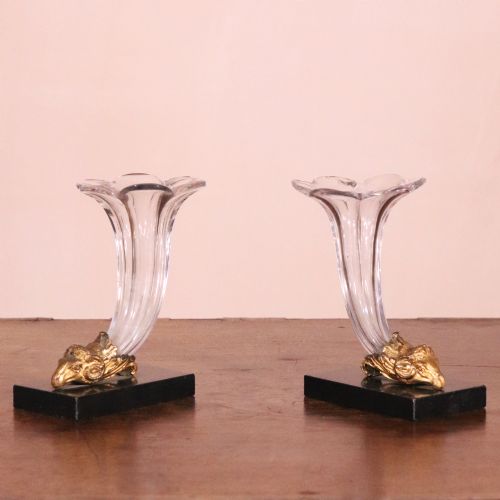
Metalwork played a structural and decorative role, integrating cast bronze, gilt bronze, brass, and ormolu mounts around the stone bodies. Artisans secured handles, plinths, collars, and finials with threaded rods and pins, combining heavy metal casting with precision stonework.
Listings feature 19th Century, Victorian, and early 20th Century periods, incorporating materials from white and green marble to gilt bronze and ormolu.
Evaluating the Pieces
The standard of a pair of marble vases rests upon the crispness of the bronze or ormolu chasing and the mineral richness of the stone. Superior examples display finely detailed casting on handles, cherubs, and classical friezes, whereas simpler items rely on plain turned marble with minimal metal elements.
Symmetry and matched geological veining determine the success of a pair, as master workshops selected stone blocks from the same quarry to ensure the pattern flowed logically across both vessels. Minor hairline fractures or older professional repairs in the marble occur frequently due to the brittle nature of the material.
The Pair of Marble Vases Glossary
- Cassolette
- A decorative vase or urn featuring a reversible lid that converts the vessel from a closed urn into a candle holder or incense burner. These dual-purpose objects frequently incorporate ormolu mounts and classical handles.
- Ormolu
- Finely ground high-carat gold mercury-gilded onto a bronze base, commonly utilised for mounts, handles, and plinths on nineteenth-century decorative vessels. This technique produced a rich, warm metallic lustre.
- Campana
- A bell-shaped classical vase form modelled on ancient Roman garden urns, featuring an everted rim and a waisted body set upon a square or circular foot.
- Grand Tour
- The cultural journey undertaken through France and Italy by nineteenth-century travellers who collected local antiquities, architectural models, and souvenir marble vases as tokens of their travels.
- Siena Marble
- A distinctive yellow Italian marble featuring dark grey or brown veining, highly favoured by nineteenth-century makers for classical revival urns and architectural tazze.
Pair of Marble Vases: Frequently Asked Questions
How were marble vases used in period interiors?
Nineteenth-century households placed these symmetrical pairs upon mantelpieces, console tables, and pedestals as purely decorative ornaments or functional cassolettes. They served as focal points that reflected classical erudition and wealth.
Larger scale urns stood directly on the floor or on dedicated plant stands, while smaller scaled examples anchored the ends of mantel garnitures alongside clocks and candelabra.
How do you date nineteenth-century marble vases?
Dating relies on stylistic clues, combining the architectural taste of the period with the manufacturing techniques visible in the bronze mounts and turning marks. Pieces reflecting the French Empire or Charles X eras display distinct neoclassical proportions compared to later Victorian revivals.
Examining the underside of the base, the composition of the securing nuts, and the oxidation of the bronze helps establish whether a piece originates from the early or late nineteenth century.
Why are some marble vases mounted in bronze?
French and Italian workshops added cast bronze, ormolu, and brass to reinforce fragile stone rims, add decorative handles, and elevate the vessels onto classical plinths. These metal mounts transformed simple turned stone into high-status decorative art.
The quality of the chasing on the gilt bronze often indicates the workshop standard, with finer pieces exhibiting sharp relief work on acanthus leaves, masks, and classical drapery.