

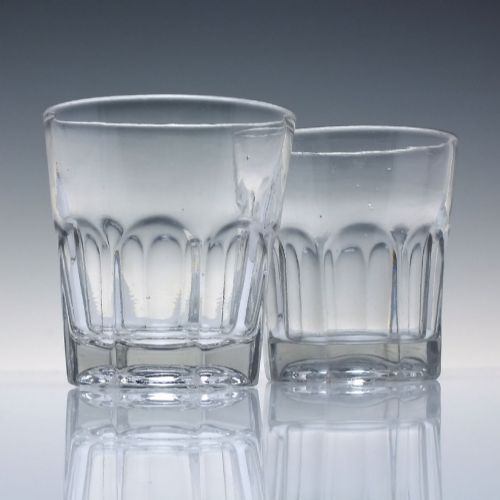
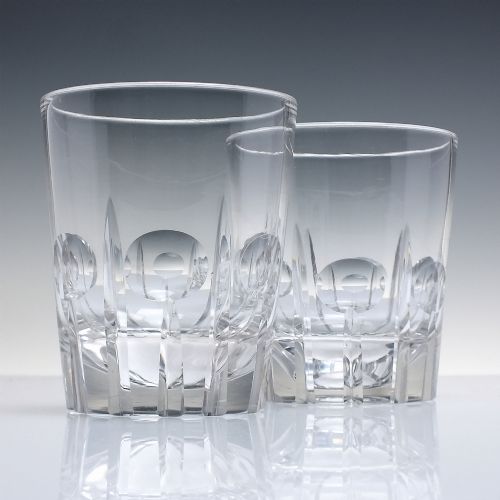
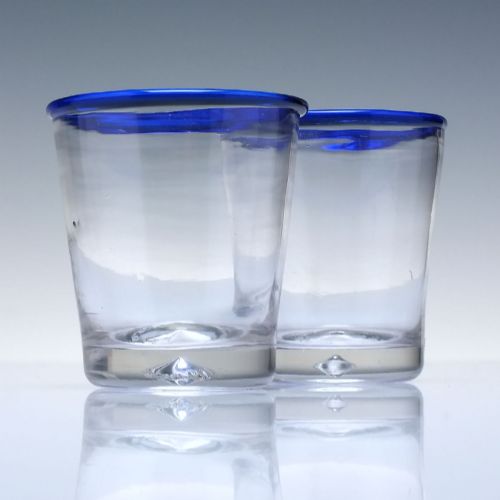
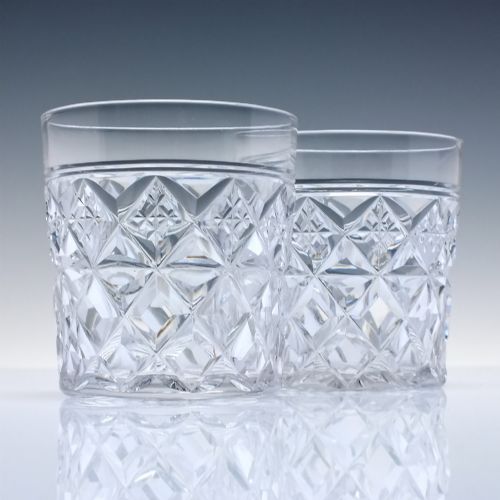
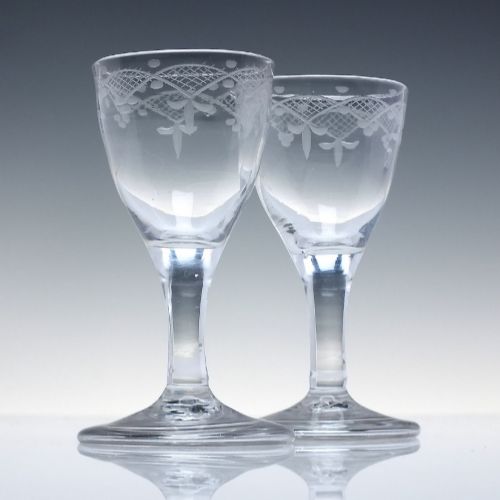
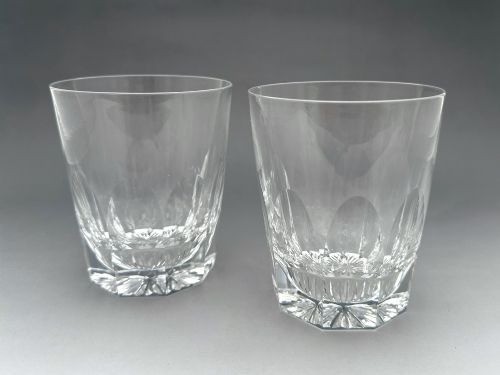


Pair of Glass Tumblers
A pair of glass tumblers brings everyday utility and Georgian or Victorian craftsmanship straight to the table.
Pair of Glass Tumblers
A pair of glass tumblers comprises matched drinking vessels designed for spirits, whisky, drams, or ale without stems or handles. When searching for a pair of glass tumblers, buyers encounter examples spanning from the Georgian era through the Victorian period and into the early twentieth century.
The most common versions met on this page are nineteenth-century Victorian pieces and Georgian examples. These items serve as functional drinkware that carries historic weight and decorative presence.
Materials and construction
These drinking vessels utilise hand-blown glass, lead crystal, and lead glass formed into robust beakers and tumblers. Artisans shaped the molten material manually before applying techniques such as wheel engraving and deep cutting.
Makers introduced colour through cobalt and ruby flash treatments, while Georgian examples often display folded feet for added structural stability at the base.
Pair of Glass Tumblers Retail Price Guide 2026
Typical asking prices for pair of glass tumblers among the pieces listed under this phrase on Sellingantiques today, from the lower quarter to the upper quarter. They describe what is for sale here now, not the wider market.
Materials recorded across the inventory include lead crystal, cobalt glass, ruby flash glass, and hand-blown clear glass.
Distinctions in quality
The standard of a pair of glass tumblers rests upon the crispness of the wheel engraving and the depth of the cut glass facets. Superior pieces exhibit clarity in the metal and precision in the hand-finished details.
Weight and balance also dictate distinction, separating standard utility vessels from finely worked crystal designed for formal hospitality.
Stuart Crystal
The Pair of Glass Tumblers Glossary
- Tumbler
- A flat-bottomed drinking glass without a handle or stem. Early versions were weighted at the base to prevent tipping.
- Cut glass
- Glassware decorated by grinding facets into the surface using a rotating wheel. This technique creates geometric patterns that refract light.
- Lead crystal
- Glass containing a high proportion of lead oxide, which increases weight, brilliance, and workability for cutting. It produces a clear ringing sound when struck.
- Folded foot
- A base formed by doubling the rim of glass back underneath itself. This adds strength to fragile eighteenth-century vessels.
- Ruby flash glass
- Clear glass coated with a thin layer of red glass before being cut away to reveal the clear base beneath. The process creates striking contrasting patterns.
Pair of Glass Tumblers: Frequently Asked Questions
How were these tumblers used originally?
These vessels served primarily for consuming spirits, whisky, drams, and ale during social gatherings and meals. Their heavy flat bases suited the robust style of tavern and dining room hospitality.
Over time, smaller dram glasses became popular for potent liquors, while larger beakers accommodated generous pours of ale or water.
How do I care for antique glass daily?
Wash these pieces gently by hand using warm water and mild detergent, avoiding harsh scrubbers and modern dishwashers. Sudden temperature changes can fracture old glass, so water should remain lukewarm.
Dry them immediately with a lint-free linen cloth to maintain the clarity and brilliance of the material.
Can I use these glasses for drinks today?
These historical vessels remain fully functional for serving whisky, spirits, or water at the table. Their durable construction allows for modern use provided they receive careful handling.
Many collectors prefer to integrate them into daily dining rather than keeping them locked behind glass cabinets.
How can I tell Georgian glass apart from Victorian?
Georgian pieces often feature distinct characteristics like pontil marks on the base, folded feet, and lighter, hand-blown forms with simpler engraving. Victorian examples tend to show heavier lead crystal, deeper machine-aided cutting, and flash colour treatments.
Examining the wear patterns on the underside provides further clues regarding the age and manufacturing techniques employed.