

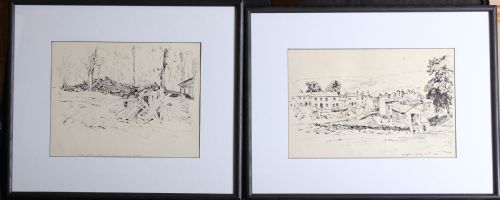
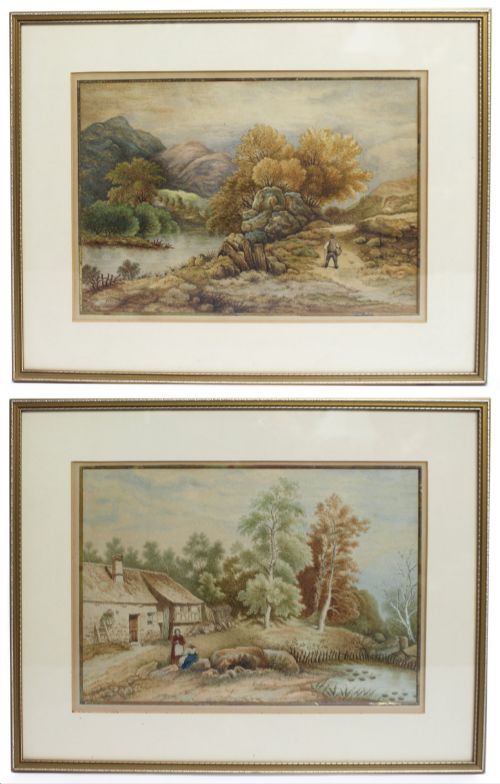
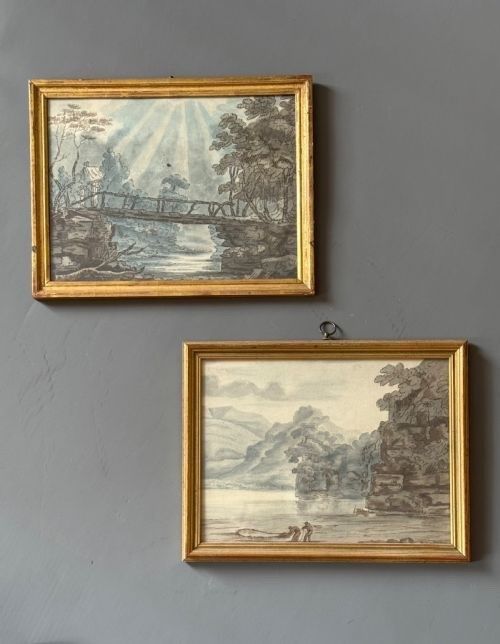
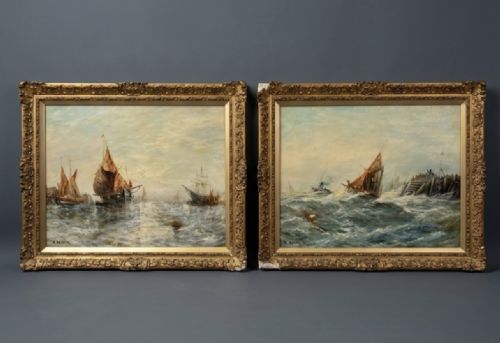
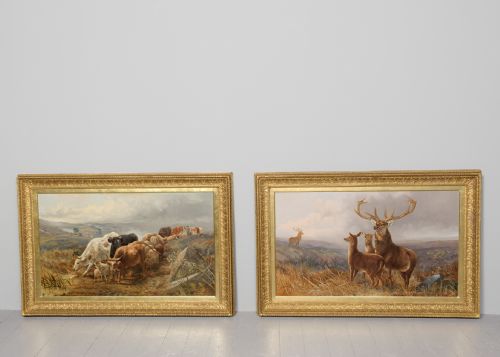
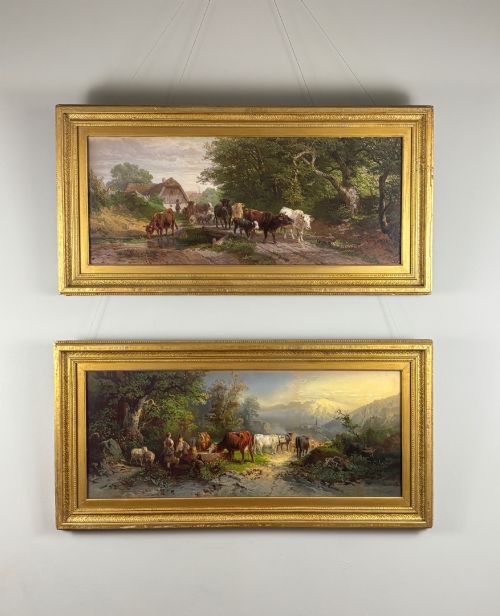
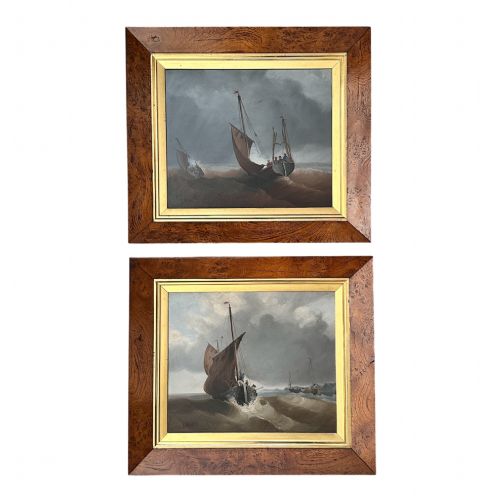
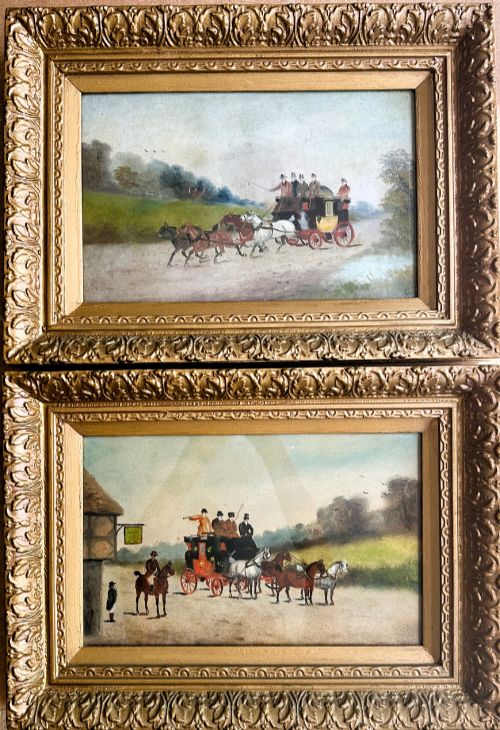


Pair of Framed Landscapes
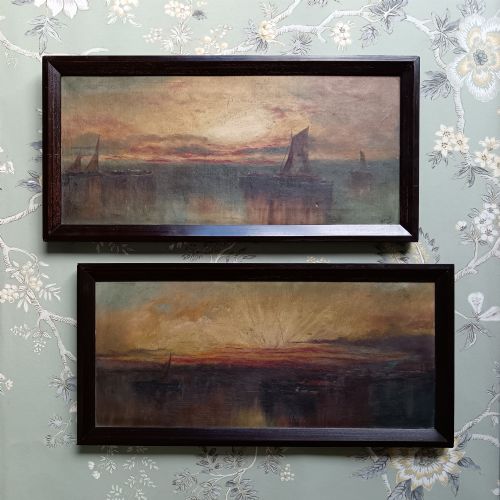
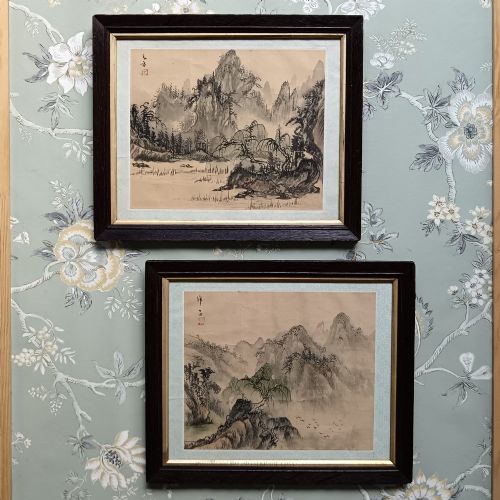
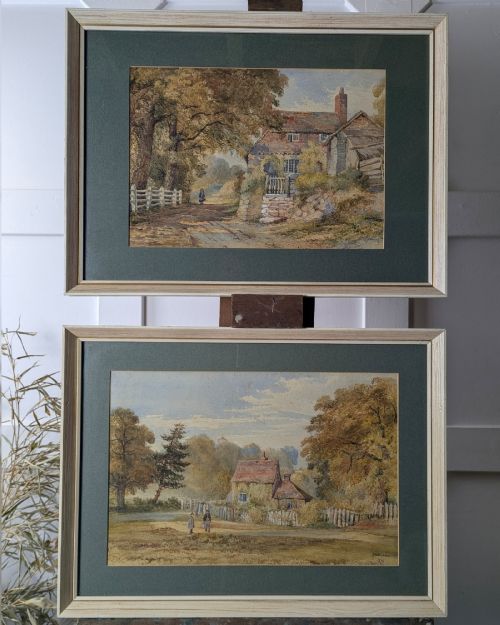
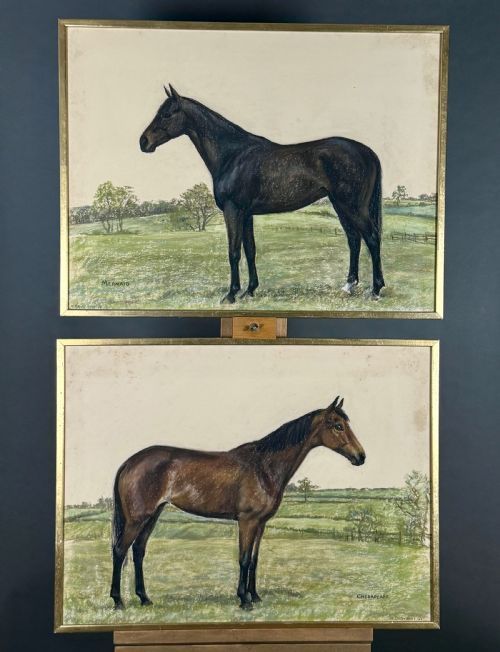
A pair of framed landscapes brings balance and symmetry to a room, offering matching views executed in oil, watercolour, or pastel.
Pair of Framed Landscapes
A pair of framed landscapes comprises two matching works designed to be hung together, frequently depicting rural countryside, mountain streams, or coastal views. These pieces emerge predominantly from the nineteenth and early twentieth centuries, spanning Victorian, Edwardian, and earlier periods.
The subjects range from tranquil moorland watercolours and pastoral scenes to dramatic maritime oils and classical ruins. Buyers encounter everything from signed works by named artists to anonymous topographical drawings.
Original frames in wood, giltwood, or gilt frame finishes often accompany the artworks, preserving the visual integrity of the pairing. Such matched sets offer a unified decorative scheme for wall display.
Materials and technique
Artists painted these works utilising oil paint on canvas, wood panels, or board, as well as applying watercolour and ink to paper. Pastels and enamel oval plaques also appear among the varied surviving examples.
The supporting frames are constructed from wood, frequently finished with giltwood or intricate moulding to complement the artwork. Glazing protects works on paper from environmental damage, while oil paintings remain unglazed.
Signatures, inscriptions, and artist ciphers frequently appear directly on the painted surface or paper, indicating the hand of the maker or the specific school of production.
Listings feature works spanning the eighteenth, nineteenth, and twentieth centuries, executed in oil, watercolour, and pastel.
Judging quality in matched pairs
Quality rests upon the skill of the brushwork, the depth of perspective, and the harmonious balance between the two companion pieces. Superior examples display confident handling of light, atmosphere, and natural detail.
The condition of both the artwork and its original frame dictates the desirability of the set. Matching frames that retain their original gilding or finish enhance the overall integrity of the pair.
John Moore of Ipswich·Philip Henry Rideout·John Frederick Herring Jnr·Pieter Cornelis Dommersen·Robert Buchan Nisbet
The Pair of Framed Landscapes Glossary
- Giltwood
- Wood carved and coated with gold leaf or a metallic substitute. This material is frequently found on Victorian and earlier frames.
- Watercolour
- A paint consisting of pigment suspended in a water-based solution, typically applied to paper. These works require glass protection.
- Tondo
- A circular painting or relief sculpture. This Italian term describes round formats sometimes seen in nineteenth-century panels.
- Diptych
- A painting or other work of art made of two panels placed side by side. These pieces often share a single hinged or matched presentation.
- Topographical
- Depicting specific, identifiable real-world locations rather than imaginary scenes. These paintings serve as historical records of towns and countryside.
Pair of Framed Landscapes: Frequently Asked Questions
How should I hang a matched pair?
Hang the two pieces at eye level with equal spacing between them to maintain visual balance on the wall. Aligning the top edges creates a clean, traditional presentation.
Consider the lighting in the room to protect works on paper from direct sunlight, which can fade watercolours over time.
Are original frames important?
Original frames provide historical context and ensure the pair matches aesthetically. Period gilt frames complement nineteenth-century oils particularly well.
Replacing lost or damaged frames requires careful matching of the period style to maintain the integrity of the ensemble.
How do I distinguish watercolours from oils?
Oils are painted on canvas, wood, or board and possess a textured, glossy surface that does not require glass. Watercolours utilise paper supports and must be framed behind glass to prevent moisture damage.
Examining the surface under magnification reveals the characteristic weave of canvas or the absorbent texture of fine paper.
What subjects are most common?
Rural countryside views, river scenes, and coastal landscapes dominate this category, reflecting Victorian and Edwardian tastes. Pastoral farmyard scenes and mountain streams also appear frequently.
Companion pieces often depict contrasting times of day, such as sunrise and sunset, or seasonal shifts like winter snow.