
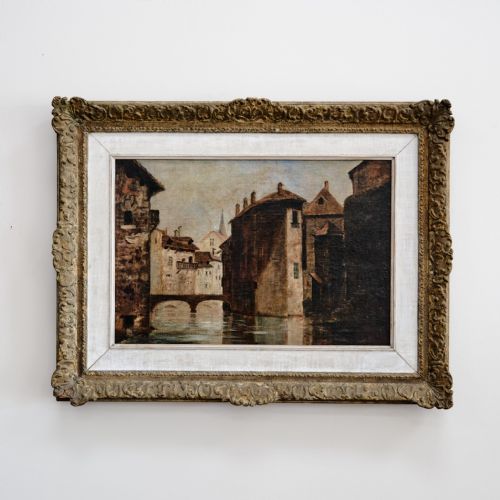
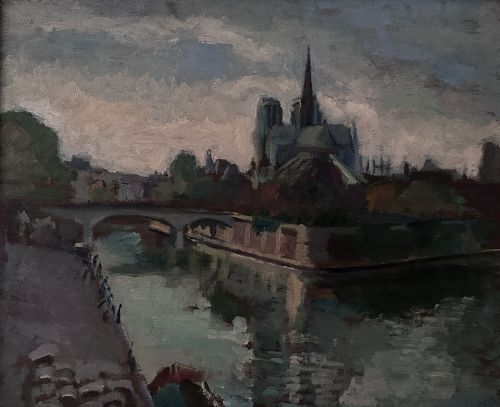
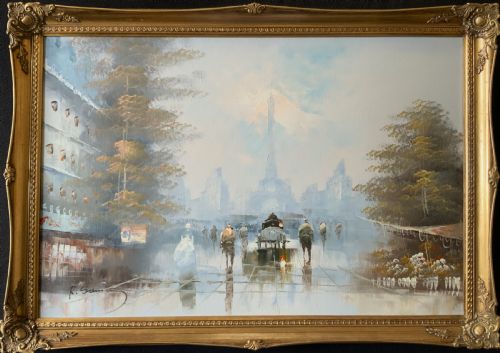
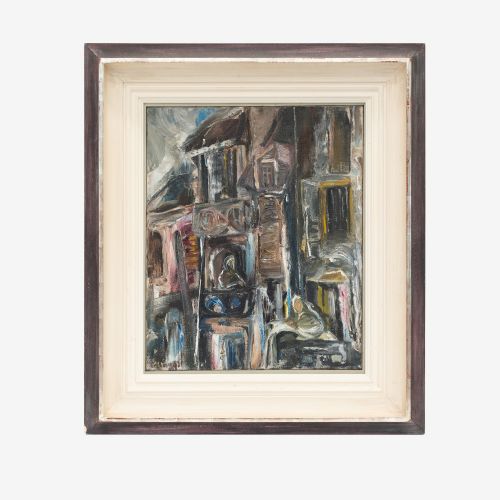


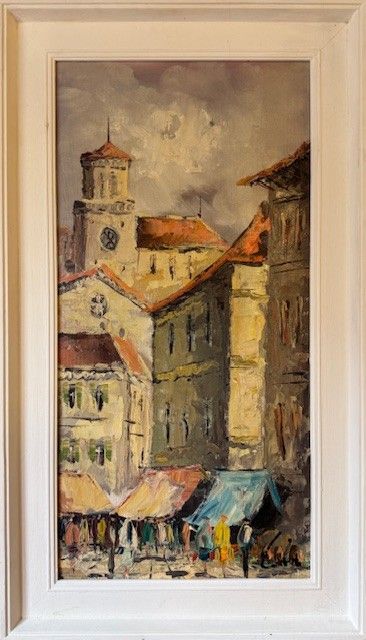


French Cityscape Oil Painting
A french cityscape oil painting brings the movement and light of Parisian streets and riverbanks directly onto your wall.
French Cityscape Oil Painting
A french cityscape oil painting captures urban views, architectural landmarks, and bustling street scenes across Paris and regional France. Buyers encounter works stretching from the late nineteenth century through the mid-twentieth century, embracing periods like the belle epoque and mid-century modernism.
The subjects range widely from iconic sites like Notre Dame, the Eiffel Tower, and the River Seine to quiet provincial squares and cathedral towns. Most examples on this page are oil on canvas or oil on board, housed within traditional wooden or gilt frames.
How they were made
Artists painted primarily with oil paint on stretched canvas or wooden board, utilising the rich texture and slow drying time of oils to build depth and atmospheric light. Brushwork varies from the loose, visible dabs characteristic of impressionism to bolder expressionist strokes.
Many works are completed with gilded wood or carved wooden frames that complement the period of the painting. These frames range from ornate nineteenth-century mouldings to simpler mid-century profiles.
Listings feature works spanning from the nineteenth century through the 1960s, created using oil on canvas and oil on board.
What varies in quality
Quality rests upon the artist's command of light, perspective, and atmospheric depth within the bustling urban environment. Superior works capture the specific quality of light in Paris or regional France rather than relying on generic formulas.
The handling of the oil medium itself distinguishes finer canvases, where varied brushwork and confident colour placement bring movement and life to street scenes and architecture.
Lilian Colbourn·Caroline Burnett·Paul-Jean Anderbouhr·Victor Gabriel Gilbert·Gabriel Dauchot·Ron Folland·Merio Ameglio·Claude Jousset·Marc Aldine·Eduard Leon Cortes·Pierre Peltier·Charles Clement Calderon·Henry Schafer·Letitia Marion Hamilton
The French Cityscape Oil Painting Glossary
- Oil on canvas
- A traditional painting medium where oil paint is applied to a woven canvas stretched over a wooden frame. This combination allows for rich colour blending and textured brushwork.
- Impressionism
- A nineteenth-century art movement focused on capturing the visual impression of a moment, especially through shifting light and unblended brush strokes. It heavily influences the street scenes found in these French works.
- Post-Impressionism
- A subsequent movement extending impressionism while rejecting its limitations, favouring more symbolic use of colour and heavier outlines. Artists in this style depict French towns with heightened emotional resonance.
- Gilt wood
- Wood coated with a thin layer of gold leaf or metallic paint, commonly used for framing antique artworks. It adds warmth and historic character to the presentation of the painting.
French Cityscape Oil Painting: Frequently Asked Questions
How do I date a french cityscape oil painting?
Dating relies on stylistic clues, framing techniques, and signatures recorded on the canvas or board. Works span from the nineteenth century into the mid-twentieth century, reflecting shifts from academic realism to impressionism and modernism.
Examining the stretcher bars, canvas weave, and any inscriptions on the reverse often helps narrow down the decade of creation.
Where should I hang these paintings?
These artworks suit living rooms, studies, or hallways where adequate lighting allows the textured oil paint and brushwork to be appreciated. Placing them away from direct sunlight protects the pigments and the wooden frames over time.
Pairing a cityscape with complementary period decor enhances its visual impact within a room.
What is the difference between canvas and board?
Canvas provides a flexible, woven support that is stretched over a wooden frame, offering a traditional surface with slight give under the brush. Board provides a rigid support made of wood or pressed material.
Both mediums hold oil paint effectively, though board paintings are often smaller and suited to plein air sketching.
How do I care for an oil painting?
Maintenance involves keeping the canvas and frame free of dust using a soft, dry brush or feather duster. Avoid using water or chemical cleaners on the painted surface or the gilt frame.
Maintaining a stable indoor environment away from extreme humidity prevents warping of the wood and cracking of the oil paint.