





Pair of Empire Candelabra
When you search for a pair of empire candelabra, you enter a world of heavy classical bronze, gilt highlights and formal symmetry.
Pair of Empire Candelabra
A pair of empire candelabra brings formal neoclassical architecture and classical myth into domestic spaces through symmetrical branched lighting. When browsing this selection, French examples from the nineteenth century dominate, particularly those echoing the grand styles of the Empire, Charles X and Regency periods.
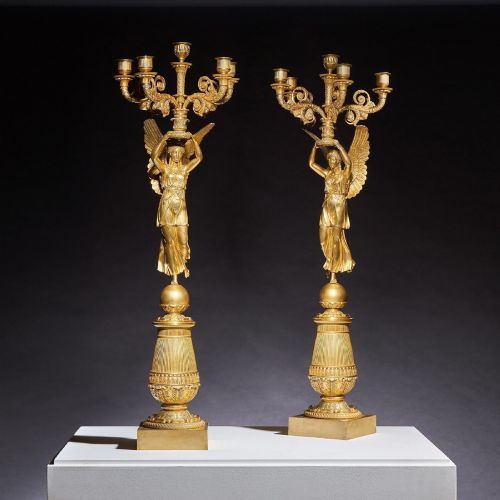
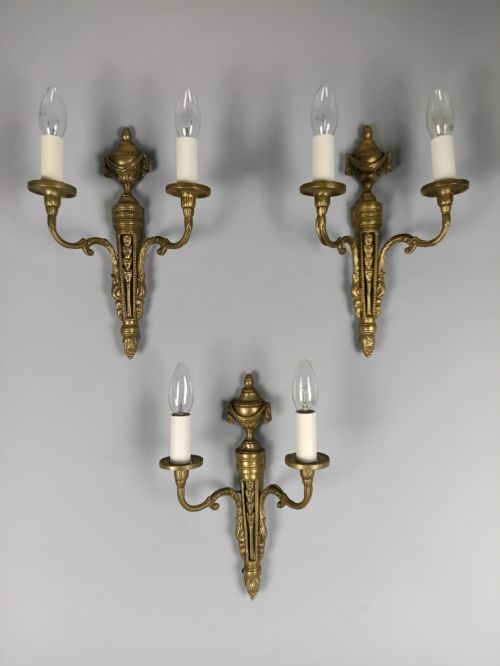
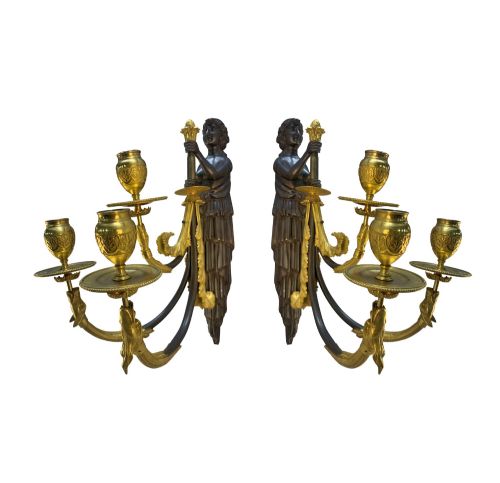
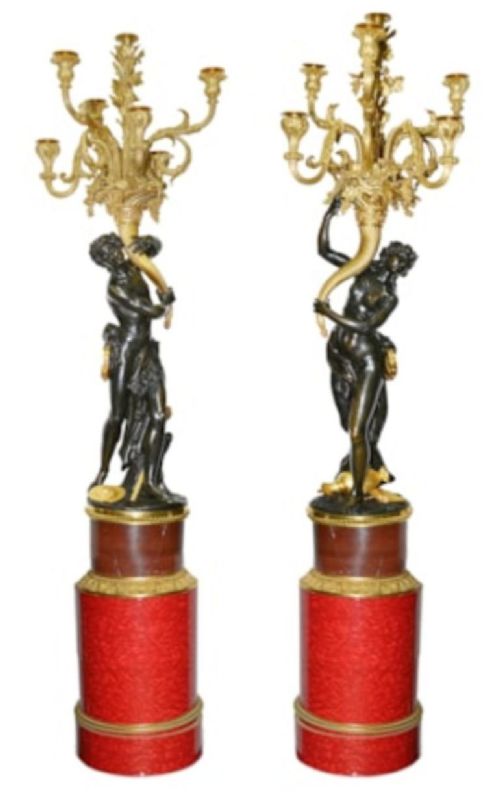
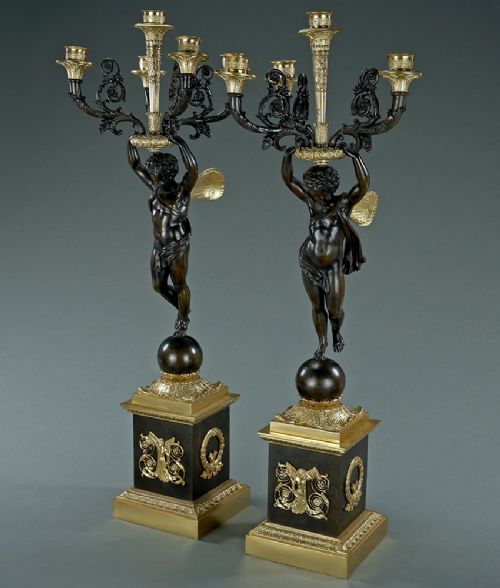
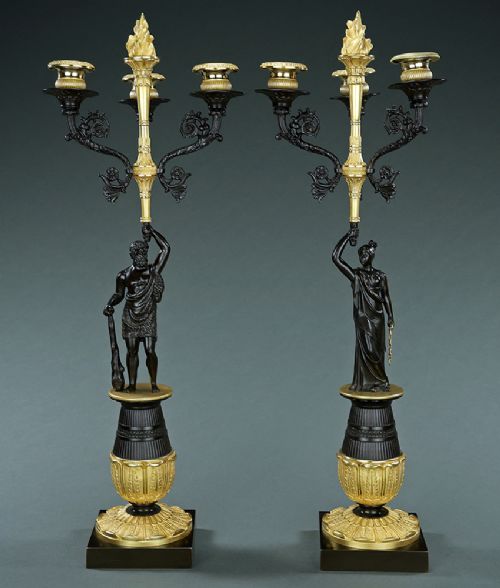
These lighting fixtures take several distinct structural forms, ranging from multi-armed candelabra and candlesticks to figural torchères and wall sconces. Many pieces incorporate mythological figures, cherubs or winged maidens supporting candle sockets above elaborate plinths.
The aesthetic relies heavily on military motifs, classical drapery and ancient architectural references derived from French design codes. Buyers encounter works spanning strict early nineteenth-century production to later revival interpretations from the decades around eighteen-eighty.
Materials and construction
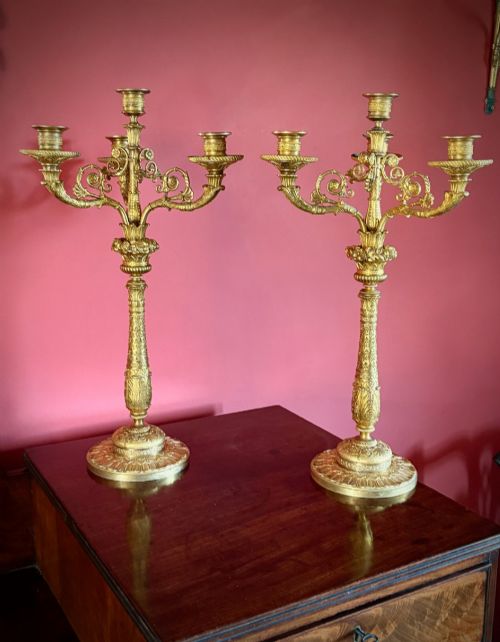
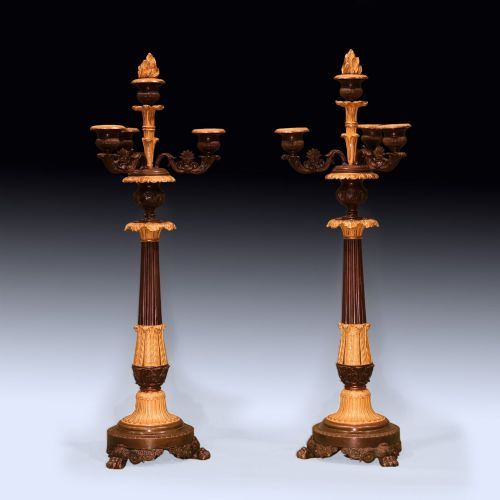
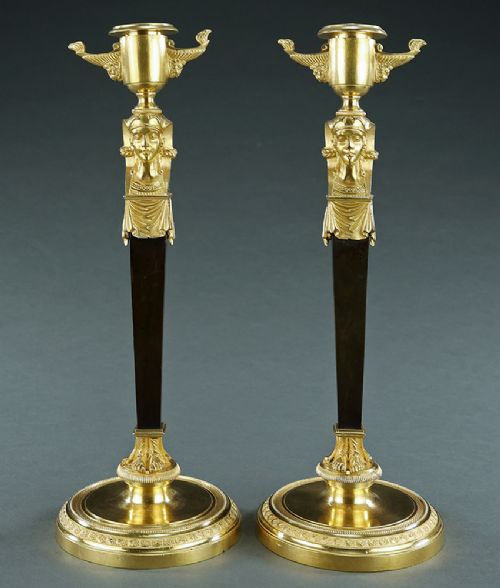
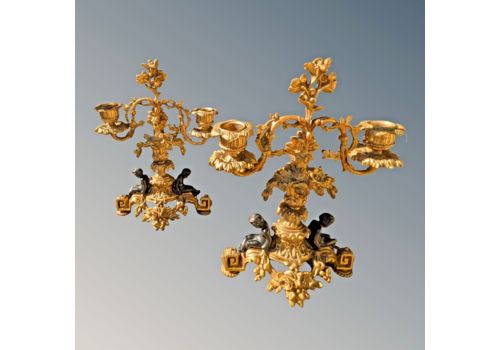
The construction of these items relies on a combination of cast bronze and brass, utilising both fire-gilding to create bright ormolu surfaces and dark patination for contrasting figural elements. This dual treatment of bronze allows makers to achieve the characteristic two-tone visual depth typical of the period.
Solid stone components frequently anchor the metallic upper structures, with white marble, green marble, onyx, slate and porphyry forming substantial bases. Individual cast components are assembled using threaded rods and internal screws, allowing for intricate multi-branch configurations.
Pair of Empire Candelabra Retail Price Guide 2026
Typical asking prices for pair of empire candelabra among the pieces listed under this phrase on Sellingantiques today, from the lower quarter to the upper quarter. They describe what is for sale here now, not the wider market.
Listings feature nineteenth-century items combining gilt bronze, patinated bronze, white marble and brass.
Assessing craftsmanship
The weight of the bronze and the selection of the supporting stone base indicate the standard of manufacture. Finer pieces employ dense, high-grade marbles paired with heavy, thick-gauge ormolu that maintains its tactile registration in the hand.
Pierre Philippe Thomire·Rabiat·Claude Galle·François Christophe Armand Toussaint
The Pair of Empire Candelabra Glossary
- Ormolu
- Gilt bronze produced by applying a mercury and gold amalgam to a bronze base and firing it to drive off the mercury. This technique creates a durable golden surface characteristic of fine nineteenth-century metalwork.
- Patinated bronze
- Bronze treated with chemical solutions to produce a dark brown, black or greenish surface colour. It provides a deliberate contrast against bright ormolu sections in figural designs.
- Torchère
- A tall ornamental stand or branched candelabrum designed to hold candles or lights. These pieces often take the form of classical figures holding aloft flaming torches.
- Cire perdue
- Lost wax casting method used to create complex metal sculptures and mounts from an original model. This process ensures intricate detail in figural candelabra arms and bases.
- Restauration
- French stylistic period spanning the reigns of Louis XVIII and Charles X between the fall of the Empire and the July Revolution. Design during this phase retained classical lines while lightening slightly in scale.
Pair of Empire Candelabra: Frequently Asked Questions
How do I light them?
These pieces were designed for traditional wax tapers, though many now accommodate modern electrical wiring or specialty candles. Inspect the internal sockets carefully to determine if they have been adapted for electricity or retain their original candle cups.
When using real wax, ensure the candles fit securely in the nozzle to prevent drips onto the gilt bronze or marble surfaces. Drips can be removed gently with warm water, avoiding harsh abrasives that scratch the ormolu.
Where should I place them?
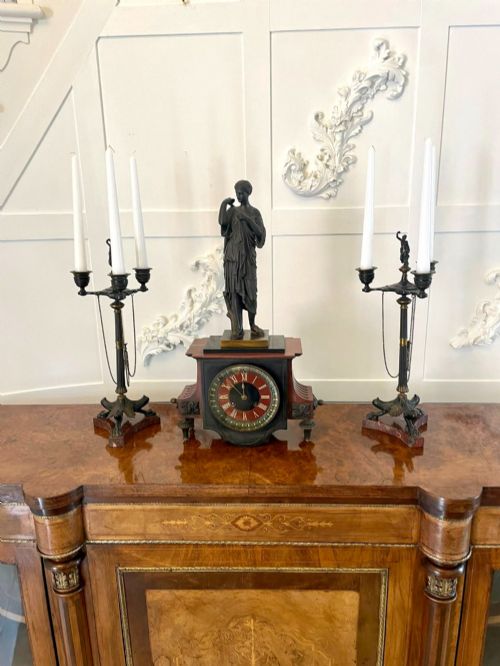
Pair of empire candelabra function best on sturdy, flat surfaces such as mantlepieces, sideboards or console tables where their symmetrical weight can be appreciated. Their height and reflective metal surfaces make them natural focal points in formal dining rooms or reception spaces.
Keep them away from direct heat sources and strong sunlight to protect underlying stone bases and prevent any historical lacquers from degrading. Adequate clearance around the arms ensures the branches are not knocked during daily movement.
Are they all French?
While the design vocabulary originates predominantly from French Napoleonic workshops, makers across Europe adopted the style during the nineteenth century. Swedish and English makers frequently produced comparable Regency and Northern neoclassical interpretations using similar bronze casting techniques.
Distinguishing between origins involves examining assembly methods, casting marks and the specific geological type of the marble base. French pieces often display finer chasing work, yet high-end domestic British and continental workshops matched these standards closely.
How do I date them?
Dating relies on stylistic shifts between the strict military severity of early nineteenth-century Empire design and later nineteenth-century revival movements. Earlier pieces exhibit precise chasing and dense mercury gilding, whereas later eighteen-eighty reproductions sometimes utilise brighter electroplate finishes and different assembly screws.
Consulting signature stamps, foundry marks or historical exhibition labels provides further chronological clues. Comparing the casting quality against documented models by makers like Thomire helps narrow down the production decade.