
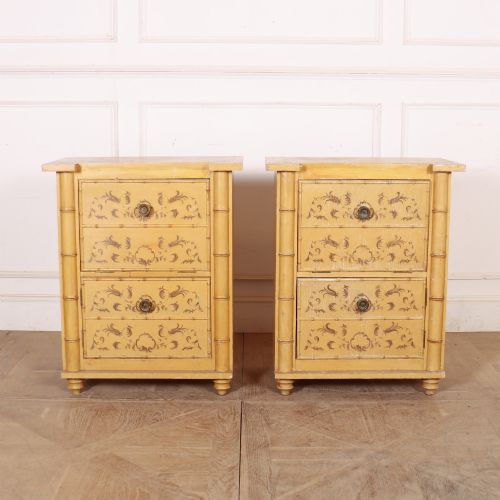


Pair of Chinoiserie Cabinets
These pair of chinoiserie cabinets bring lacquered surfaces, gold leaf and oriental motifs into a room.
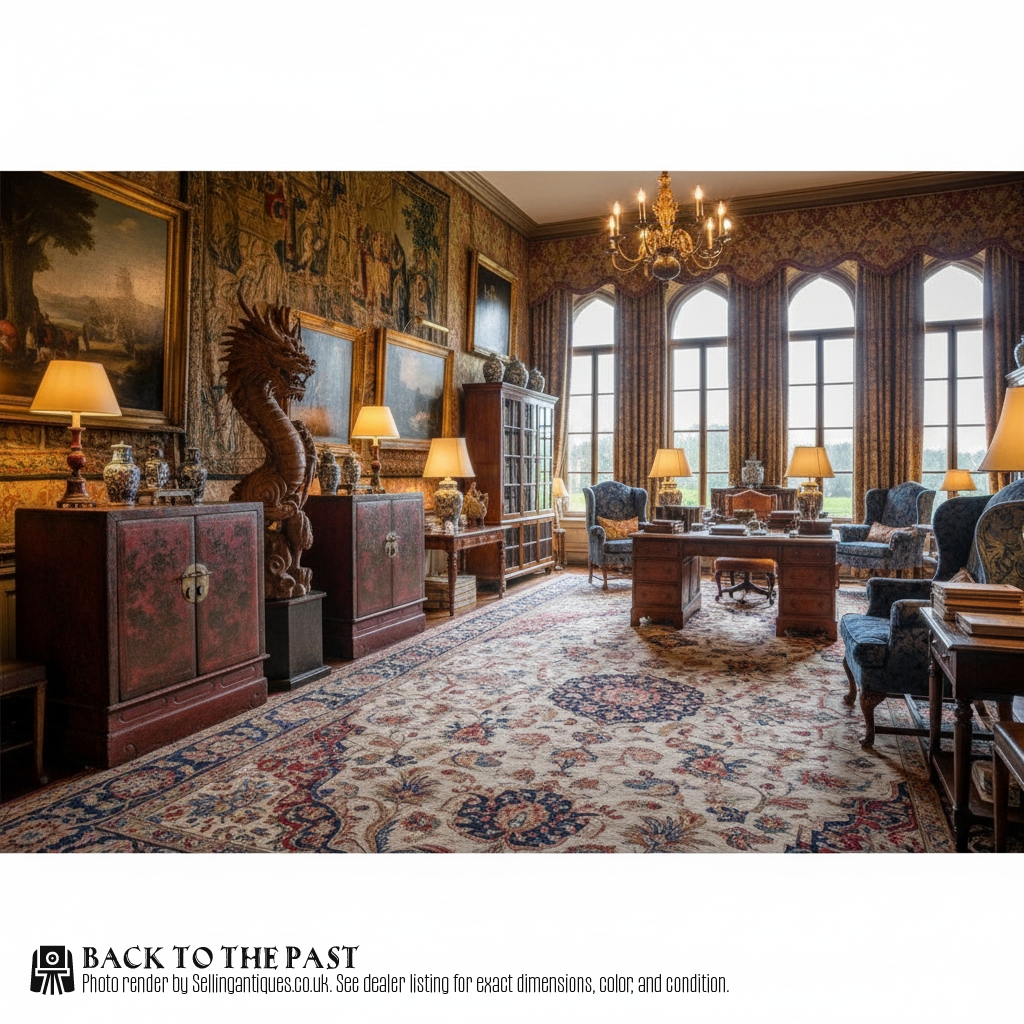
Pair of Chinoiserie Cabinets
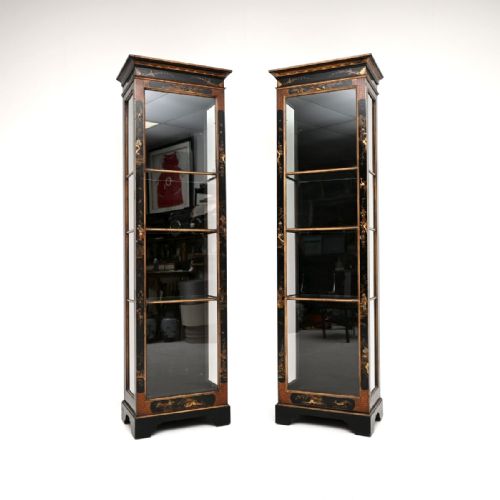
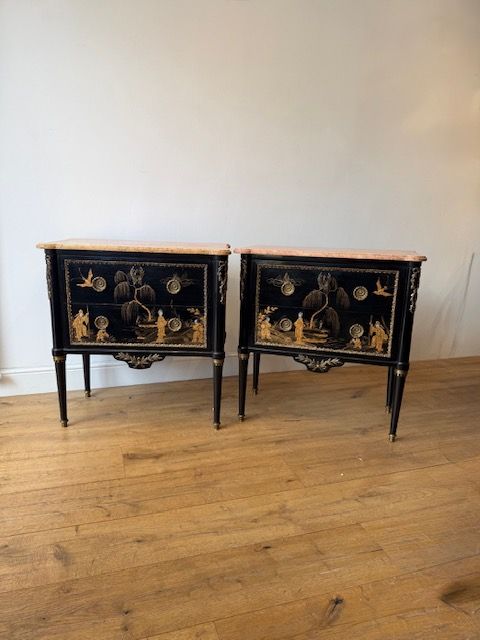
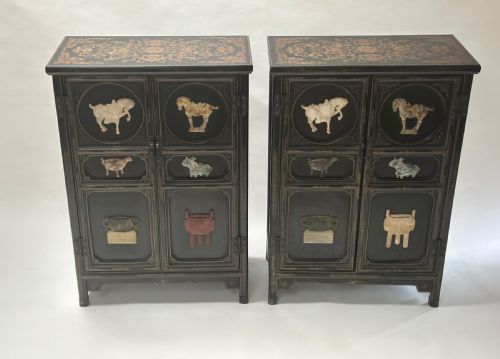
A pair of chinoiserie cabinets encompasses side cabinets, display cabinets, bedside tables and cabinets on stands decorated with oriental scenes. These pieces draw from styles including Edwardian, Regency, Louis XVI, Aesthetic Movement and Victorian interpretations of Chinese design.
Most examples encountered here date from the nineteenth century into the nineteen twenties, alongside earlier Georgian periods in the archive. Formats range from tall display pieces to low bedside chests and corner units.
How they were made
The construction relies on wood carcasses finished with lacquer and detailed with gold leaf, brass and enamel elements. Artisans applied layers of lacquer to build deep surfaces before painting oriental landscapes, figures and floral motifs.
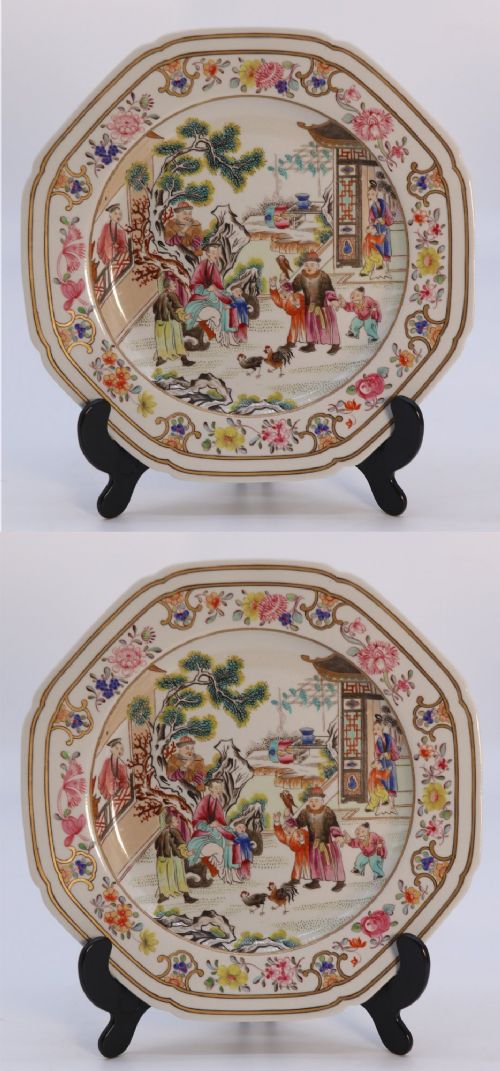
Some variations incorporate glass doors for display cabinets or stone china and ceramic elements within related decorative plates. Secondary framing utilises bamboo styling or traditional timber joinery depending on the period.
Several bedside cabinets double as lamp tables, ready to hold your evening reading.
What varies in quality
Quality rests in the execution of the lacquering and the crispness of the gold leaf decoration across both matching pieces. The depth of the surface finish and the retention of hand-painted details distinguish finer examples from simpler production.
Proportion and the integrity of the stands or bases also define the standing of a pair. Uniformity between the two cabinets determines the success of the matched set in an interior.
The Pair of Chinoiserie Cabinets Glossary
- Chinoiserie
- European theatrical interpretation of Chinese and East Asian artistic traditions, popular in furniture and decorative arts across multiple centuries. This style employs motifs of figures, pavilions and landscapes.
- Lacquer
- A durable resin finish applied in multiple coats to wood surfaces, often polished to a smooth sheen. It provides the characteristic glossy background for oriental decoration.
- Cabinet on stand
- A cabinet elevated upon a separate supporting frame or table structure with legs. This form lifts the main storage compartment for display.
- Faux bamboo
- Wood turned and carved to imitate the segmented stems of natural bamboo. It appears frequently in nineteenth-century bamboo-style furniture.
Pair of Chinoiserie Cabinets: Frequently Asked Questions
Where do I put a pair of chinoiserie cabinets?
These cabinets suit drawing rooms, hallways or bedrooms where symmetry matters.
Placing them as matching bedside tables or flanking a fireplace balances a room.
How do I care for lacquer surfaces?
Keep lacquered wood away from direct sunlight and excessive heat sources.
Dust gently with a dry microfibre cloth and avoid chemical polishes.
Are these cabinets purely decorative?
Most pieces offer functional storage behind doors or within drawers.
Display cabinets and open variants also allow for showing porcelain or objects.
How do I identify Edwardian chinoiserie?
Edwardian examples from around nineteen hundred combine lighter timber frames with refined lacquer work.
They often reflect revival tastes popular during that period.