



Pair of Carved Lions
Pair of carved lions bring centuries of sculptural majesty into a room, spanning garden statuary, library seating, and diminutive desk ornaments.
Pair of Carved Lions
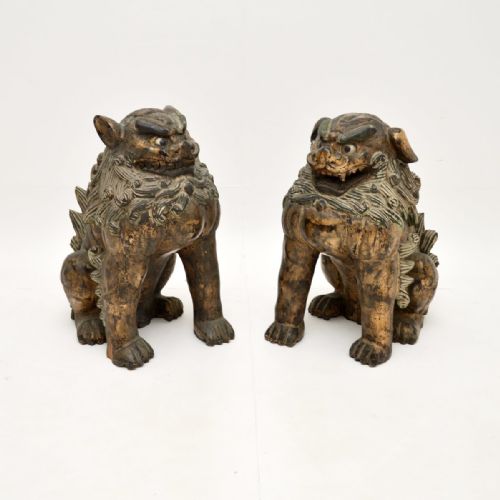
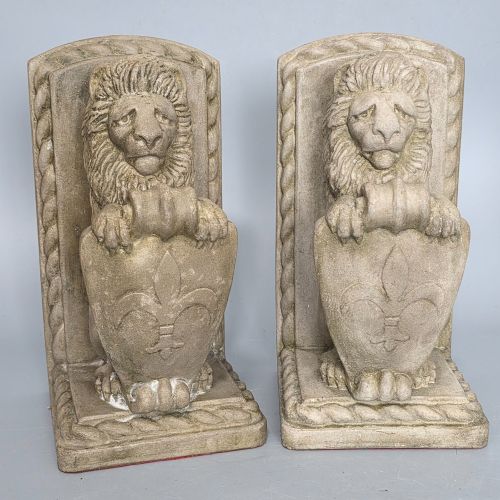
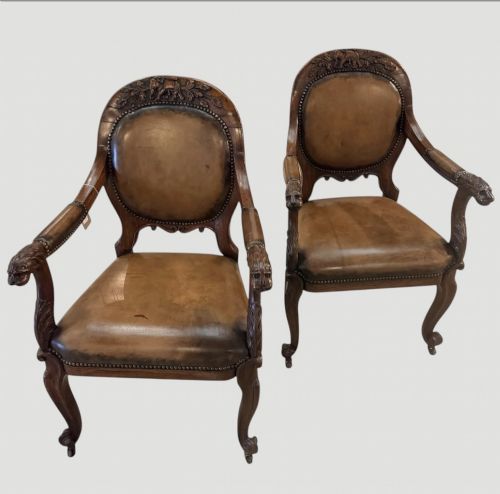
A pair of carved lions encompasses everything from monumental garden statuary in stone and marble to detailed interior carvings on chairs, bookends, and console tables. These pieces draw on diverse traditions, including classical European Grand Tour souvenirs, Anglo-Indian woodwork, and Chinese Buddhist guardian figures.
The objects on this page appear across multiple centuries, stretching from the Georgian era through Victorian revivals and into the twentieth century. Buyers encounter garden figures designed to flank a doorway alongside domestic furnishings that incorporate leonine motifs into arms, legs, and supports.
Sculptural pairs dominate the offerings, whether carved from solid blocks of marble and alabaster or rendered in pine, oak, walnut, and teak. Alongside free-standing figures, collectors find utilitarian items such as bookends and library chairs where the carved beast forms an integral part of the structure.
Materials and Craftsmanship
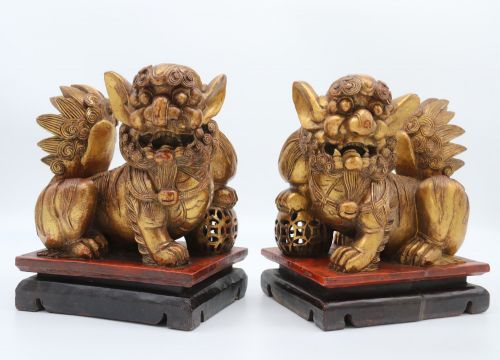
Makers utilised a wide range of hard and soft woods, including oak, walnut, mahogany, rosewood, and pine, shaping them with chisels and gouges to create flowing manes and powerful musculature. Gilding, lacquer, and polychrome finishes frequently highlight the wooden surfaces of Chinese temple lions and European console tables.
Stone workers employed marble, alabaster, serpentine, and cast stone for architectural sculptures and desk seals, relying on abrasives and hand tools to achieve smooth contours. These mineral materials reflect the weight and permanence traditionally associated with classical statuary and Grand Tour souvenirs.
Some nineteenth-century travellers carried home tiny carved soapstone lions just so a miniature beast could guard their writing desk.
Judging Quality and Execution
The integrity of the material and the harmony between the animal form and its functional context dictate the standing of a piece. Well-balanced proportions in architectural supports or furniture mounts demonstrate the maker's mastery over their chosen medium.
The Pair of Carved Lions Glossary
- Medici Lions
- A pair of marble sculptures of lions, one with its paw upon a ball, originating from Roman antiquity and placed at the Villa Medici in Rome. These iconic figures served as models for countless Grand Tour souvenirs and garden ornaments.
- Foo Dog
- A traditional Chinese guardian lion, also known as a Shi Shi or temple lion, typically displayed in pairs to protect a threshold. They combine stylised manes with fierce expressions and are carved from stone, wood, or soapstone.
- Grand Tour
- A cultural trip through Europe undertaken by young upper-class men during the eighteenth and nineteenth centuries to collect classical art and antiquities. Smaller carved alabaster and marble lions served as popular souvenirs from these journeys.
- Canova Lions
- Sculptures based on the monumental tomb monuments designed by the neoclassical sculptor Antonio Canova. These reclining beasts became standard templates for Italian marble carvers.
- Serpentine
- A group of green hydrous magnesium silicate minerals often used as a decorative stone for small sculptures and table tops. Its mottled appearance resembles snake skin, hence the name.
Pair of Carved Lions: Frequently Asked Questions
Where should I place a pair of carved lions?
Large stone or marble examples suit gardens, entrance halls, or flanking a fireplace, where their scale creates a formal symmetry. Smaller wooden or alabaster figures fit easily onto library shelves, console tables, or desks as decorative accents.
Pairing them correctly depends on the weight of the material and the intended room, as heavy garden statuary requires stable outdoor footings while delicate interior carvings need protection from direct weather and humidity.
How do I identify a Grand Tour lion?
Grand Tour pieces typically date from the nineteenth century and are carved from alabaster, serpentine, or white statuary marble. They frequently replicate famous Roman prototypes such as the Medici lions.
These souvenirs often show softer details due to the compact nature of the stone and display handling wear consistent with nineteenth-century travel and collection.
Are Chinese temple lions the same as European lions?
Chinese temple lions, or Foo dogs, feature stylised curls in their manes, open mouths, and occasionally a cub or a ball beneath a paw. They derive from Buddhist iconography rather than European heraldry or classical sculpture.
European carved lions focus on anatomical realism derived from Greek and Roman models, whereas Asian guardian figures prioritise symbolic protection and decorative surface patterns.
How do I care for wooden carved lion furniture?
Wooden chairs and tables featuring carved lions require regular dusting with a soft cloth and protection from sudden temperature changes to prevent timber splitting. Wax polish helps maintain the finish on hardwoods like oak, walnut, and mahogany.
Avoid placing these items in direct sunlight or near heat sources, which can dry out the wood and degrade applied gilt or lacquer finishes.