

Pair of Bedside Pedestals
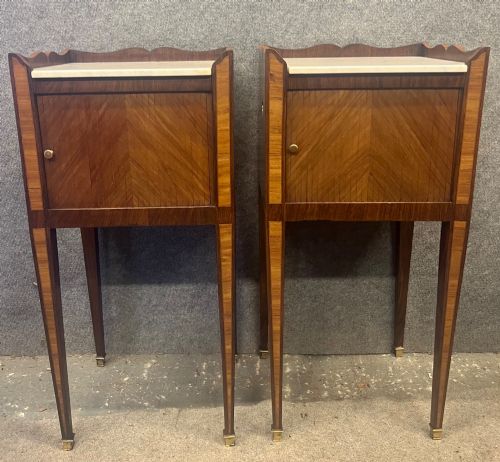
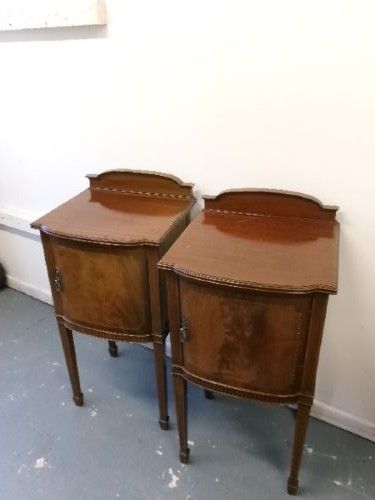
A pair of bedside pedestals provides matching bedside storage in wood, marble and brass.
Pair of Bedside Pedestals
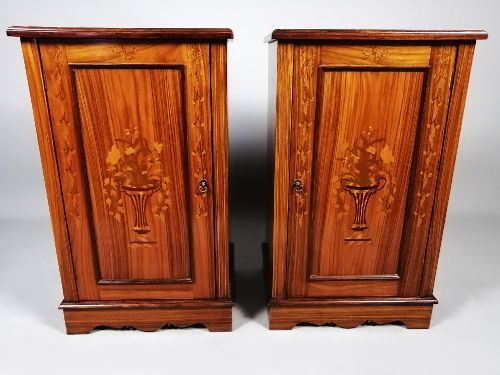
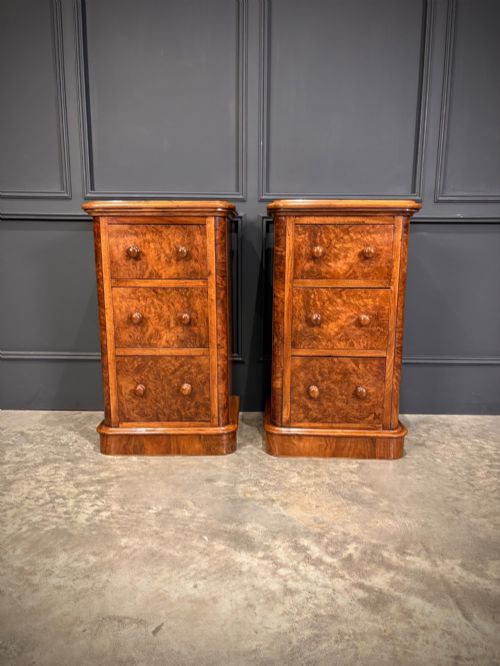
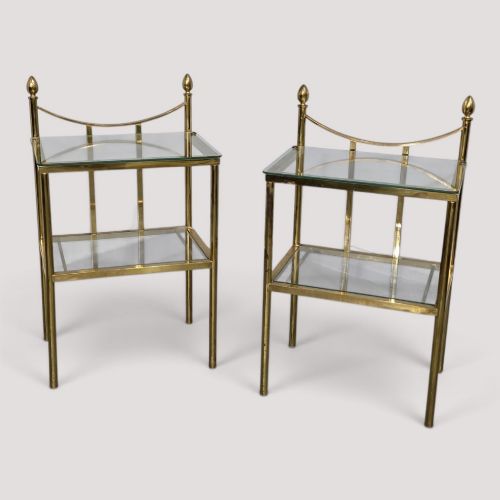
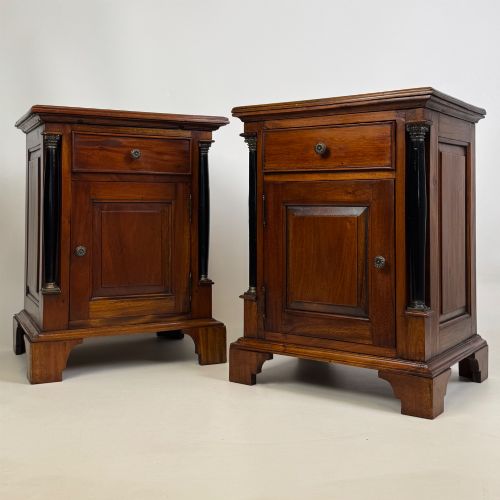
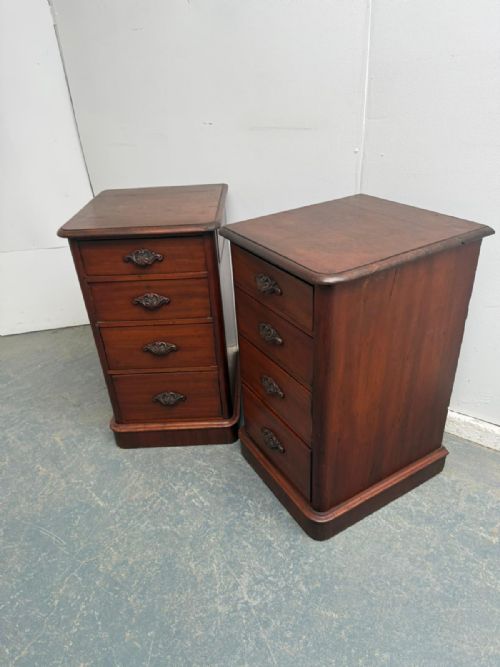
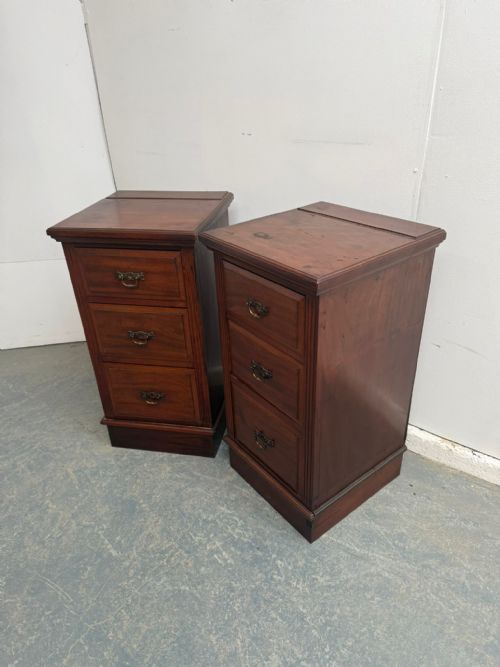
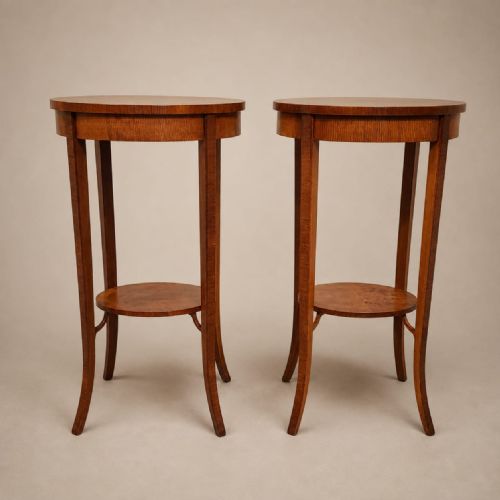
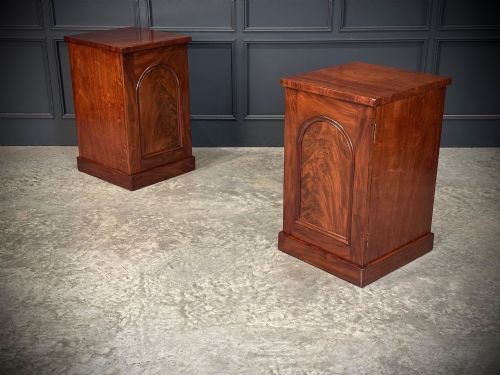
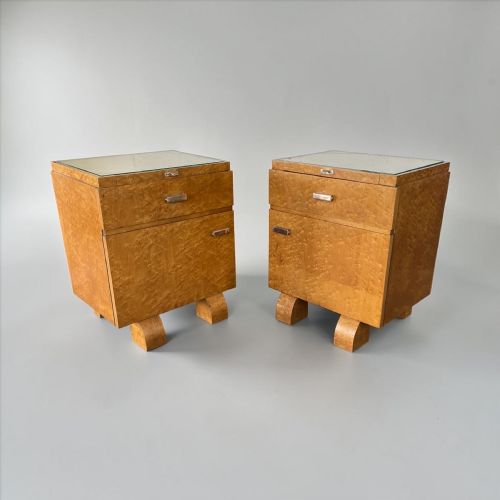
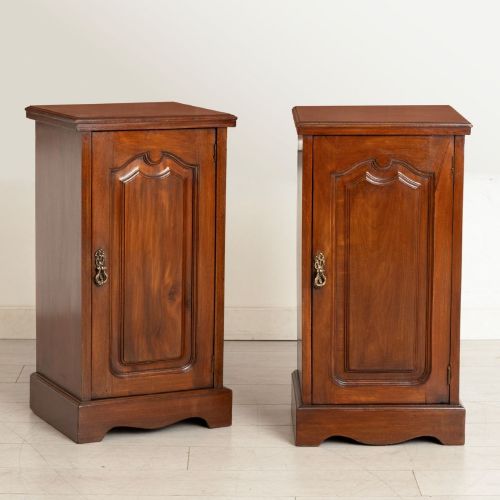
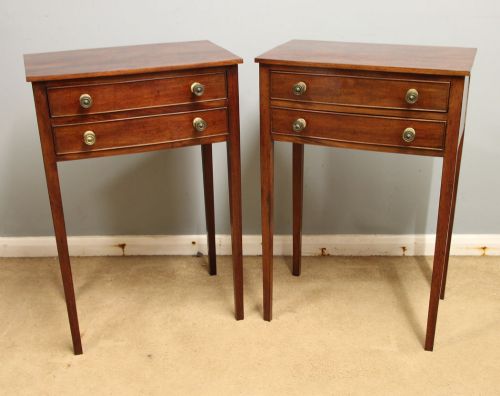
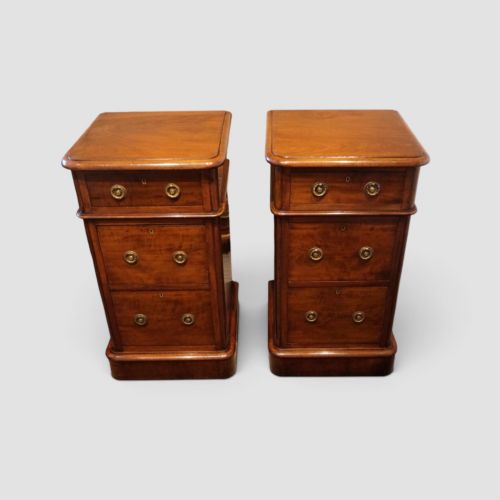
A pair of bedside pedestals unites two matched small cabinets or tables designed to stand beside a bed for night storage. The selection spans the nineteenth century through the art deco period, taking forms such as enclosed pot cupboards, small drawer chests and open lamp tables.
Victorian and Edwardian mahogany or burr walnut chests appear frequently, alongside earlier Georgian designs and art deco walnut variants. Buyers encounter both British and continental pieces, including French inlaid cabinets and Irish tables.
How they were made
Cabinet makers utilised dense hardwoods including mahogany, walnut and satinwood, often applying burr walnut, rosewood or fruitwood veneers to display complex grain patterns. Selected examples incorporate contrasting marquetry, ormolu mounts, leather top inserts or marble tops.
Construction methods range from dovetailed drawer boxes to panelled cupboard doors, reflecting the prevailing joinery standards of periods from the eighteenth century to the mid twentieth century.
The selection includes mahogany, walnut, satinwood and brass across Victorian, Edwardian and Art Deco periods.
What varies in quality
Quality rests upon the choice of timber figure, the crispness of any inlaid marquetry or carving, and the fidelity of period construction. Matched pairs showing consistent timber grain and original hardware command greater attention than those with mismatched timber or later replacements.
The refinement of proportion and the integrity of the original polish or wax finish separate standard workshop production from finer cabinet work.
Holland and Sons
The Pair of Bedside Pedestals Glossary
- Burr walnut
- Timber taken from a tree growth that produces swirling, highly decorative grain patterns. Cabinet makers frequently used burr walnut veneers on drawer fronts and door panels.
- Pot cupboard
- A small enclosed bedside cabinet originally designed to house a chamber pot. These pieces usually feature a single door above or beside a lower compartment.
- Marquetry
- The art of applying decorative veneer pieces to a structure to form detailed pictures or geometric designs. This technique appears on Victorian and Edwardian cabinets.
- Pedestal cupboard
- A tall, narrow freestanding cabinet supported by a plinth or feet. These structures offer vertical storage space beside a bed.
- Ormolu
- Gilt bronze mounts applied to furniture for decorative effect. French nineteenth century pieces frequently employ ormolu handles and mounts.
Pair of Bedside Pedestals: Frequently Asked Questions
What is a pair of bedside pedestals?
A pair of bedside pedestals consists of two matched small tables or cabinets designed to flank a bed. They provide surface space for lamps and enclosed storage for nighttime items.
These pieces range from open lamp tables to enclosed cupboards and small drawer chests produced across the nineteenth and early twentieth centuries.
How do I date a pair of bedside pedestals?
Dating relies upon observing the timber species, construction methods, handles and stylistic details such as inlay or carving. Victorian and Edwardian pieces often display distinct mahogany or walnut grains.
Earlier Georgian items show different proportions and joinery, while art deco examples feature streamlined geometric forms from the nineteen-thirties.
Were these always sold as pairs?
Many bedside pieces were constructed as matched pairs to balance the arrangement on either side of a bed. Other examples began as single pedestals that dealers subsequently matched by similar style and timber.
Checking the interior construction and timber grain helps determine whether two pieces were made together.
How do I maintain wood bedside cabinets?
Maintaining wood surfaces involves applying traditional wax polish and keeping the timber away from direct heat sources and excessive moisture. Gentle dusting preserves the original polish and grain.
Marble tops on French pieces benefit from regular wiping with a damp cloth to prevent staining.