


Pair Oak Windsor Chairs
Pair oak windsor chairs offer sturdy country seating, built from robust native timber for generations of daily use around the farmhouse table.
Pair Oak Windsor Chairs
Pair oak windsor chairs are traditional seating forms rooted in English country history, spanning periods from the eighteenth century through the Victorian era and into nineteen twenty. These domestic chairs typically serve as dining chairs, kitchen chairs, or captain's chairs within rustic farmhouse and English country interiors.
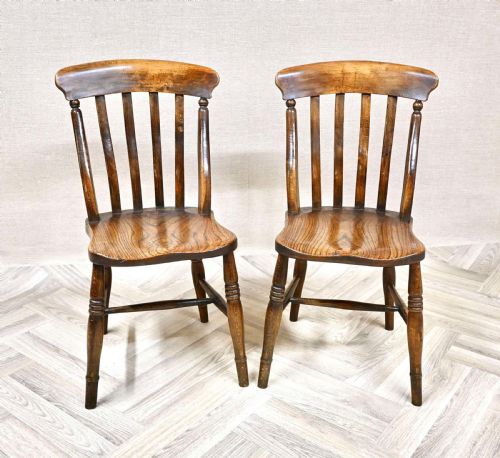
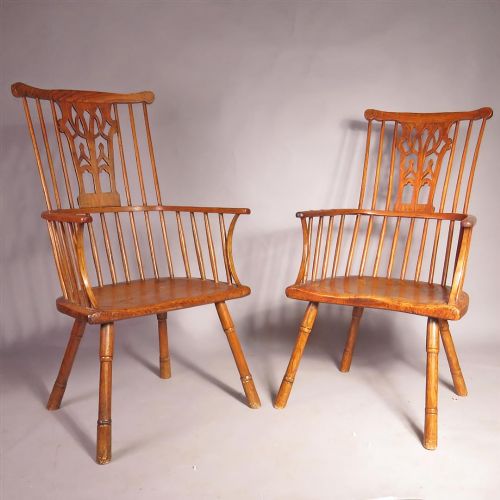
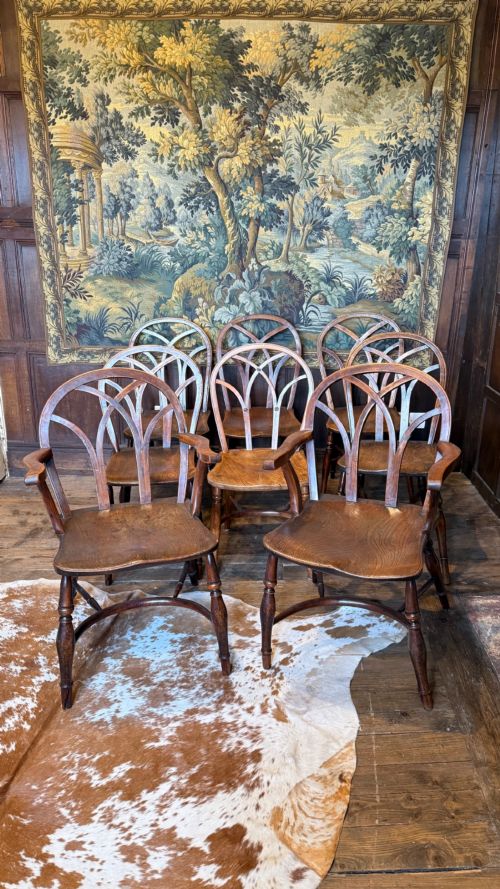
Buyers browsing this selection most frequently encounter nineteenth-century examples alongside Victorian iterations. Forms vary from low-back and stick back designs to comb back, wheelback, lyreback, and Gothic Revival styles.
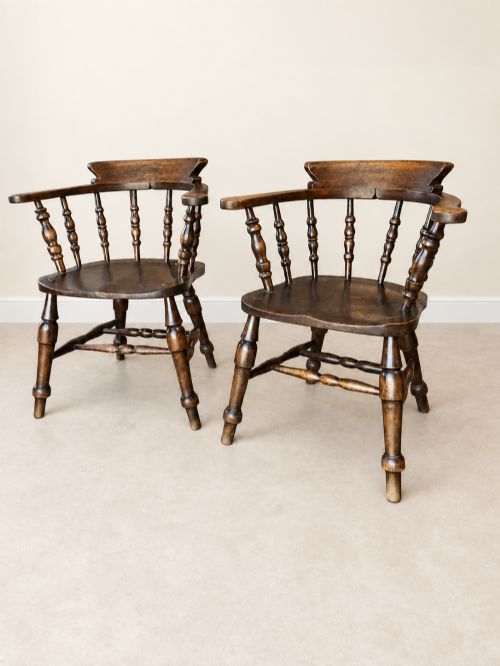
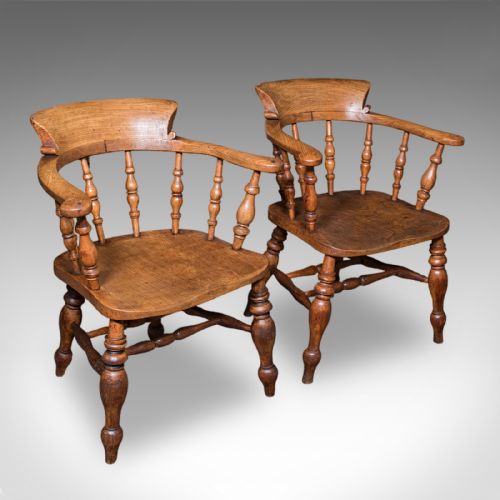
The evidence records various regional country interpretations, including smoker's bows and harlequin configurations. Such seating combines structural oak components with mixed timber seats for robust everyday utility.
How They Were Made
These chairs are constructed using traditional timber combinations recorded across the evidence, notably pairing oak with elm, beech, ash, and yew. Makers utilised these native woods for their distinct properties, integrating dense elm for sculpted solid seats with sturdy oak and ash for spindles and legs.
Joinery relies on specialised Windsor framing techniques where spindles and undercarriage components fit directly into bored holes within the solid wooden seat. This method creates a rigid skeletal structure without relying on traditional box frames.
Some chairs arrive as harlequin pairs, united in spirit though slightly mismatched in their turned spindles.
What Varies in Quality
Quality differentiates by the subtlety of the seat's sculpted contours and the balance of the spindle arrangement. Finer examples display harmonious proportions between the turned parts and the solid saddle seat.
Material selection also dictates distinction, particularly where contrasting timbers like yew wood or rich elm are chosen for the seat alongside the structural oak frame.
The Pair Oak Windsor Chairs Glossary
- Comb back
- A Windsor chair variation featuring a tall backrest where the central spindles rise through a horizontal top rail, resembling the teeth of a comb.
- Wheelback
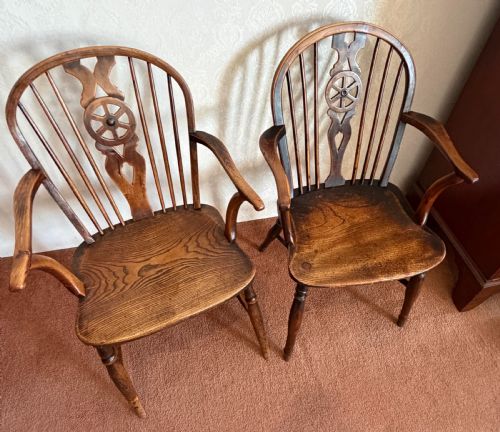
- A design incorporating a pierced splat shaped like a carriage wheel into the centre of the backrest. This decorative feature became popular during the nineteenth century.
- Smoker's bow
- A low-backed Windsor armchair featuring a continuous curved armrail supported by turned spindles, traditionally used in smoking rooms and country pubs.
- Harlequin pair
- A set of matching or closely related chairs that are not strictly identical, often showing minor variations in turning or age while sharing a common style.
Pair Oak Windsor Chairs: Frequently Asked Questions
What periods do these chairs come from?
The available pieces span multiple eras, including the eighteenth century, late Georgian period, and nineteenth-century Victorian times, with some examples dating to nineteen twenty.
These dates reflect traditional English country craftsmanship passed down through generations of rural joiners.
Are these chairs suitable for daily dining?
Yes, these sturdy country chairs were originally built for heavy domestic use around the farmhouse kitchen or dining table.
Their robust construction of oak, elm, and beech ensures lasting stability for everyday seating needs.
How do stick back and wheelback styles differ?
Stick back designs feature simple vertical spindles supporting the top rail for a clean, utilitarian appearance. Wheelback versions incorporate a distinctive pierced wooden wheel motif within the centre of the backrest.
Both styles utilise the classic Windsor method of securing components directly into a solid wooden seat.
What woods were used to build them?
Makers utilised native British timbers, most frequently combining oak for structural frames with elm for solid, comfortable seats. Beech, ash, and yew wood also appear frequently across the documented materials.
Using multiple timber species allowed craftsmen to match each part of the chair to its specific structural demand.