
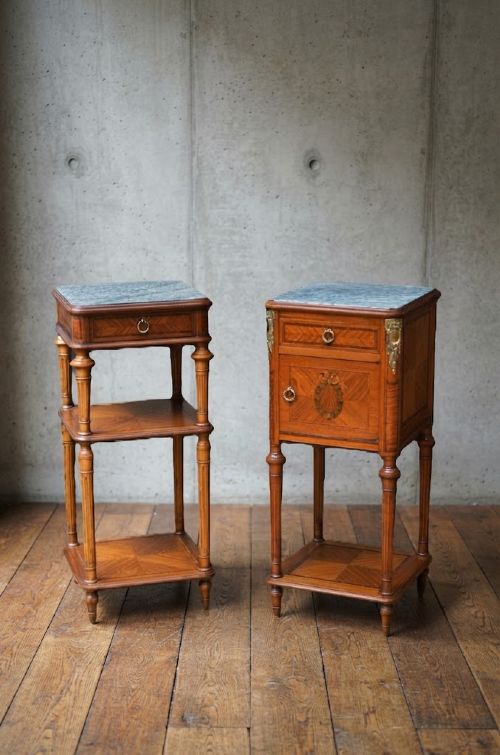
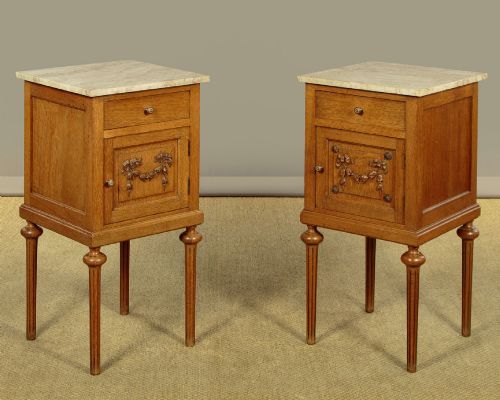
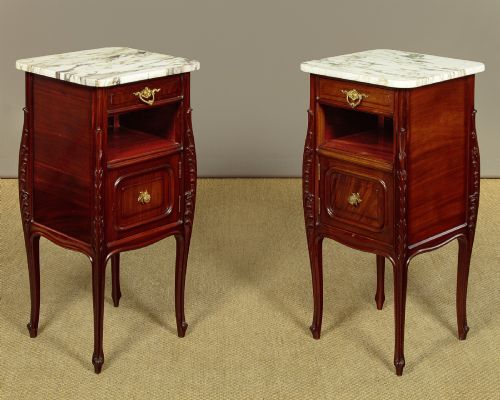
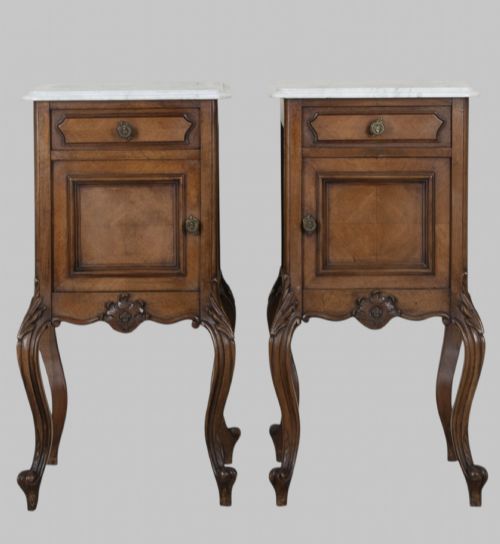

Pair Marble Topped Tables
Pair marble topped tables bring practical stone surfaces and decorative timber frames together, offering balanced symmetry for drawing rooms and bedrooms.
Pair Marble Topped Tables
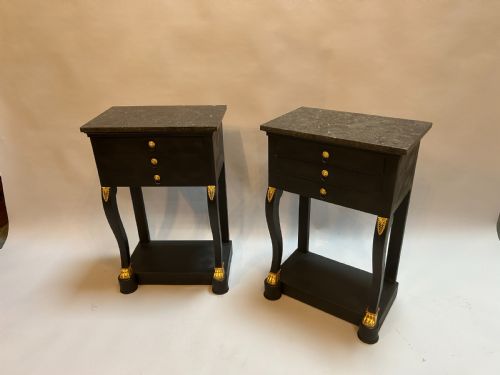
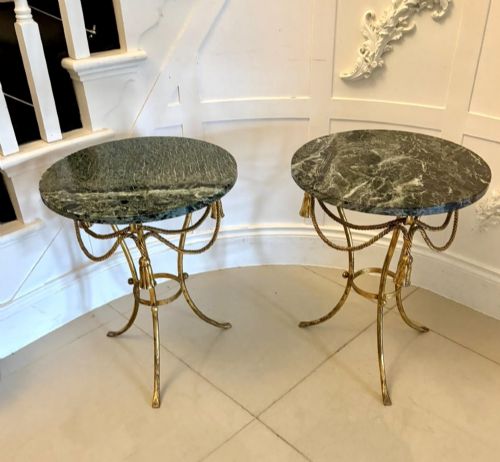
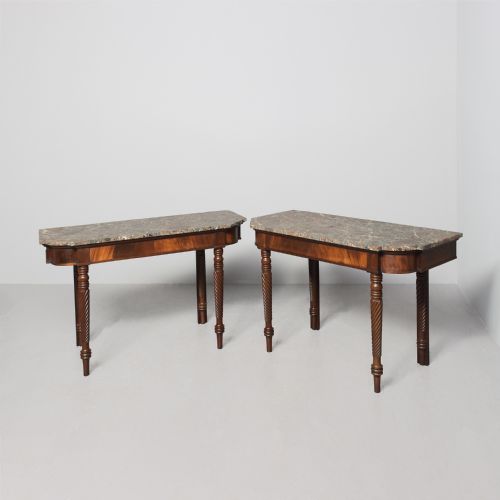
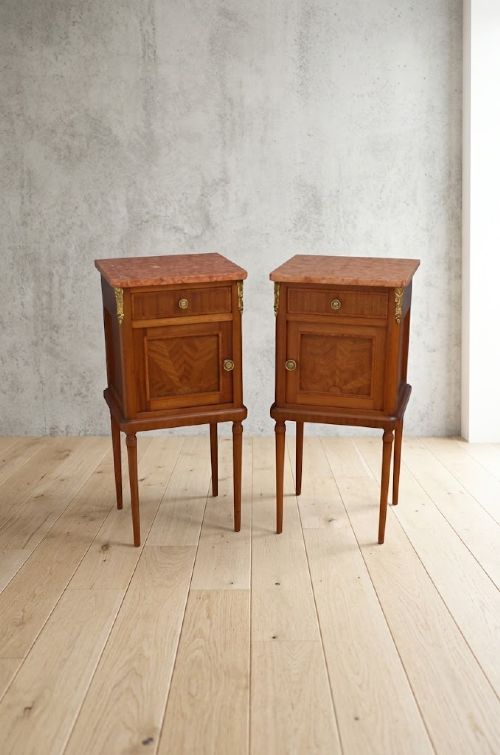
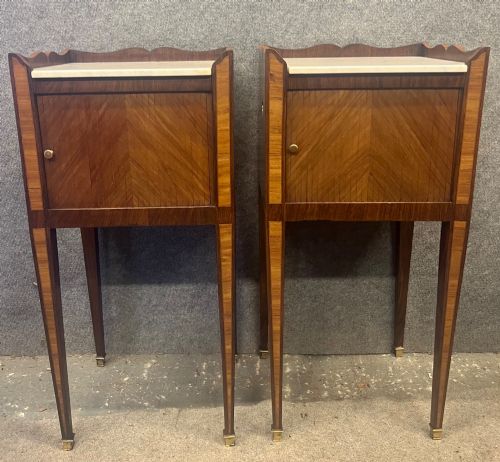
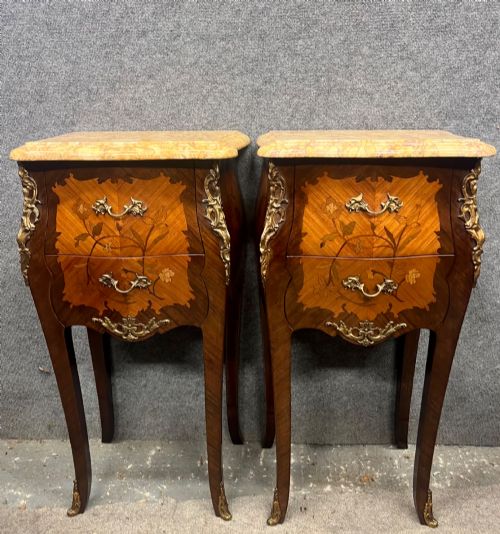
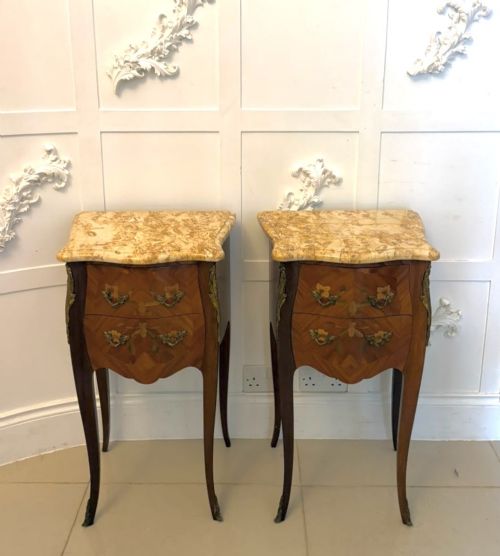
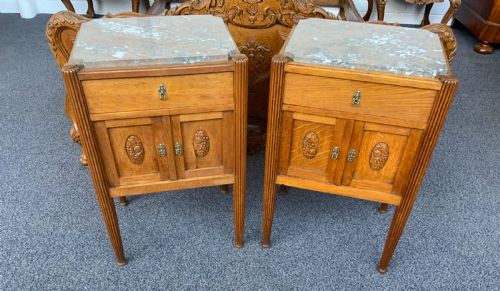
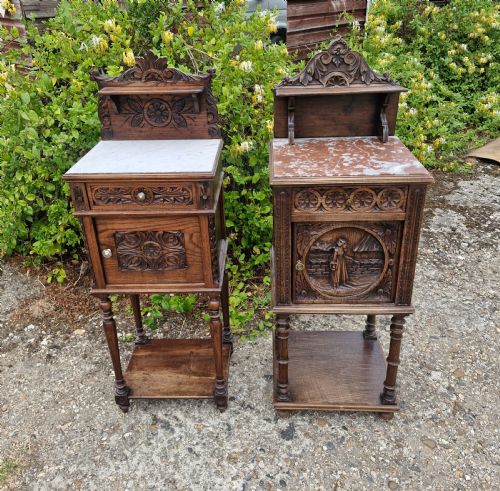
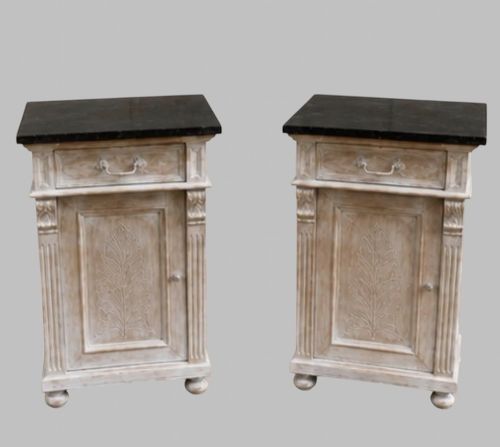
Pair marble topped tables encompass a diverse range of furniture forms designed for practical utility and decorative symmetry in period interiors. Bedside cabinets, console tables, lamp tables and plant stands dominate the selection across this page.
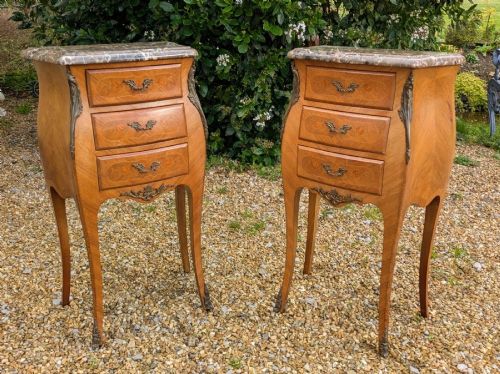
French revival styles from the nineteenth and early twentieth centuries appear frequently alongside Chinese hardwood stands and English mahogany or walnut pieces. Bedside cabinets and compact commodes represent the most common forms encountered by buyers today.
The survival of matched pairs elevates the utility of these items, particularly for flanking beds, fireplaces or architectural doorways. Both European cabinetwork and Asian export traditions are well represented in the surviving examples.
What varies in quality
The selection of timber veneer and the precision of marquetry inlay dictate the visual hierarchy among similar cabinet forms. Richly figured grains and complex geometric or floral patterns separate standard production pieces from master cabinetmaker output.
The choice and thickness of the marble slab, alongside the crispness of bronze or gilt metal mounts, determine the overall execution level. Integrated design harmony between the stone top and the wooden base remains a key indicator of workshop standard.
Listings feature bedside cabinets and console tables spanning the nineteenth and early twentieth centuries.
Krieger Paris·E. Kahn
The Pair Marble Topped Tables Glossary
- Chevet
- A French bedside table or small cabinet designed for night storage. These pieces often incorporate a single drawer above a small cupboard space.
- Console table
- A wall-mounted or freestanding table designed to stand against a vertical surface. They frequently feature decorative legs and heavy marble slabs.
- Marquetry
- Decorative inlay work using various coloured wood veneers to form pictorial or geometric patterns. Artisans carefully fitted these thin wood pieces into the carcase surface.
- Ormolu
- Gilded bronze mounts applied as decorative ornaments to furniture corners, legs, and aprons. This technique was widely utilised in French cabinetmaking.
- Petit commode
- A small chest of drawers or bedside cabinet produced in eighteenth and nineteenth century France. They typically combine fine veneers with marble tops and metal mounts.
Pair Marble Topped Tables: Frequently Asked Questions
How were pair marble topped tables used historically?
These tables served various domestic functions depending on their specific form and room placement. Bedside cabinets held night essentials while protecting surfaces from spills, whereas console tables displayed decorative items in reception rooms.
Larger console examples stood against drawing room walls for lamps or ornaments. Plant stands and guéridons provided elevated platforms for greenery or porcelain within Victorian and Edwardian interiors.
Can I use these tables as bedside cabinets?
Many surviving examples were originally constructed as bedside cabinets or compact chests specifically for bedroom use. Their enclosed cupboards and drawers offer practical storage alongside a durable stone surface.
It remains helpful to check the height of the table against your mattress level before purchase. Taller nineteenth century examples suit modern bed heights particularly well.
How do I care for antique marble tops?
Antique marble requires gentle cleaning with warm water and mild, pH-neutral soap followed by thorough drying. Avoid acidic substances like citrus or vinegar which can etch the polished surface.
Using coasters and mats helps prevent liquid rings or scratches on softer stones. Periodic waxing is generally unnecessary unless the marble has a specific historic sealant.
How do I distinguish French revival styles from earlier periods?
French revival pieces from the late nineteenth and early twentieth centuries often adopt the curved cabriole legs and floral marquetry of Louis XV or Louis XVI designs. Closer inspection of construction methods, secondary timbers, and hardware usually reveals the later manufacturing date.
Original pieces from the eighteenth century show distinct hand-tool marks and structural wear consistent with earlier cabinetmaking. Revival workshops utilised machine-sawn elements and standardised joinery while copying classic proportions.