



Parquetry Walnut Bedside Cabinets
Parquetry walnut bedside cabinets bring French proportion and intricate geometric veneers to the bedroom.
Parquetry Walnut Bedside Cabinets
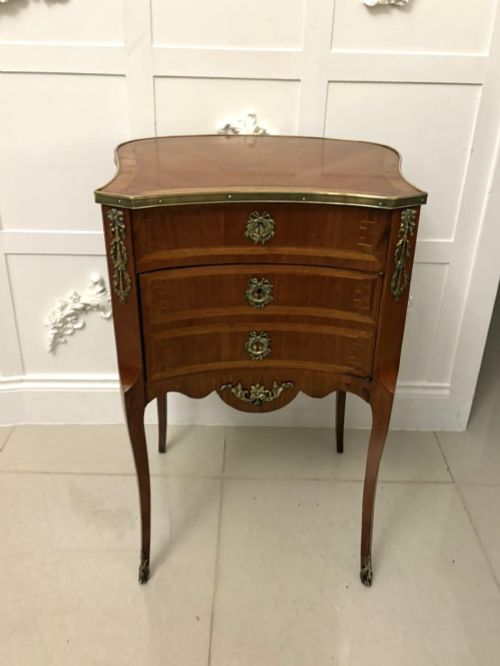
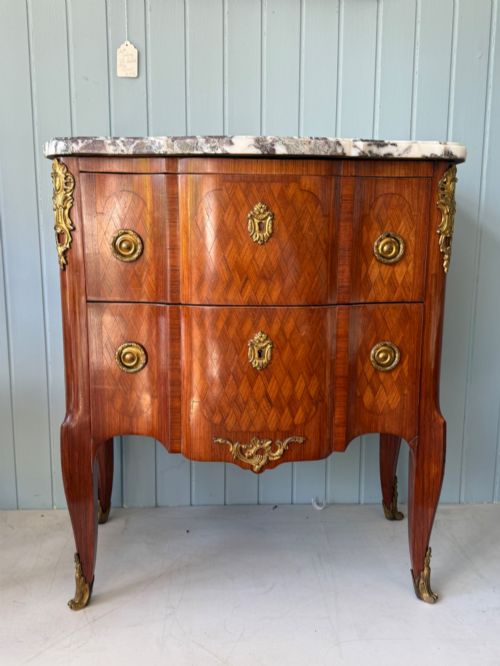
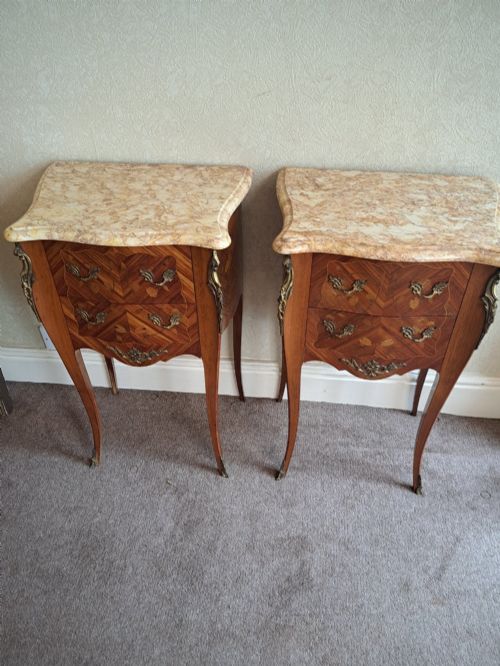
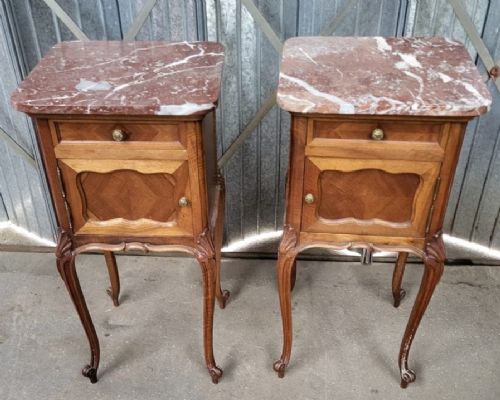
Parquetry walnut bedside cabinets are compact storage pieces built primarily in France during the nineteenth and early twentieth centuries. These tables take the form of bedside cabinets, commodes, and nightstands that frequently incorporate marble tops.
The pieces appearing on this page span several decades, stretching from the late nineteenth century through to the Art Deco period of the 1930s. Buyers will encounter matching pairs alongside individual cabinets shaped with bombe profiles or straight lines.
Makers of these items drew heavily on historic design idioms, producing works in the Louis XV style, Louis XVI revival, and French Provincial taste. Such small furniture items served both decorative and practical functions in grand and modest chambers alike.
How they were made
Cabinetmakers constructed these pieces using walnut timber and delicate veneer layers, often arranging the grain in geometric parquetry patterns. Surfaces were frequently completed with marble tops, while structural accents utilised brass, ormolu, and gilt bronze.
Joiners shaped complex curves for bombe and kidney-shaped bodies, requiring precise cutting of wood veneers. Details such as secret compartments and inset leather surfaces appear within the recorded construction techniques of the period.
Listings feature pieces from the 1800s, 1870, 1890, 1900, 1910, 1920, 1930, and the Edwardian period, utilising walnut, brass, marble, kingwood, ormolu, gilt bronze, veneer, and leather.
What varies in quality
The standard of a cabinet rests on the precision of its parquetry layout and the alignment of the walnut veneer across curved surfaces. Finer examples display meticulous matching of grain patterns and tighter joints on bombe or serpentine frames.
Hardware and secondary materials also set pieces apart, distinguishing simple walnut frames from those mounted with chased ormolu, solid brass, and heavy marble slabs. The sophistication of internal fittings, including drawers and secret compartments, marks out the superior workshops.
The Parquetry Walnut Bedside Cabinets Glossary
- Parquetry
- Geometric mosaic woodwork formed by fitting small pieces of veneer together onto a structure. This technique creates patterned surfaces such as cubes or chequers.
- Ormolu
- Gilt bronze mounts applied to furniture for decorative effect. These metallic embellishments define French revival pieces from the nineteenth century.
- Bombe
- An outwardly bulging swollen contour found on the sides and fronts of cabinets. This curved form requires advanced veneer shaping.
- Chevet
- A French term for a bedside table or small nightstand. These compact units provide enclosed storage beside a bed.
- Marquetry
- Decorative inlay work using various coloured woods to form pictorial or abstract motifs. It differs from parquetry through its pictorial scope.
Parquetry Walnut Bedside Cabinets: Frequently Asked Questions
Are these cabinets purely French?
The majority of pieces catalogued originate from French workshops or follow distinct French stylistic traditions such as Louis XV and Louis XVI revivals. Cabinetmakers across these regions favoured walnut and decorative veneer work for bedroom furnishings.
Buyers will also find designs associated with Edwardian and Art Deco tastes spanning the late nineteenth and early twentieth centuries. Each period imparted local interpretations to the basic bedside cabinet form.
How do I identify a marble top cabinet?
Marble top bedside cabinets feature fitted stone slabs inset directly into the timber frame of the upper surface. These stone additions provided a durable, water-resistant top for washing basins and nighttime accessories.
Slabs vary from simple white marble to variegated coloured stone matching the tones of the walnut veneer below. They lift out of the wooden rebate on many antique examples.
How do I care for walnut veneer?
Walnut veneer surfaces require gentle cleaning with a soft, dry cloth to preserve the polished wood finish. Avoid excess moisture and harsh chemical polishes that can damage the delicate historic glues beneath the veneer.
Keeping cabinets away from direct heat sources and strong sunlight prevents the walnut timber from drying out or fading. Natural wax applied sparingly helps maintain the lustre of the parquetry patterns.