
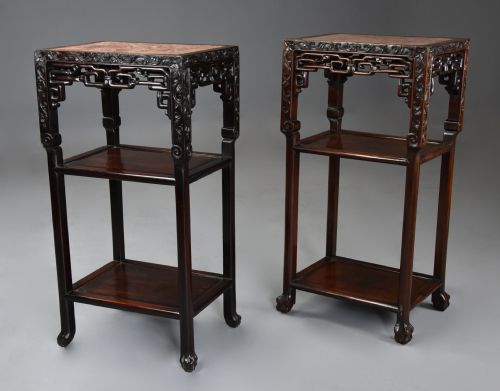
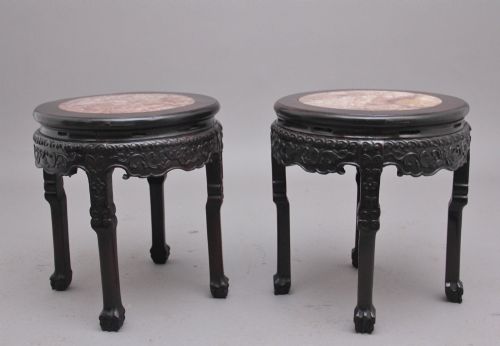
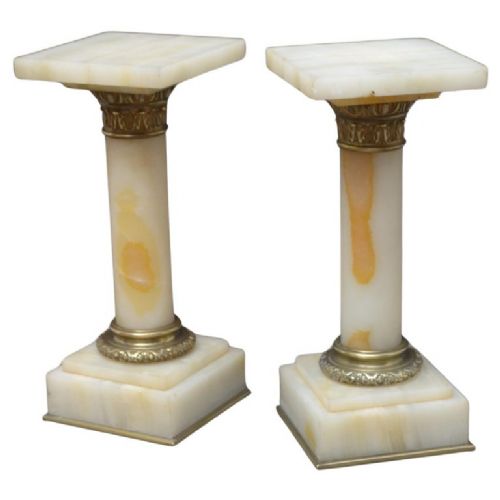
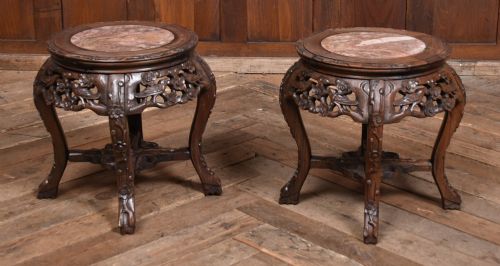


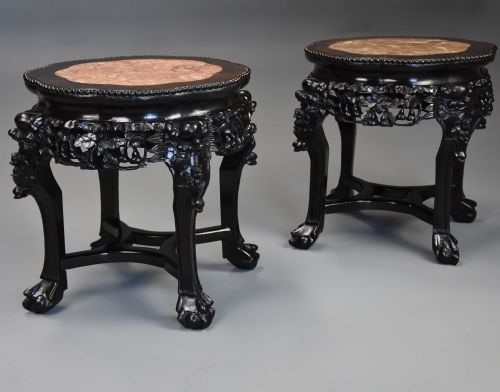


Pair Marble Plant Stands
These pair marble plant stands elevate flora and sculpture with carved hardwood, onyx, and neoclassical columns.
Pair Marble Plant Stands
When you search for pair marble plant stands, you encounter a specialised selection of symmetrical furnishings designed to elevate interior greenery, urns, and sculpture. These objects serve decorative and architectural roles within domestic spaces, offering elevated surfaces for display across multiple centuries of craftsmanship.
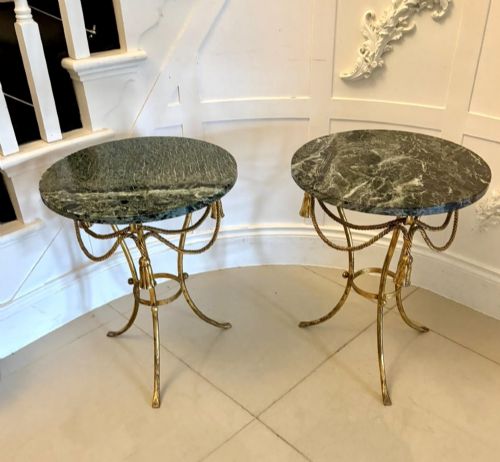
The selections span distinct cultural and period traditions, uniting European neoclassical tastes with Chinese Qing Dynasty woodworking. You will frequently find matching pairs featuring inset marble tops supported by carved hardwood frames, gilt metal mounts, or stone columns.
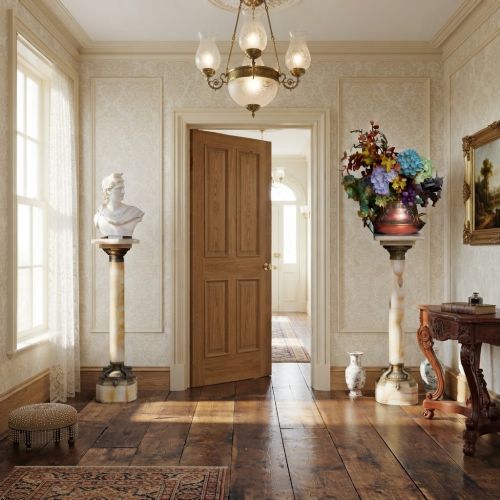
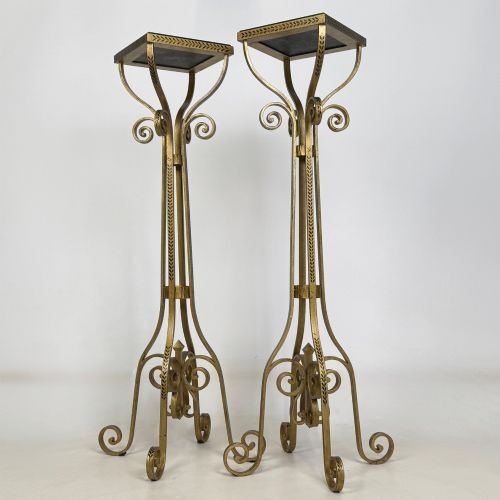
Forms range from tall torchere columns and pedestals to low occasional tables and bedside cabinets adapted for display. These dual configurations provide balanced symmetry for flanking doorways, fireplaces, or room corners.
Materials and Construction
Makers combined dense timbers such as rosewood, hongmu, mahogany, and ebonised hardwood with natural stone inserts including verde, rouge, bardiglio, carrara, and serpentine marble. Hardwood frames frequently feature intricate hand-carved details, joinery, and occasionally mother-of-pearl inlay.
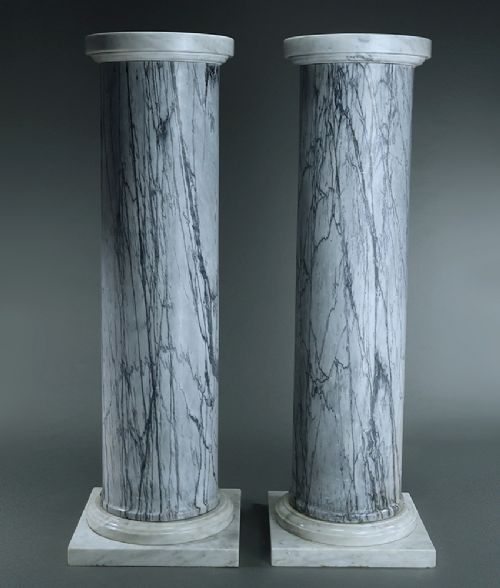
European examples incorporate cast or chased ormolu collars, brass mounts, and gilt metal details alongside solid onyx, alabaster, or painted plaster columns. The stone tops are precision-cut and polished to sit flush within wooden or metal rims, providing durable surfaces for heavy urns and plants.
Materials documented across the inventory include onyx, alabaster, brass, ormolu, rosewood, and multiple varieties of marble.
Gradations in Quality
Quality rests upon the crispness of the wood carving and the natural figuring of the stone inserts. Superior examples display deep, three-dimensional carving on hardwood skirts and legs, matched with stone tops exhibiting rich veining and unblemished surfaces.
Construction rigidity and material integration also distinguish finer pieces, where ormolu collars fit precisely and columns maintain absolute vertical alignment. Matched pairs showing uniform grain direction and consistent patination reflect higher standards of original workshop selection.
The Pair Marble Plant Stands Glossary
- Ormolu
- Gilt bronze ornamentation applied to furniture and decorative objects. It provides metallic contrast against dark hardwoods and polished marble.
- Torchere
- A tall stand or pedestal originally designed to hold a torch or candle. These architectural supports later adapted to display plants, urns, and lamps.
- Hongmu
- A category of dense, heavy Chinese hardwoods prized for furniture making. It frequently forms the carved structure beneath inset marble panels.
- Serpentine marble
- A greenish decorative stone mottled with serpentine minerals. It provides durable, patterned surfaces for classical columns and table tops.
- Plinth
- The heavy base supporting a column, pedestal, or statue. It provides physical stability and visual grounding for elevated plant stands.
Pair Marble Plant Stands: Frequently Asked Questions
What woods appear most often in these stands?
Chinese pieces frequently utilise exotic hardwoods such as rosewood, padouk, and hongmu. These dense timbers supported heavy stone inserts without warping.
European makers employed mahogany, satinwood, and ebonised wood alongside gilt metal and brass components. The selection of timber often mirrored the prevailing furniture style of the period.
How do I distinguish Chinese stands from European ones?
Chinese stands often feature carved hardwood frames with inset marble tops, reflecting Qing Dynasty motifs and mortise-and-tenon joinery. Mother-of-pearl inlay and ebonised finishes also point to Asian workshop origins.
European examples typically lean towards neoclassical designs, incorporating full stone columns, ormolu collars, and painted plaster or cast brass elements. The presence of verd antique, rouge, or carrara marble columns usually signifies French or Italian manufacture.
Can these stands support heavy items safely?
The solid construction of hardwood frames and stone columns provides substantial weight-bearing capacity. They were originally engineered to hold heavy stone urns and large potted plants.
Buyers should inspect the structural integrity of the joints and the stability of the base before placing exceptionally heavy sculptures or large botanical arrangements on top.