
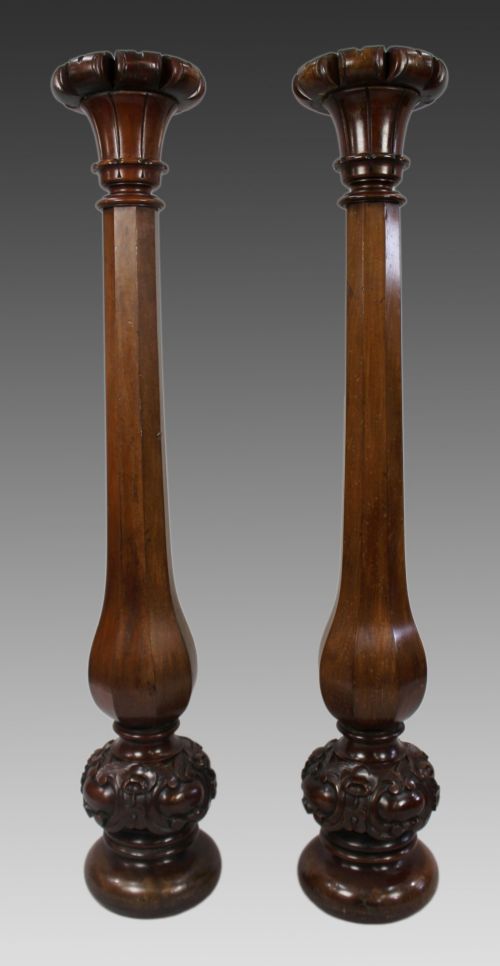
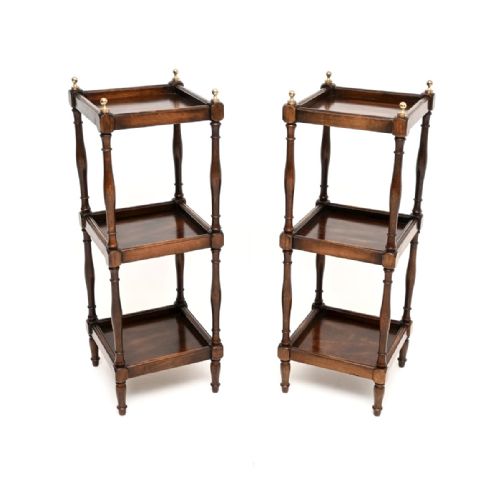
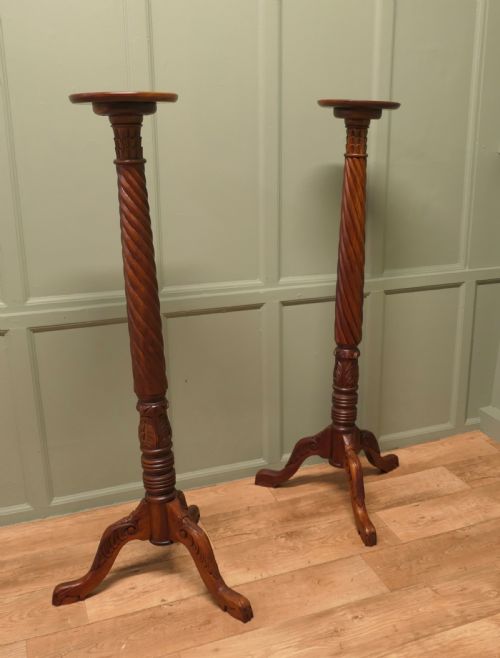
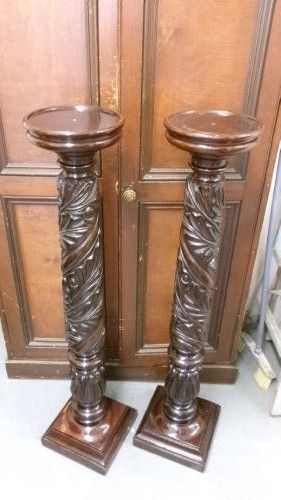
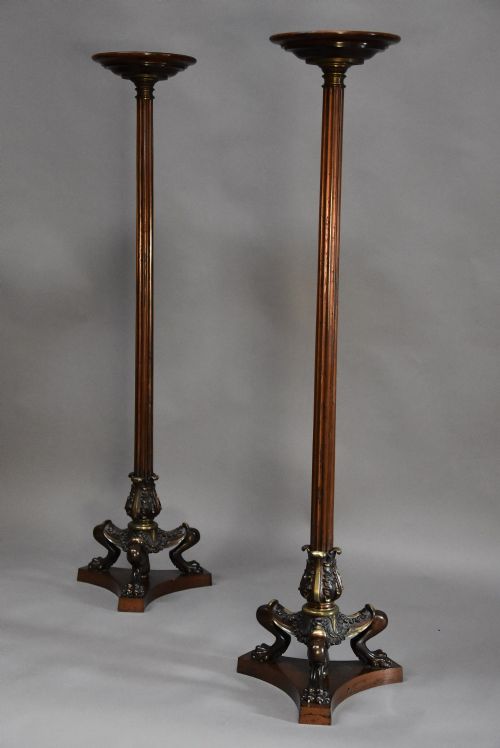

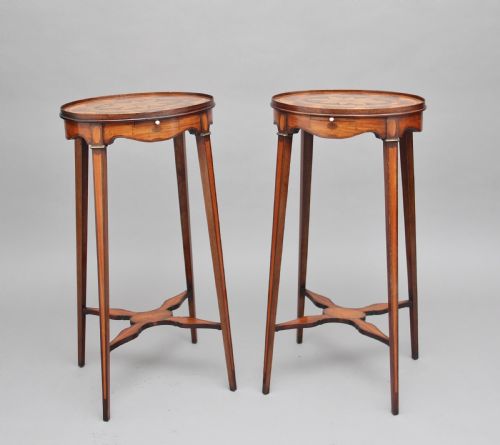


Pair Mahogany Plant Stands
Pair mahogany plant stands elevate botanical displays with classical proportion, bringing vertical interest and rich dark timber grain into a room.
Pair Mahogany Plant Stands
Pair mahogany plant stands span multiple historical eras, appearing in Georgian, Victorian, and Edwardian forms designed to elevate decorative items. These useful pieces serve as torcheres, pedestals, urn stands, and occasional tables, often standing tall with slender columns or carved shafts.
Victorian and Edwardian examples dominate the selection, bringing warmth through rich timber and occasional satinwood or brass detailing. Buyers encounter various configurations ranging from simple three-tier side tables to heavy classical column pedestals and tall wine tables.
Originating from diverse stylistic revivals, these furnishings include Georgian style pieces, French Empire influences, and Sheraton revival designs. The forms adapt readily to modern interiors while retaining their traditional utility as display surfaces.
Materials and construction
Makers utilised solid mahogany and hardwood foundations, often pairing the dark timber with contrasting materials such as brass mounts, marble tops, and subtle satinwood inlay. Bronze, alabaster, and bone also appear on specific forms, adding varied textural weight to the timber framework.
Construction techniques involve careful turning of columns, precise joinery, and intricate carving on pedestals and tripod bases. Inlaid panels and brass fittings demonstrate the skilled handwork typical of these decorative stands.
Listings span from the eighteenth-century George III period through the Victorian and Edwardian eras, incorporating diverse materials like marble, brass, and satinwood.
Assessing quality in stands
Quality rests primarily in the crispness of the timber carving, the depth of the mahogany grain, and the stability of the column or pedestal base. Superior examples display balanced proportions, clean joinery, and harmonious matching between the two items forming the pair.
The integration of secondary materials such as well-cast brass, substantial marble or alabaster tops, and fine satinwood stringing distinguishes higher workshops from standard commercial production. Weight, structural rigidity, and the fidelity of revival styles further separate ordinary pieces from finer items.
The Pair Mahogany Plant Stands Glossary
- Torchere
- A tall ornamental stand originally designed to hold a candle or torch. These slender supports now serve to display floral arrangements or sculptural busts.
- Pedestal
- A structural support or column used to elevate urns, vases, or statues. They feature heavily in classical and architectural furniture designs.
- Satinwood
- A bright, pale exotic timber utilised for contrasting inlay and decorative banding on mahogany furniture. It creates striking visual boundaries on table tops and friezes.
- Inlay
- A decorative technique where contrasting woods or metals are inserted into recessed cavities on the timber surface. Sheraton revival pieces frequently employ this method.
- Occasional table
- A small, versatile table intended for light domestic use around a principal room. They appear in matching pairs across various nineteenth-century periods.
Pair Mahogany Plant Stands: Frequently Asked Questions
What were pair mahogany plant stands used for?
These tall supports originally held lighting devices, decorative urns, or botanical specimens in prominent rooms of grand houses. Their elevated surfaces brought greenery and ornamental items to eye level.
Today, they serve similar decorative purposes in residential interiors, providing stable platforms for houseplants, floral arrangements, or sculptural objects without occupying excessive floor space.
How do I date a pair of stands?
Dating relies on observing the stylistic markers, turning methods, and secondary woods present in the construction. Georgian and Regency pieces show classical architectural restraint, while Victorian items often incorporate heavier carving or mixed materials like marble.
Edwardian and later revival items frequently display lighter satinwood inlay and more eclectic stylistic borrowings, helping to narrow their period of manufacture.
Are these stands genuinely matching pairs?
Many listings feature closely matched pairs or matched pairs assembled during the nineteenth or twentieth centuries rather than originating from a single workshop bench at the exact same moment. Slight variations in timber grain or turning depth can occur in older furniture.
Buyers should examine the overall height, base configuration, and wood tone to determine how harmoniously the two pieces function together in a room.
How do I care for antique mahogany?
Mahogany benefits from consistent indoor humidity and protection from direct sunlight, which can fade the rich reddish-brown tone of the timber over time. Regular dusting with a soft, dry cloth preserves the polished surface.
Applying a traditional beeswax polish occasionally helps nourish the wood and maintain its natural lustre without building up heavy chemical layers.