

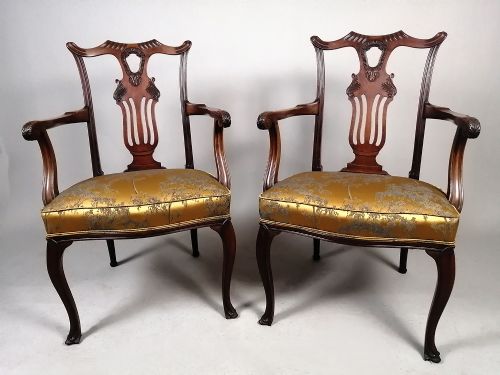
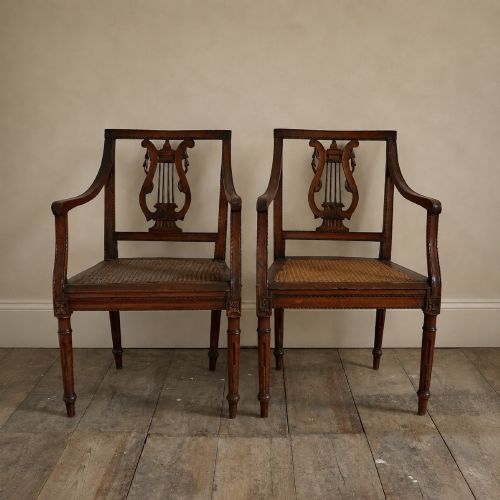
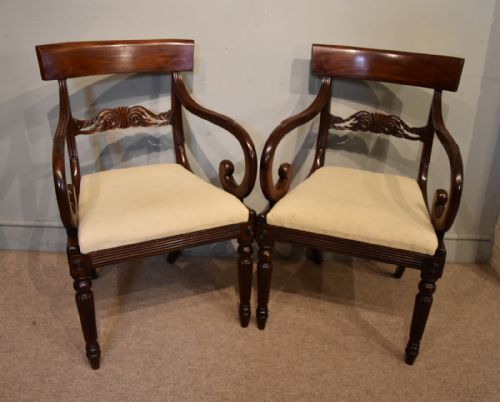
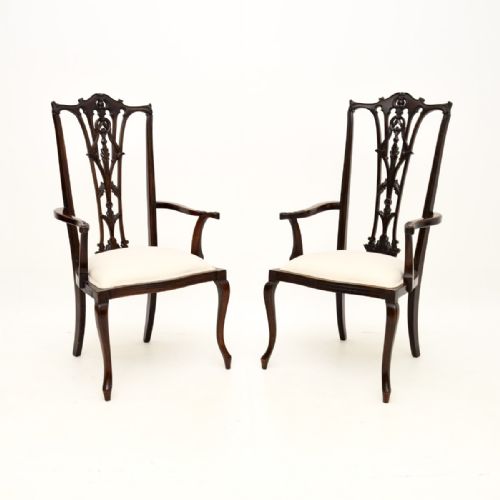
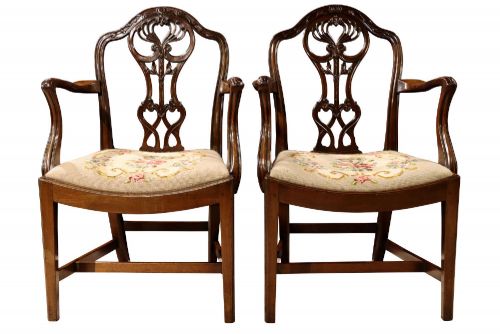


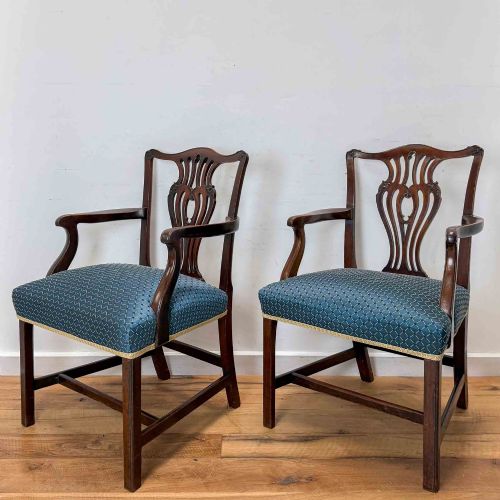
Pair Mahogany Elbow Chairs
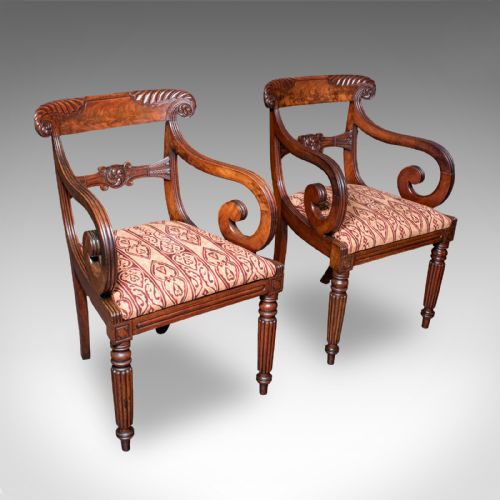
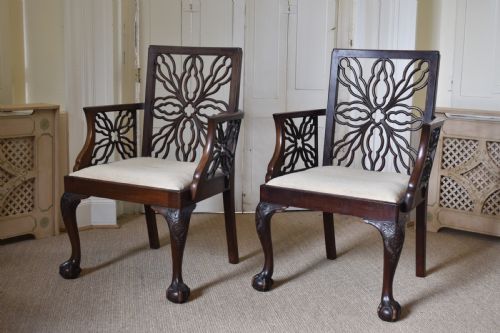
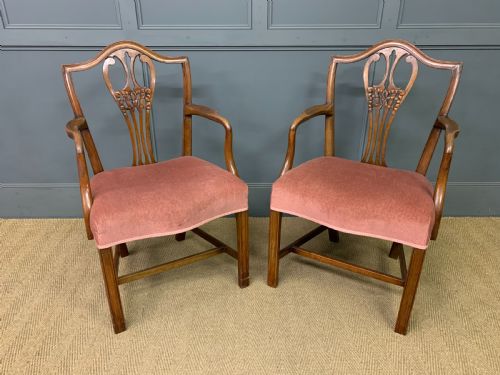
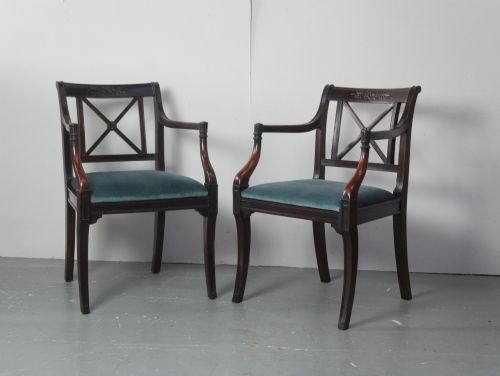
These pair mahogany elbow chairs offer sturdy seating formed from rich timber, uniting period utility with classical design.
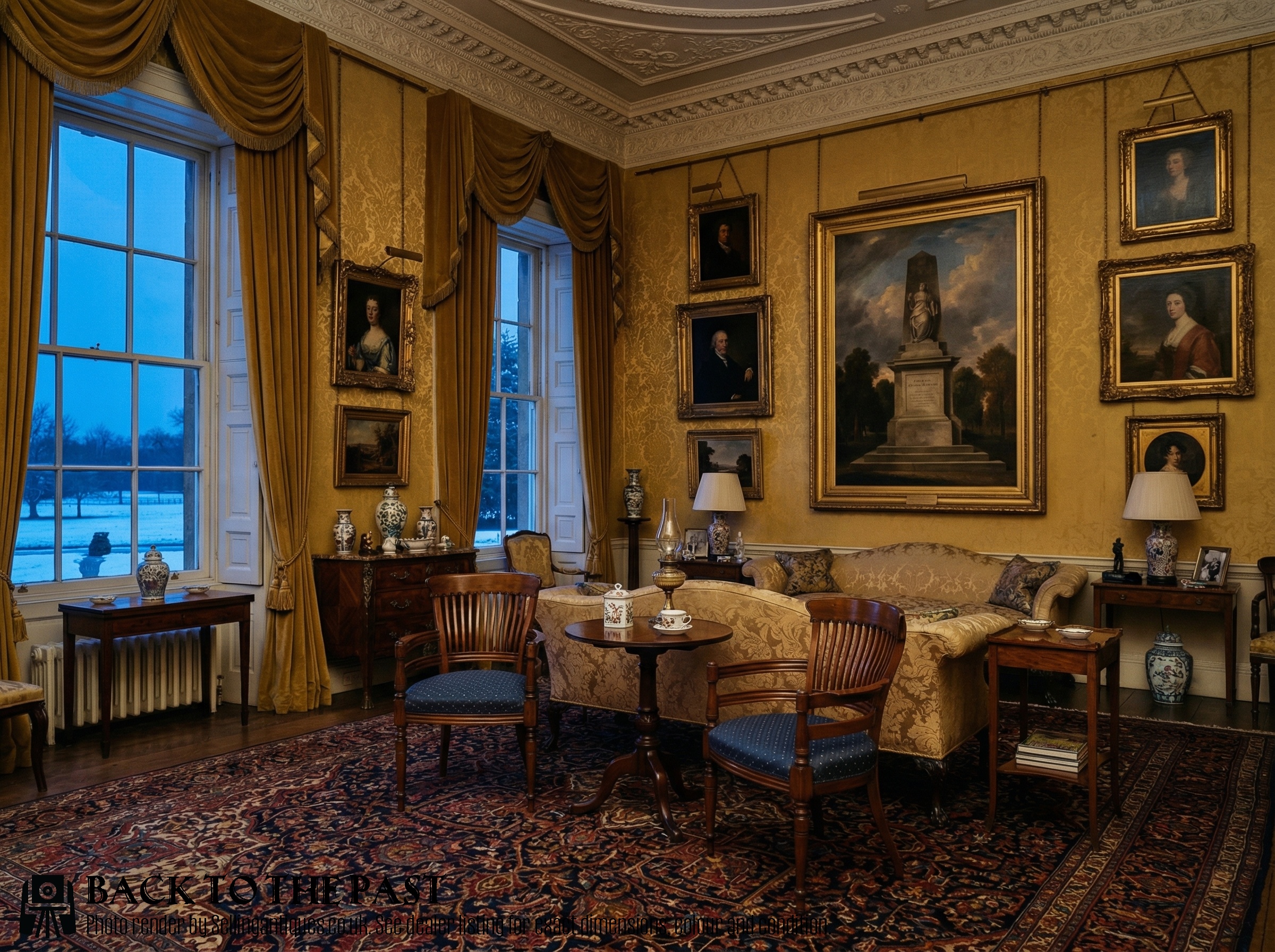
Pair Mahogany Elbow Chairs
A pair mahogany elbow chairs search reveals seating designed for dining rooms, libraries, and reception spaces across multiple centuries. These seats include carvers, armchairs, and desk chairs originating from Georgian, Regency, Victorian, and Edwardian periods.
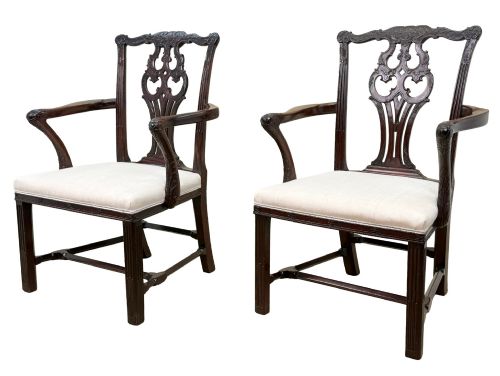
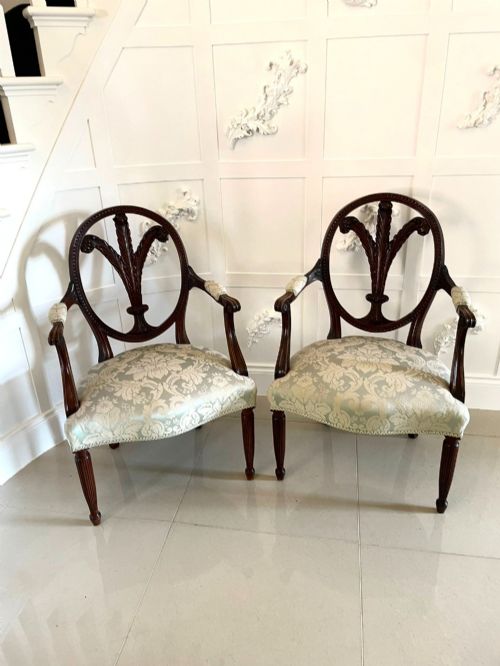
Buyers meet examples spanning strict historical eras alongside later revivals, such as Chippendale style, Hepplewhite style, and Regency revival. The shared form combines a sturdy timber frame with supporting armrests tailored for comfort.
Originating mostly from English workshops, these items serve functional roles as dining armchairs or morning room seats. Their matching configuration makes them practical for placement around a table or flanking a fireplace.
What varies in quality
The refinement of carved details distinguishes finer examples from simpler production pieces, particularly around the crest rail, splat, and arm terminals. Sharp, cleanly executed mouldings and crisp hand-carving indicate skilled craftsmanship.
Timber selection dictates the visual depth of the grain, with well-figured mahogany displaying rich tones and careful matching across the pair. The integrity of the original joints and timber seasoning preserves the structural balance over time.
Pair Mahogany Elbow Chairs Retail Price Guide 2026
Typical asking prices for pair mahogany elbow chairs among the pieces listed under this phrase on Sellingantiques today, from the lower quarter to the upper quarter. They describe what is for sale here now, not the wider market.
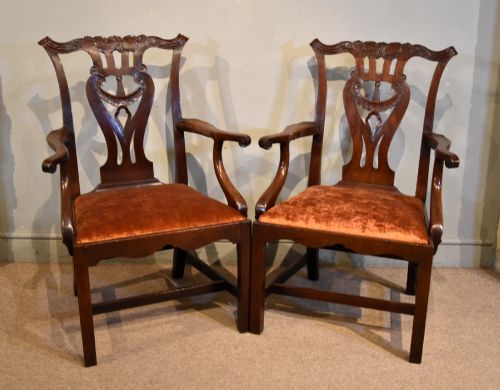
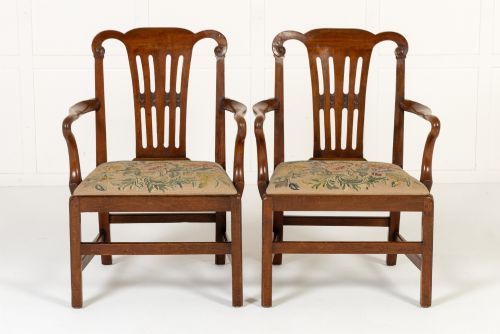
Listings feature mahogany frames paired with upholstery in leather, velvet, and woven fabric across Georgian, Regency, and Edwardian periods.
The Pair Mahogany Elbow Chairs Glossary
- Carver chair
- An armchair, traditionally placed at the head of a dining table or utilised as a desk seat. These pieces feature integrated armrests to provide additional support.
- Bar-back
- A chair back featuring horizontal wooden slats resembling the bars of a gate or ladder. This design was popular during the Regency period.
- Lyre back
- A chair splat shaped in the silhouette of a classical stringed musical instrument. This motif gained favour during the Regency and nineteenth-century revival periods.
- Splat
- The central vertical slat running from the seat up to the top rail of a chair back. Cabinetmakers shaped and carved this component to define the stylistic period.
- Sabre leg
- A concave curving chair leg that tapers toward the foot, mimicking the shape of a cavalry sword. This form appeared frequently on Regency seating.
Pair Mahogany Elbow Chairs: Frequently Asked Questions
Where were pair mahogany elbow chairs used?
These chairs served multiple domestic functions in period homes, primarily acting as dining armchairs or desk seats. They also populated libraries, morning rooms, and parlours as reception seating.
Their substantial arms and paired configuration made them suitable for placement at the heads of dining tables or flanking fireplaces.
How do I date a mahogany elbow chair?
Dating relies on observing structural proportions, leg shapes, and carved decorative motifs matched against historical periods. Regency pieces often display sabre legs and brass inlay, while Georgian examples favour straight or cabriole supports.
Revival pieces from around nineteen hundred frequently emulate earlier eighteenth-century Chippendale or Hepplewhite designs while retaining later timber patination.
Can I use these chairs at a modern dining table?
These antique carvers function well in contemporary dining settings alongside standard dining tables. Their generous proportions and armrests provide comfortable seating for prolonged dining.
Buyers should verify seat heights and arm clearances against their table dimensions to ensure the chairs tuck underneath properly.
What is the difference between an elbow chair and a carver?
The terms are often used interchangeably to describe any armchair with wooden elbow supports designed for dining or desk use. Historically, carvers denoted chairs positioned at the ends of dining tables to accommodate the host.
Both forms share the characteristic open arm design paired with a matching companion seat.