


Pair Low Stools
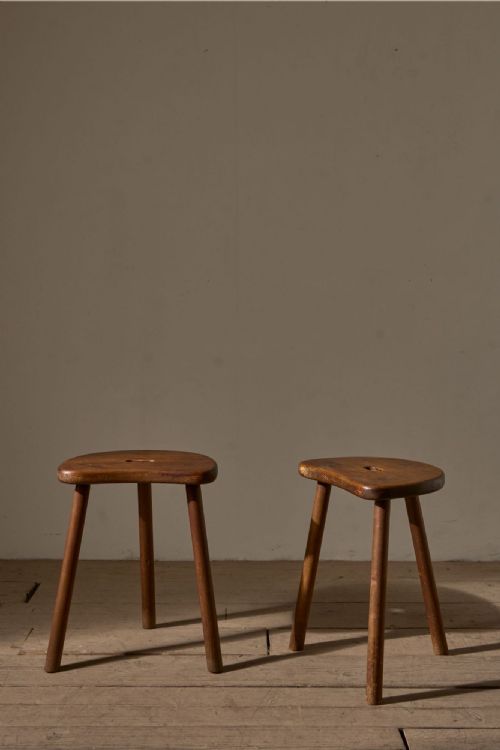
Pair low stools bring balanced seating and surface utility to compact spaces, spanning centuries of regional cabinetmaking from simple pine to carved walnut.
Pair Low Stools
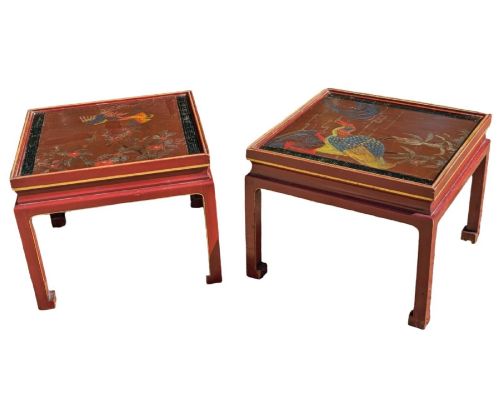
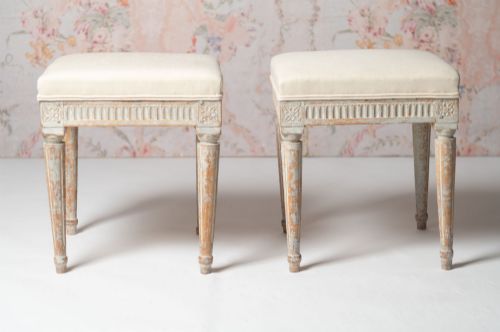
Forms extend beyond standard seating to include candle stands, side tables, window seats, and prie-dieu chairs, often grouped as pairs by proportion and finish. Regional diversity remains prominent, ranging from Swedish Gustavian painted surfaces to French revival styles and English domestic timber frames.
Materials and construction
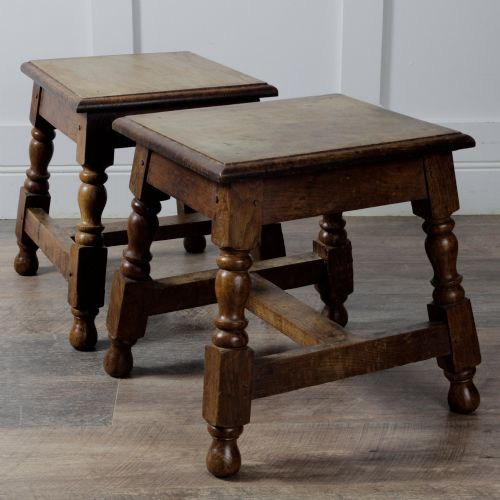
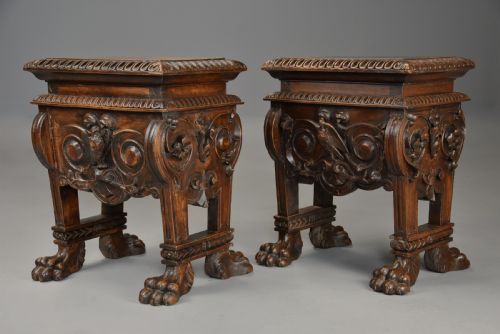
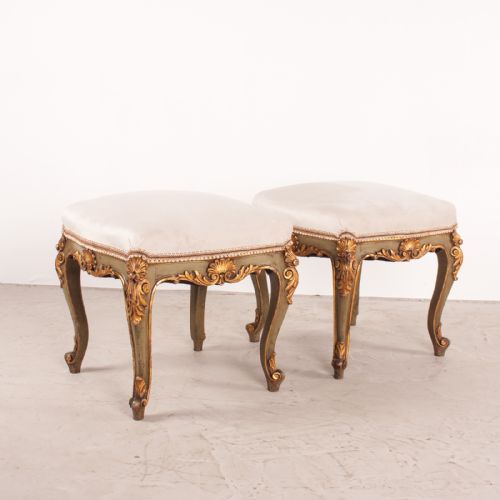
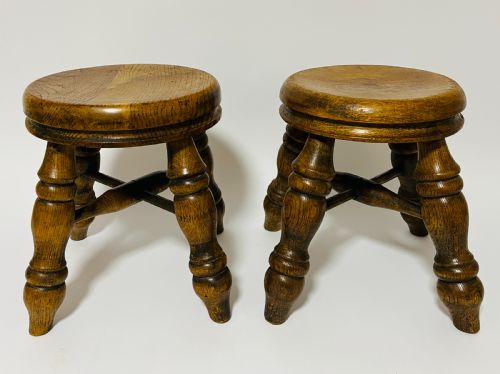
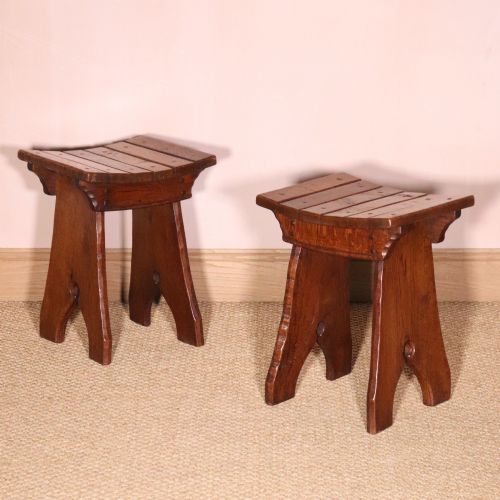
Joinery relies heavily on traditional timber framing using hardwoods such as mahogany, walnut, rosewood, and yew alongside softer woods like pine and beech. Frames frequently feature hand carving, gilding, or painted finishes, reflecting the aesthetic preferences of periods from the Georgian era through the Arts and Crafts movement.
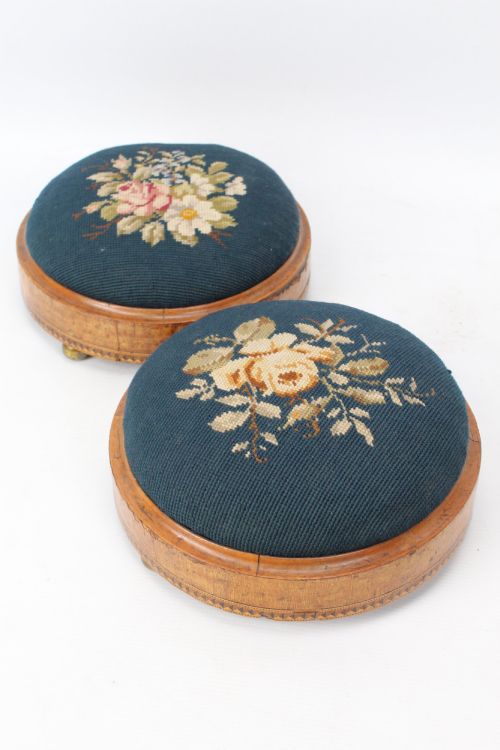
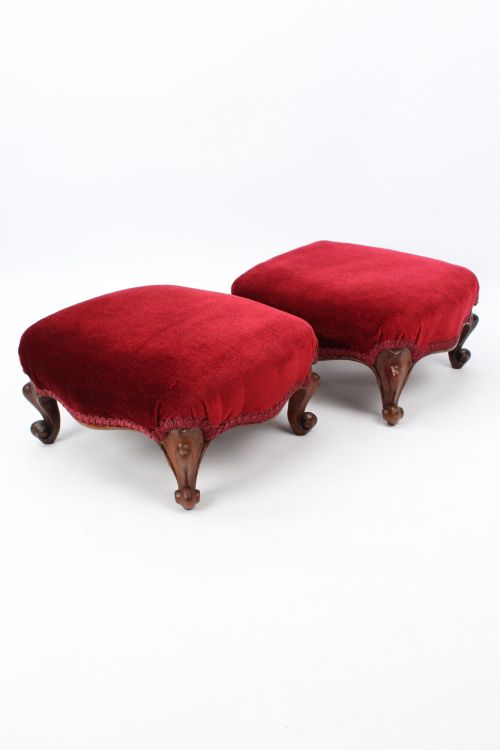
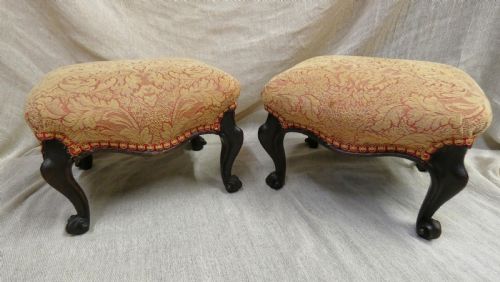
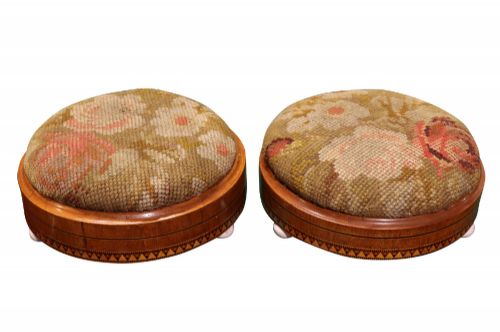
Upholstered examples integrate traditional textiles, velvet, silk, and fabric over padded foundations, while wooden tops showcase jointed construction, inlay, and inset porcelain panels. The combination of structural timber and decorative surface treatment defines the physical character of each pair.
Materials recorded across the selection include walnut, mahogany, brass, velvet, silk, painted wood, and porcelain panel inserts.
Assessing quality and craftsmanship
Quality rests upon the crispness of carved details in the wood, the integrity of the original joints, and the cohesion of the matched pair. Pieces that retain their original painted surfaces, gilding, or early upholstery demonstrate superior survival compared to heavily altered examples.
Proportion and timber selection further distinguish finer workshops from vernacular production. The balance between the frame and its decorative elements dictates the visual weight and historical integrity of the objects.
Jack Grimble·Gillow
The Pair Low Stools Glossary
- Vernacular
- Everyday furniture made by local craftsmen using regional timbers rather than following high-style urban fashions. These pieces often display straightforward construction and honest utility.
- Gustavian
- The Swedish interpretation of French neoclassical style, characterised by lighter proportions, pale painted finishes, and restrained carving. It emerged during the late eighteenth century.
- Prie-Dieu
- A devotional chair or low stool equipped with a padded shelf for kneeling and prayer. They became particularly popular during the Victorian period.
- Cabriole leg
- A furniture leg that curves outward in a convex arc and then bends inward in a concave arc, terminating in a foot. This design originates from classical antiquity and recurs in revival styles.
- Yew wood
- A dense, richly grained softwood prized by cabinetmakers for its variegated colour and decorative figure. It was frequently utilised in quality country and regional pieces.
Pair Low Stools: Frequently Asked Questions
How were pair low stools used historically?
These pieces served multiple domestic functions, acting as footstools for seated occupants, low seats near firesides, or small stands for candles and decorative objects. Their modest height kept them versatile within domestic interiors.
Pairs were frequently positioned symmetrically beside hearths, beneath windows, or flanking larger pieces of furniture to create balance in a room's layout.
What woods are common in these stools?
Makers utilised a wide array of timbers depending on the period and region of origin. Hardwoods such as mahogany, walnut, rosewood, and oak dominate formal examples, while regional items frequently employ pine, elm, or beech.
Exotic woods like yew also appear in specific stylistic contexts, offering distinctive grain patterns that elevated the visual appeal of the seating.
How do I identify a Victorian footstool?
Victorian examples often feature turned or cabriole legs in walnut, mahogany, or rosewood, supporting an upholstered top covered in velvet, needlework, or silk. The frames frequently display robust carving typical of nineteenth-century revival aesthetics.
Construction details such as traditional joinery and the weight of the timber help separate nineteenth-century productions from later reproductions.
Can these stools be used as small tables?
Flat-topped wooden variants, including candle stands and low stands, function readily as compact side tables for holding small objects. Upholstered versions remain better suited for seating or resting feet.
Care should be taken with upholstered surfaces if placing liquid items upon them, though rigid wooden panels and low tables adapt well to daily surface use.