
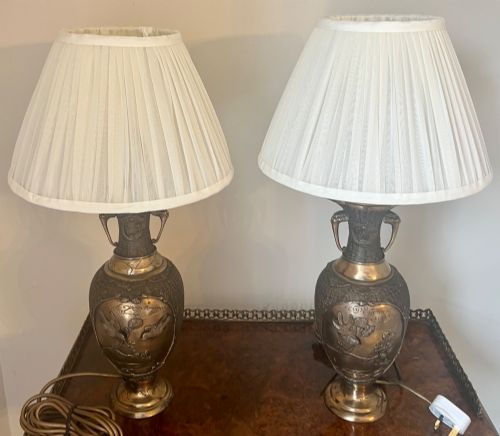
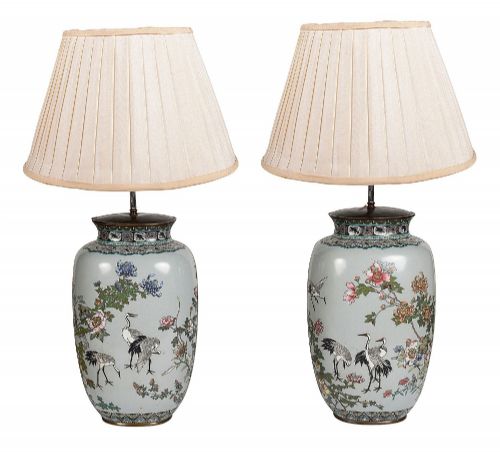
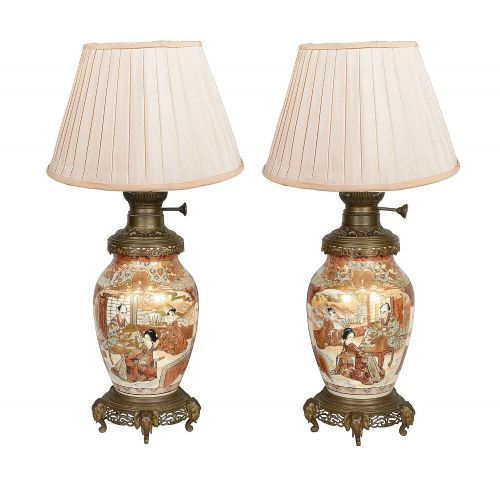


Pair Japanese Vase Lamps
These pair japanese vase lamps bring together traditional ceramic and bronze vessels with practical illumination for domestic interiors.
Pair Japanese Vase Lamps
Buyers seeking pair japanese vase lamps encounter matched sets of decorative vessels adapted into functional table lamps. These pieces originate primarily from the nineteenth century, including the Meiji and Edo periods, alongside later twentieth-century examples.
Most items function as table lamps, often retaining the proportions of the original vases. They appear frequently paired with fabric or silk shades that complement the underlying ceramic or metal bodies.
Materials and construction
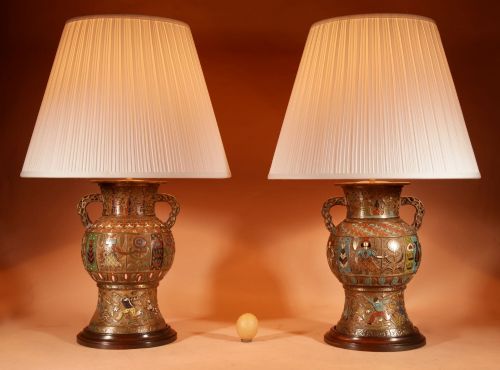
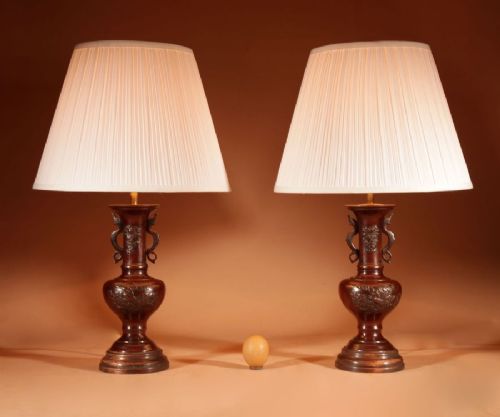
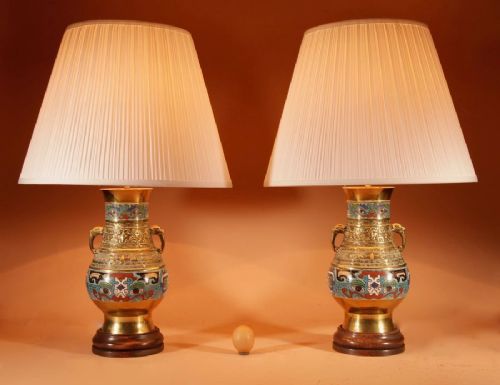
Construction relies on ceramic bodies formed from porcelain or earthenware, decorated with painted blue and white pigments, enamels, or gilt highlights. Metal counterparts utilise cast bronze and brass, frequently embellished with champlevé or cloisonné enamel work.
Conversion into lamps involves mounting the original vases onto bases, sometimes incorporating ormolu mounts made in Europe to secure electrical fittings. Wiring and holders are added above the vessel neck while preserving the decorative surface of the antique body.
Listings include items manufactured across the seventeenth, eighteenth, and nineteenth centuries, alongside early twentieth-century examples.
Evaluating quality and execution
Quality rests upon the fineness of the original vessel's painting, the crispness of enamel work, and the weight of the bronze or porcelain body. Superior examples demonstrate meticulous detail in hand-painted motifs and precise metal cloisonné wirework.
The integration of mounts and lamp fittings also dictates overall standard. Pieces featuring quality ormolu mounts and harmonious proportions display superior craftsmanship compared to simpler conversions.
The Pair Japanese Vase Lamps Glossary
- Cloisonné
- A metalwork technique where fine wires are soldered to a metal body to form compartments filled with enamel paste and fired. This creates intricate coloured patterns across bronze or brass surfaces.
- Champlevé
- An enamelling method where troughs or cells are carved directly into a thick metal surface and filled with enamel before firing. It produces bold designs on heavy bronze and brass bases.
- Satsuma
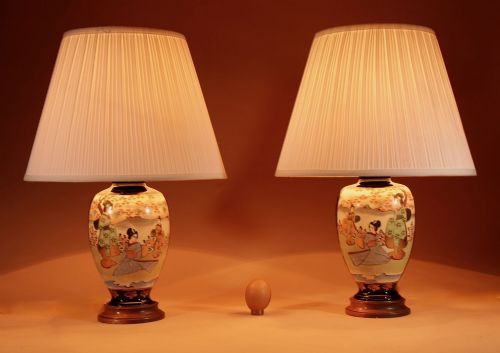
- A type of Japanese earthenware featuring a crackle-glaze ivory body painted with polychrome enamels and gilding. These wares are widely adapted into decorative table lamps.
- Imari
- A traditional style of Japanese porcelain decorated in underglaze blue, iron red, and gold. Dating largely from the Edo period onwards, these pieces provide striking patterns for lamp conversions.
- Kutani
- Japanese porcelain recognised for its vibrant overglaze painting, often dominated by rich greens, reds, and golds. Such vases offer robust colour when used for lighting.
- Ormolu
- Gilded bronze mounts applied to furniture and ceramic objects for decorative support. European workshops frequently added these metal fixtures to imported Japanese vases during conversion.
Pair Japanese Vase Lamps: Frequently Asked Questions
How are these lamps wired?
Most antique vase lamps are adapted for modern electrical standards using standard flex and lamp holders fitted through the top of the vessel.
Professional conversions typically avoid drilling through the main decorated ceramic or bronze body wherever possible.
Can original vase lids be kept?
Some early vases survive with matching lids that were set aside or modified when the bodies were turned into lamps. Many examples, however, omit the original lids to accommodate the electrical stem and shade.
Finding a matched pair with intact lids remains uncommon among converted table lamps.
How do I date these lamps?
Dating relies on the stylistic markers, glazes, and marks of the original ceramic or bronze vase rather than the electrical fittings. The listed pieces span the seventeenth through to the early twentieth century.
Meiji period examples often display distinct signature panels and dense decorative motifs characteristic of late nineteenth-century export wares.
What shades suit these lamps?
Fabric and silk shades in neutral or coordinating tones help balance the colourful patterns of Satsuma, Imari, and Kutani porcelain. The choice of shade typically reflects the scale and height of the underlying vase.
Proportion is key to ensuring the completed table lamp sits comfortably within a room.