





Pair Japanese Bronze Vases
Pair japanese bronze vases bring sculptural weight and intricate metalwork into a room, originating mostly from the Meiji period.
Pair Japanese Bronze Vases
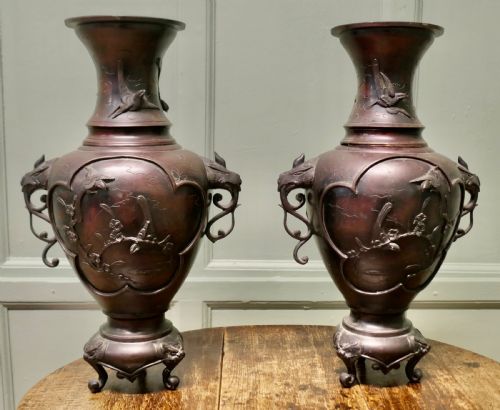
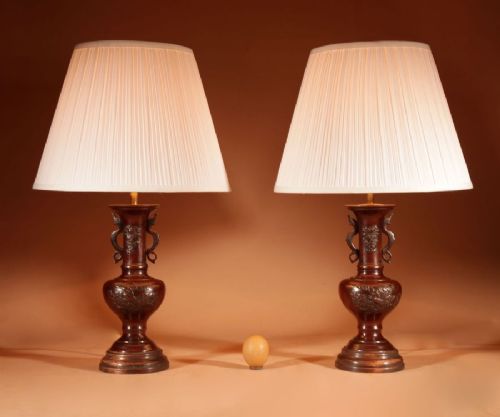
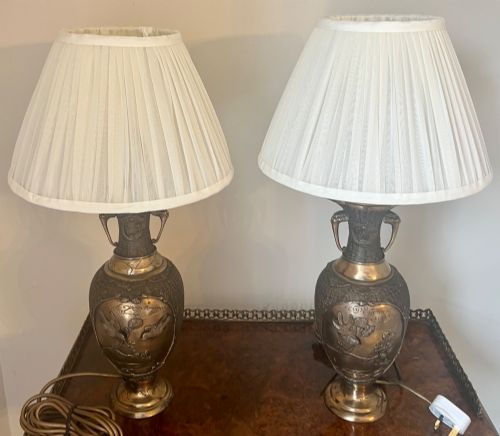
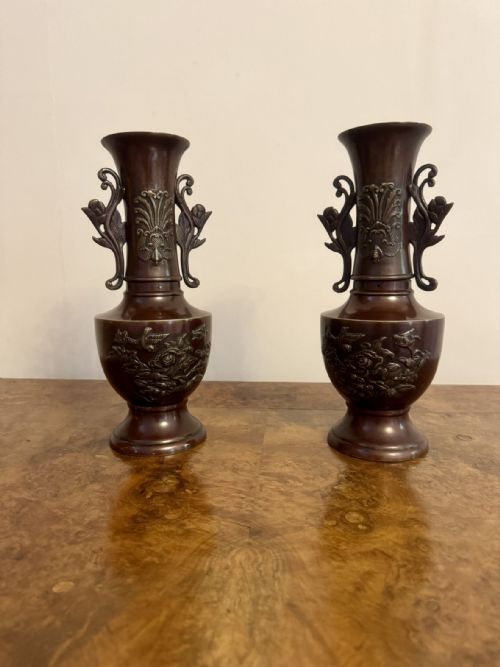
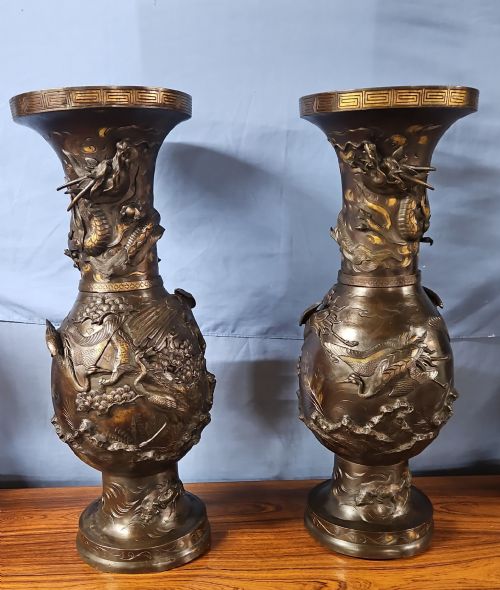
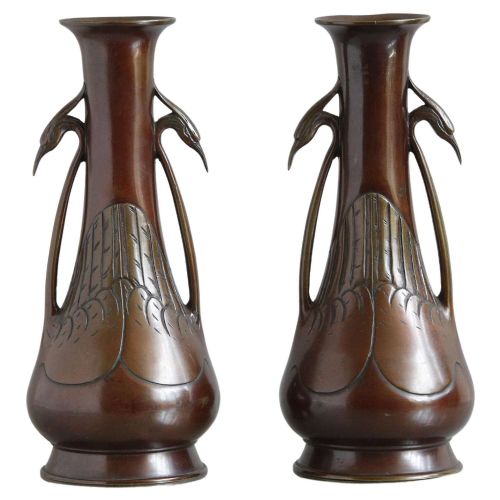
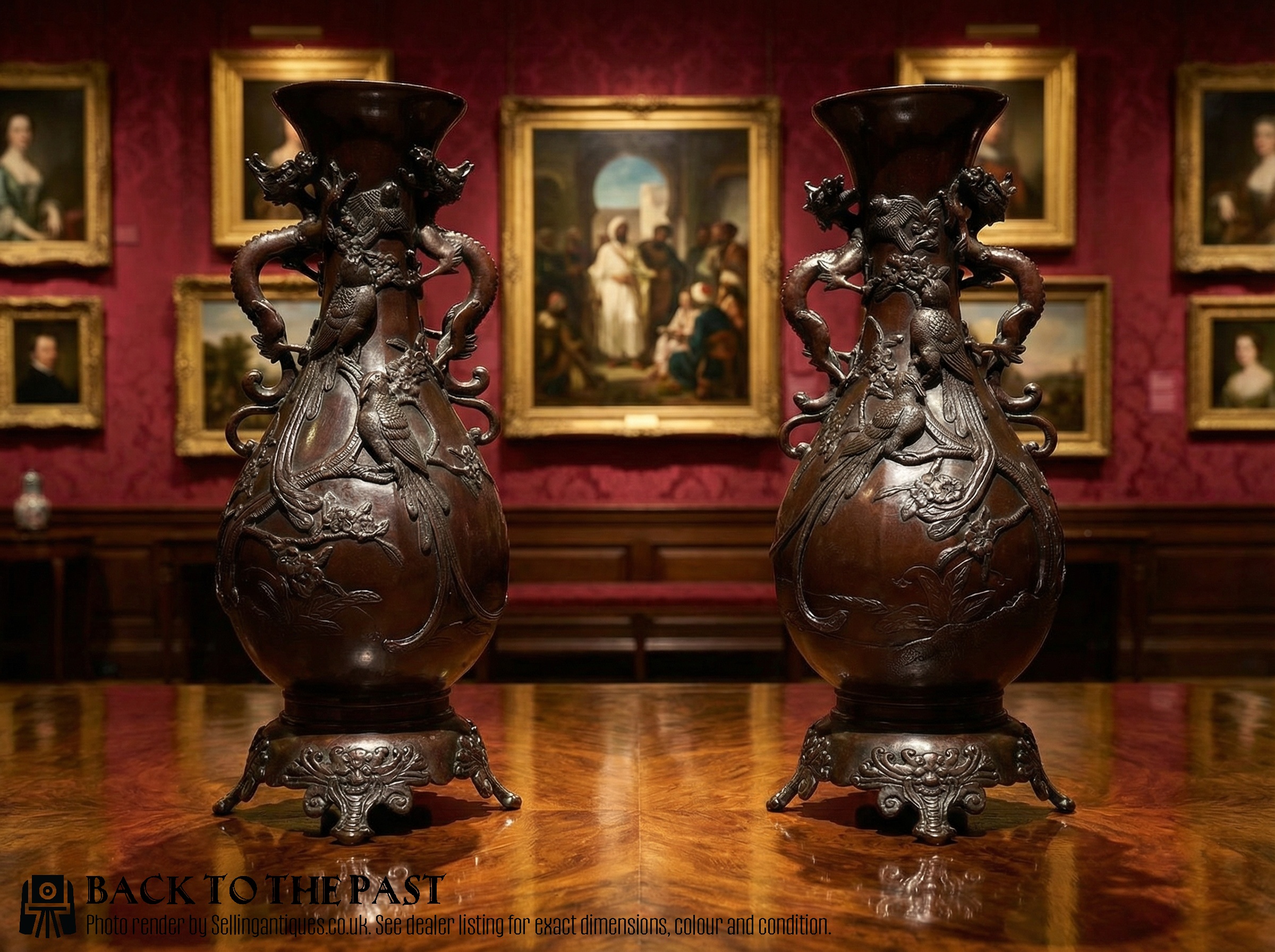
When you search for pair japanese bronze vases, you encounter symmetrical metal vessels created primarily during the Meiji period and the nineteenth century. These objects include baluster urns, twin-handled vessels, garden urns, and forms adapted later into table lamps.
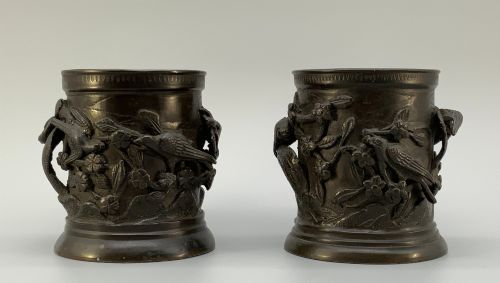
The pieces often feature cast bodies decorated with motifs such as birds, blossoms, egrets, and floral trails. Many examples survive from the Victorian era onwards, reflecting a strong historical British appetite for decorative oriental metalwork.
How they were made
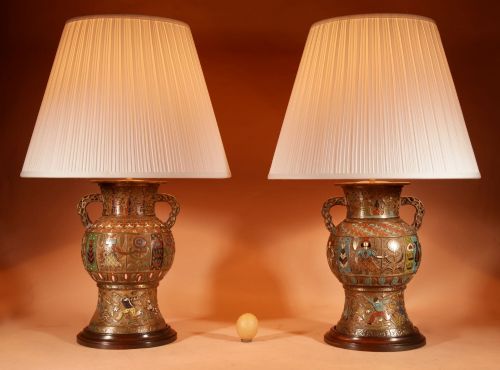
The foundational vessels were cast in bronze, sometimes utilising brass, copper, or patinated bronze to achieve darker or varied surface tones. Artisans then enriched these metallic surfaces through mixed metal inlay, champlevé enamel, and raised relief details.
Details such as birds, foliage, and figures were cast separately and applied to the body, or inlaid with contrasting metals like gold and silver. Gilding and patination completed the process, creating durable finishes that resist wear.
Listings feature bronze, brass, copper, and enamel materials across nineteenth-century and early twentieth-century periods.
What varies in quality
Quality rests in the crispness of the casting and the precision of the applied mixed metal decoration. Finer examples display deeply undercut relief work and meticulous individual feather or floral detailing rather than generalized surface stamping.
Weight and balance also distinguish the range, with heavier specimens utilising thicker bronze walls and more substantial handles. The integration of signed artist panels or complex champlevé enamel work elevates a piece above standard decorative production.
Nogawa·Hamada Yoshifumi·Kuroda
The Pair Japanese Bronze Vases Glossary
- Meiji Period
- The era in Japanese history spanning from 1868 to 1912, corresponding to the reign of Emperor Meiji. Most antique bronze vases found today date from this period of intense artistic export.
- Mixed Metal
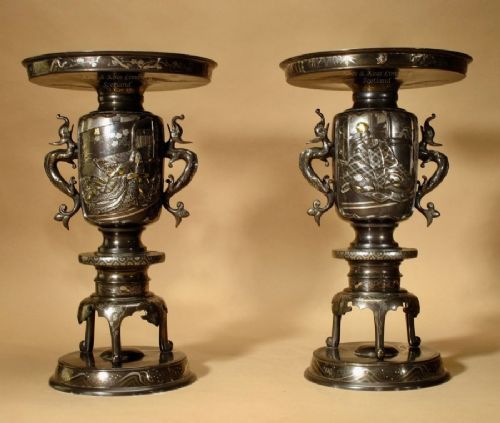
- A technique involving the combination of different metals such as copper, silver, and gold applied to a bronze base. This creates multicolored pictorial effects on the surface of the vase.
- Champlevé
- An enamelling technique where troughs are carved into the bronze body and filled with enamel paste before firing. It produces vibrant coloured patterns flush with the metal surface.
- Usubata
- A specific form of Japanese bronze vessel traditionally used for ikebana flower arrangement, characterised by a wide flanged mouth and a pillar-like stem.
- Patination
- The process of treating the bronze surface chemically or thermally to alter its colour and tone. Antique patination ranges from deep chocolate brown to rich olive green.
Pair Japanese Bronze Vases: Frequently Asked Questions
How were pair japanese bronze vases used?
These vessels served primarily as decorative display items in Japanese interiors and later in European drawing rooms. Many were manufactured specifically for the export market during the late nineteenth century.
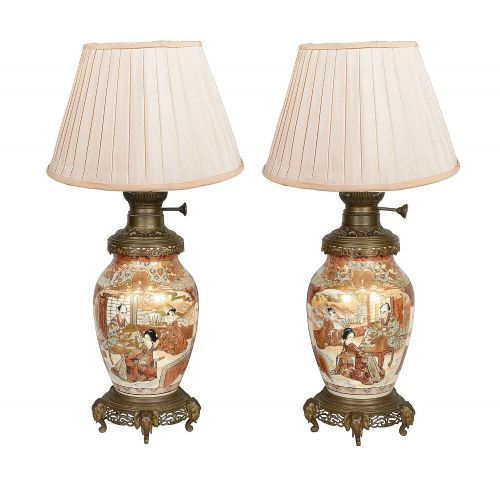
Some larger forms functioned as garden urns or ceremonial containers, while others were converted into table lamps during the twentieth century to suit modern domestic lighting needs.
How do I date a bronze vase?
Dating relies on stylistic markers, manufacturing techniques, and historical export periods. Pieces bearing Meiji period characteristics typically date between 1868 and 1912.
Heavier mixed metal decoration and specific patination styles often point towards the late nineteenth century. Later twentieth-century items generally show different wiring methods if adapted for electrical use.
What is mixed metal inlay?
Mixed metal inlay is a decorative method where contrasting metals are embedded into the bronze surface. Artisans hammered gold, silver, and copper wires or plates into carved recesses.
This technique allowed makers to depict natural scenes with distinct metallic colours for birds, foliage, and backgrounds.
Can I use them as lamps?
Many bronze vases have been safely converted into table lamps over the decades. This adaptation allows the detailed metalwork to be displayed upright while providing functional lighting.
When living with converted lamps, ensure the original bronze body remains unaltered by destructive drilling where possible.