
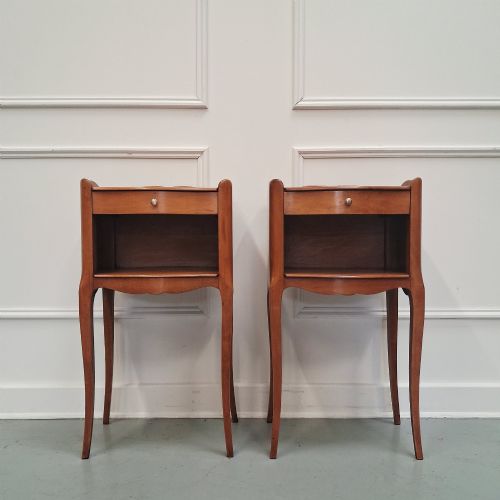
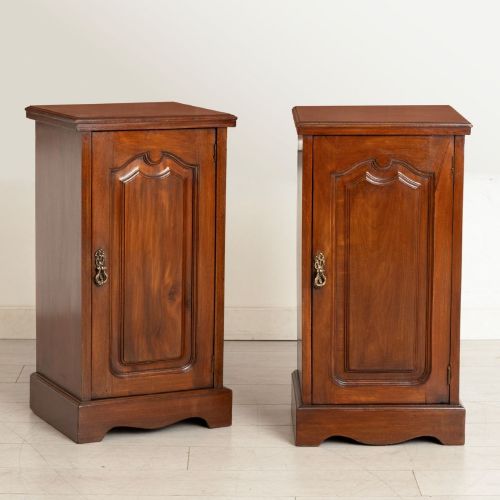
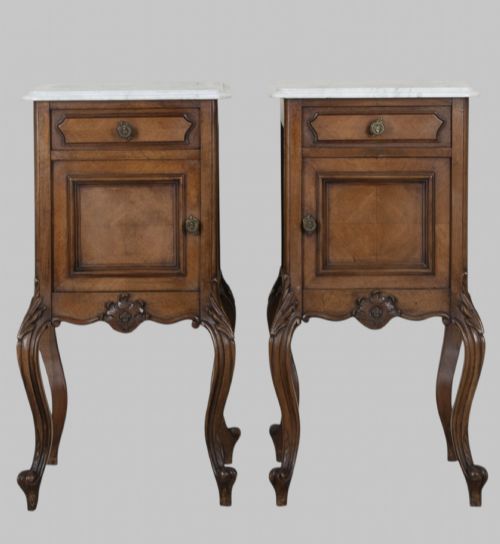

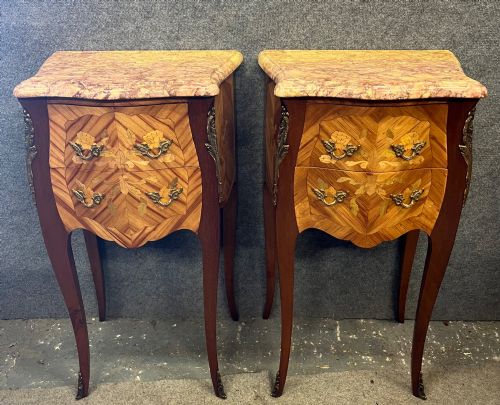
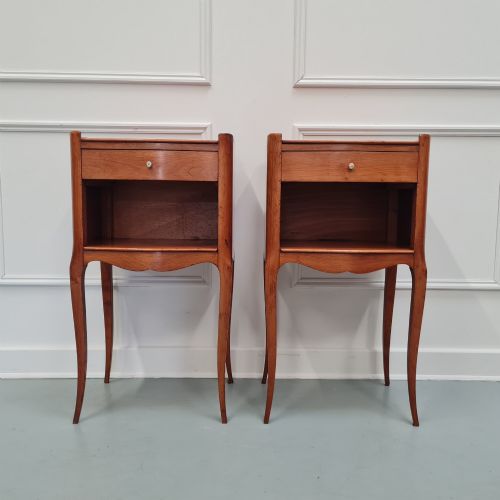
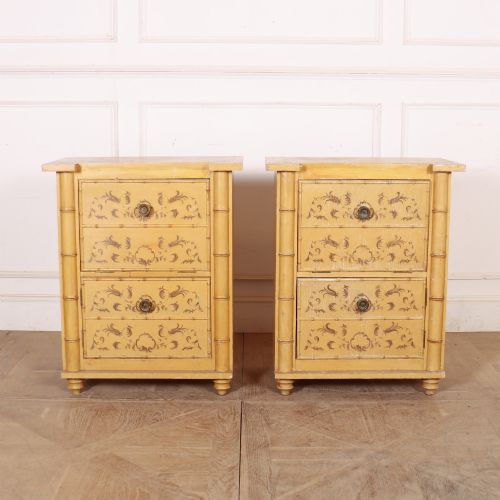
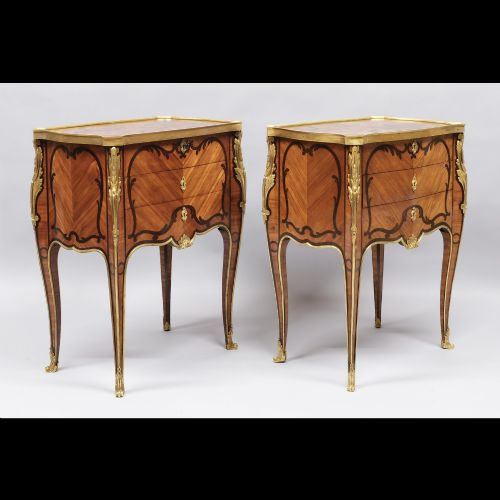


Pair French Night Tables
These pair french night tables offer matched utility beside the bed, bringing Continental character into bedrooms.
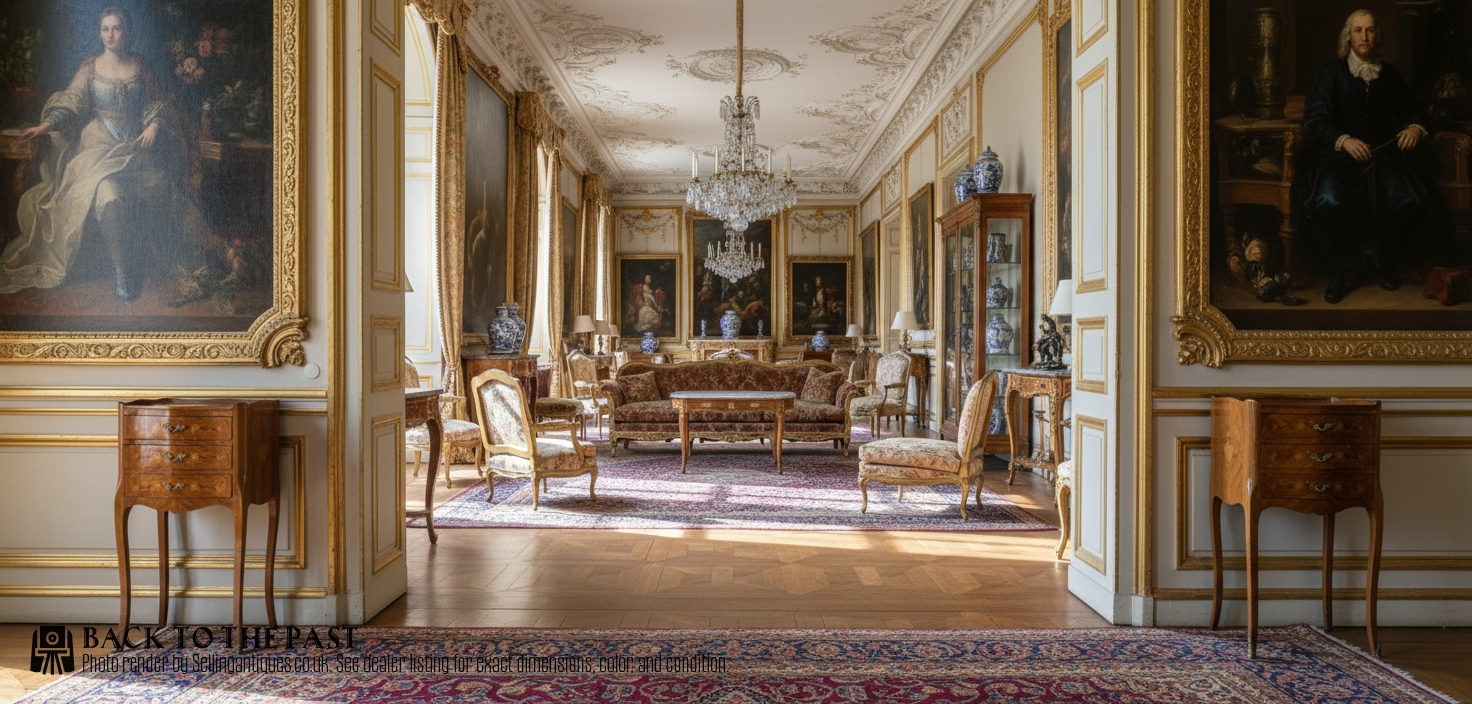
Pair French Night Tables
When searching for pair french night tables, buyers encounter bedside tables, bedside cabinets, commodes, and night stands originating from Continental workshops across the nineteenth and twentieth centuries. The selection spans several decades from the late Victorian period through the Edwardian era into the interwar years, encompassing diverse regional aesthetics.
The most common versions met on this page include walnut, mahogany, and oak cabinets built in styles ranging from French Provincial and French Chateau to Louis XV Revival and Art Deco. These items function primarily as compact bedside storage, frequently featuring marble tops, inlaid marquetry, or parquetry surfaces.
Makers utilised various secondary forms such as lamp tables, end tables, and chevets to serve domestic spaces. Examples include pieces with secret compartments, faux bamboo framing, and specific period revivals that reflect changing European tastes.
How they were made
Cabinetmakers constructed these frames from solid timbers including walnut, mahogany, oak, cherry wood, and satinwood, often applying veneers of kingwood, tulipwood, rosewood, and marquetry patterns. Joinery relied on traditional woodworking methods suited to small-scale case furniture, incorporating panelled doors and fitted drawers.
Surface detailing frequently incorporated contrasting brass hardware, ormolu mounts, and polished marble inserts on the top surfaces. Workshops also employed painted finishes, faux bamboo shaping, and precise geometric parquetry to achieve varied aesthetic effects.
Listings feature items spanning six distinct decades from the 1880s through the 1930s, utilising brass, walnut, marble, mahogany, kingwood, rosewood, oak, and ormolu.
What varies in quality
Distinctions in quality rest upon the precision of the timber matching and the execution of intricate marquetry or parquetry patterns across both matched items. Superior examples display seamless veneer work and fine grain selection that elevate simple storage into decorative art.
The choice of supplementary materials, such as heavy marble tops, cast ormolu mounts, and solid brass fittings, distinguishes standard utility pieces from higher-end commission work. Construction integrity, including the smoothness of drawer operation and the stability of the frame, determines the overall standard.
Sormani
The Pair French Night Tables Glossary
- Marquetry
- Decorative veneer work arranged in pictorial or floral patterns using various coloured woods. This technique requires meticulous hand-cutting and fitting of thin timber slices.
- Parquetry
- Geometric mosaic woodwork forming repeating patterns such as cubes or chevrons across a tabletop or cabinet door. It showcases the precision of the cabinetmaker.
- Ormolu
- Gilded bronze mounts applied to furniture for decorative accent. The technique involves treating bronze with an amalgam of mercury and gold.
- Chevet
- The French term for a bedside table or small cabinet. These compact units provide enclosed storage next to a bed.
- Serpentine
- A furniture front or tabletop shaped with a curving contour that bends outward in the centre and inward at the sides. This fluid line appears frequently in Louis-style case pieces.
Pair French Night Tables: Frequently Asked Questions
What periods do these tables represent?
The pieces span from the late nineteenth century through the Edwardian era up to the 1930s. They capture historical revivals alongside modern Art Deco design.
Dates are determined by stylistic markers, construction methods, and prevailing decorative fashions of each decade.
How were these cabinets used?
They served primarily as bedside storage for personal items, night lamps, and reading materials. Their compact proportions suited the bedroom layouts of the period.
Many designs incorporated enclosed cupboards and small drawers to keep bedside necessities neatly out of sight.
Are matching pairs common?
Many listings offer matched pairs designed to sit symmetrically on either side of a bed. These consist of pieces built as companion items from the outset.
Some pairs are assembled later based on matching dimensions, timber, and style characteristics.
What materials predominate?
Walnut, mahogany, and oak form the structural core of most pieces, supplemented by exotic surface veneers. Marble tops and brass or ormolu mounts appear frequently.
Art Deco and later pieces often utilise satinwood, kingwood, and geometric marquetry work.
How do styles differ?
Styles range from rustic French Provincial and Chateau pieces to ornate Louis XV and Louis XVI revivals. These traditional forms contrast with cleaner Art Deco and Art Nouveau lines.
Details like faux bamboo framing or specific inlay work help identify the distinct design movement.