


Marquetry Night Tables
Marquetry night tables bring patterned wood veneers into the bedroom, offering small surfaces and hidden storage shaped by centuries of French and English design.
Marquetry Night Tables
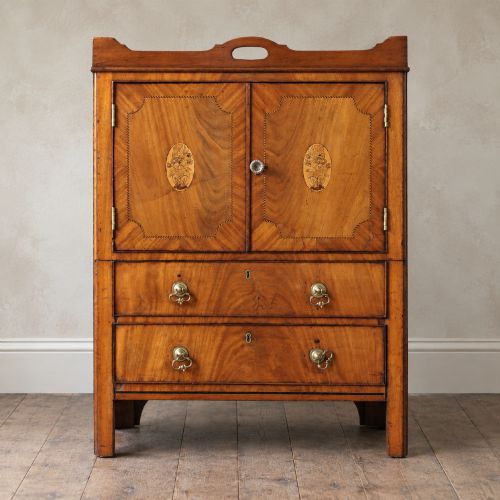
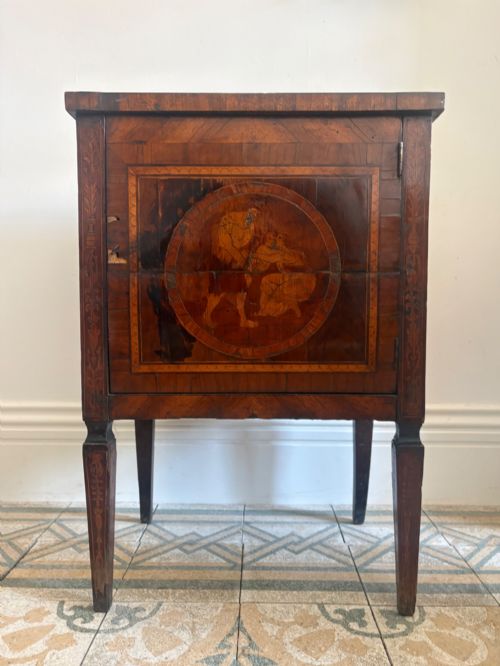
Marquetry night tables encompass bedside cabinets, chests, commodes, and lamp tables decorated with contrasting wood veneers. These pieces range from eighteenth-century Italian Neoclassical examples to late Victorian and early twentieth-century French styles.
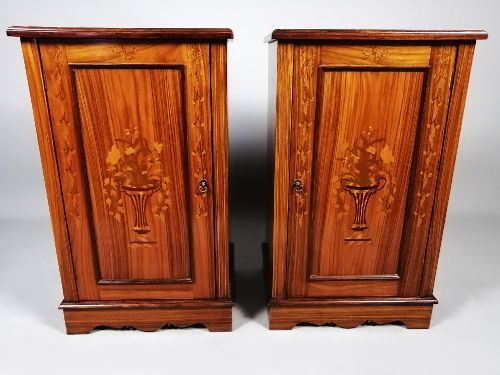
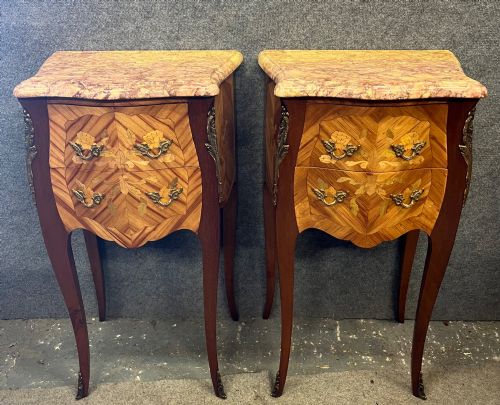
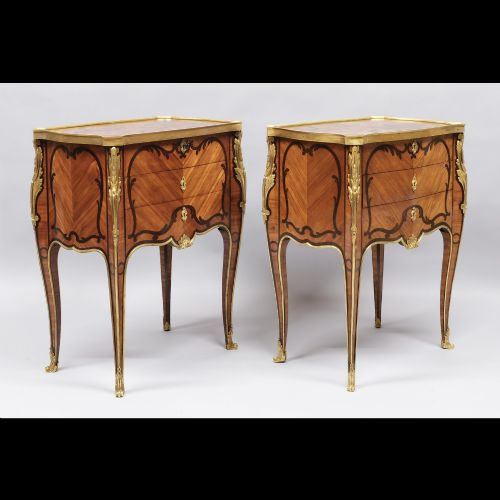
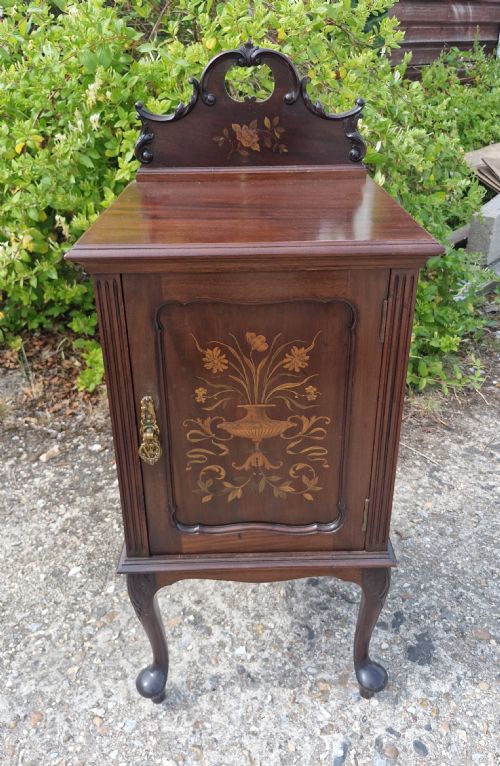
Buyers frequently encounter matched pairs dating from around nineteen hundred, alongside individual chests and commodes from the nineteenth and twentieth centuries. Forms vary from serpentine and bombé shapes to simpler rectilinear bedside cupboards.
The objects serve primarily as bedside storage, often fitted with drawers, cupboards, or secret compartments. Their origins stretch across French provincial workshops, Italian makers, and English revival cabinets.
Materials and Techniques
Cabinet makers constructed carcasses from foundational timbers like mahogany and walnut, applying delicate veneers of rosewood, kingwood, tulipwood, satinwood, and fruitwood to the exterior surfaces. These contrasting timbers formed intricate pictorial or geometric marquetry patterns across the top and sides.
Many examples incorporate marble tops for durability alongside cast brass or ormolu mounts, handles, and sabots that frame the drawer fronts and legs. The combination of parquetry patterns and detailed brass hardware defines the structural execution of these bedside pieces.
The selection spans eighteenth-century Italian commodes, nineteenth-century Victorian cabinets, and nineteen-thirties French tables.
Evaluating the Pieces
Quality rests in the precision of the veneer cutting and the complexity of the timber selection, where tightly fitted fruitwood and rosewood create sharp pictorial contrast. Lesser pieces rely on simpler geometric parquetry or straightforward mahogany grains without intricate inlay.
The integration of supportive materials dictates the overall standard, distinguishing simple cabinets from those finished with heavy marble slabs and finely chased ormolu mounts. The crispness of the serpentine or bombé carcass shaping further separates standard production from finer cabinet work.
Sormani
The Marquetry Night Tables Glossary
- Marquetry
- Decorative inlay technique using thin slices of wood veneer to create pictorial or floral designs on furniture surfaces. This method distinguishes these bedside pieces from plain timber furniture.
- Ormolu
- Gilt-bronze mounts applied to furniture for decorative and protective purposes. Makers used these cast metal elements on the corners and feet of commodes.
- Bombé
- Swelling or outward-curving furniture shape popular in French-influenced designs. This contour requires skilled carpentry to fit the veneer across rounded drawer fronts.
- Serpentine
- A furniture front or top curving inward centrally and outward at the ends in a continuous wave line. This profile appears frequently on French revival bedside chests.
- Parquetry
- Geometric mosaic pattern formed by wood veneer pieces fitted together. It differs from floral marquetry through its reliance on repeating angles and straight lines.
Marquetry Night Tables: Frequently Asked Questions
What is the difference between a commode and a bedside cabinet?
A commode typically refers to a low chest of drawers with decorative marquetry, while a bedside cabinet often encloses a cupboard space behind a door.
Both serve similar functional roles beside a bed, though commodes generally offer wider proportions and distinct serpentine shaping.
How do I distinguish eighteenth-century pieces from later revivals?
Eighteenth-century examples display construction methods, native timber usage, and hand-cut marquetry specific to their period of origin. Later revival pieces from nineteen hundred often replicate Louis XV styles with twentieth-century machine precision.
Examination of the interior drawer linings and secondary woods clarifies the true age of the cabinet.
Are these tables suitable for everyday bedside use?
These pieces function well as lamp tables and nightstands, providing surface space for reading lights and small personal items. Their enclosed cupboards and drawers offer practical storage for bedroom essentials.
Care should be taken with moisture and direct heat to protect the delicate veneer surfaces.