

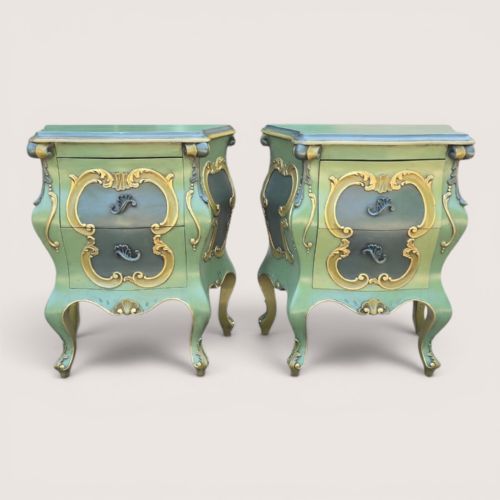
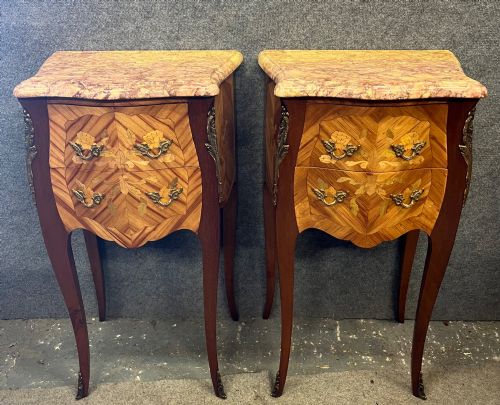
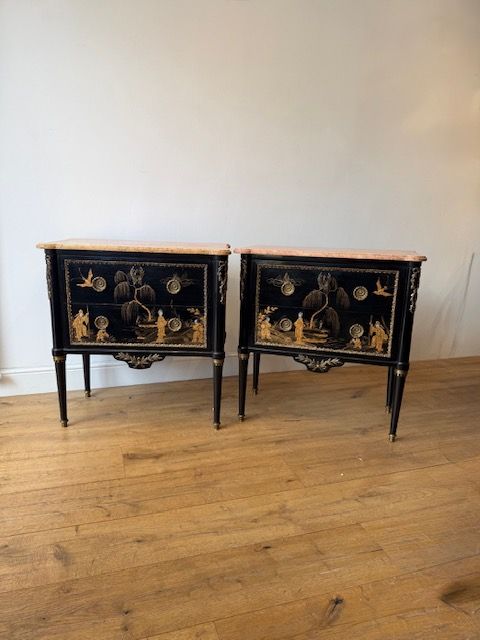
French Style Nightstands Pair
French style nightstands pair items bring matching Continental elegance to a bedroom, combining practical bedside storage with decorative revival forms.
French Style Nightstands Pair
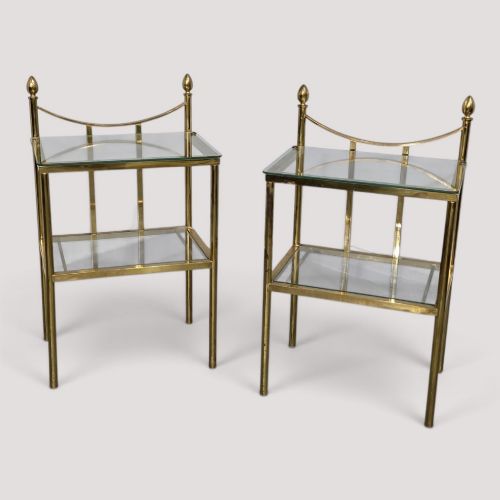
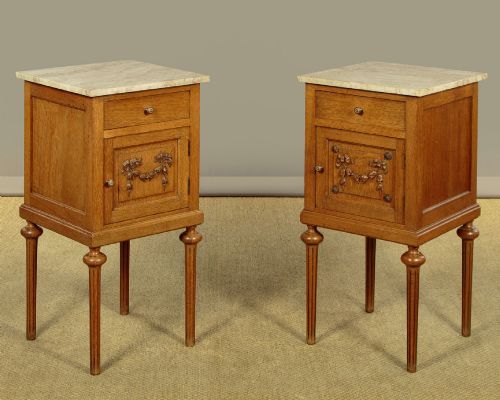
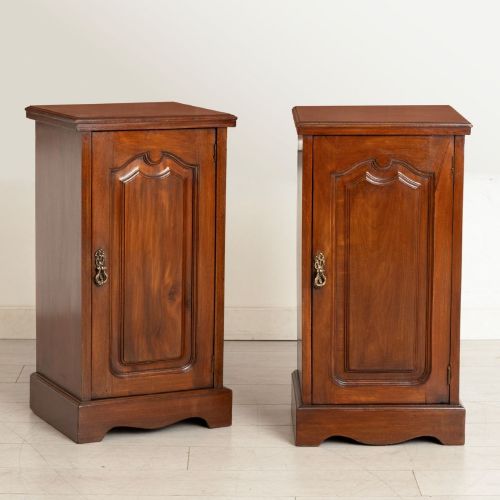
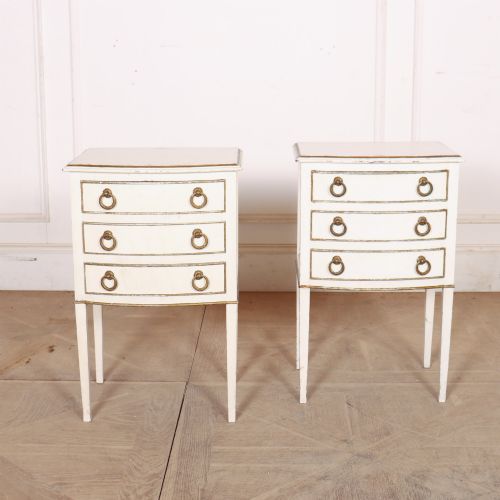
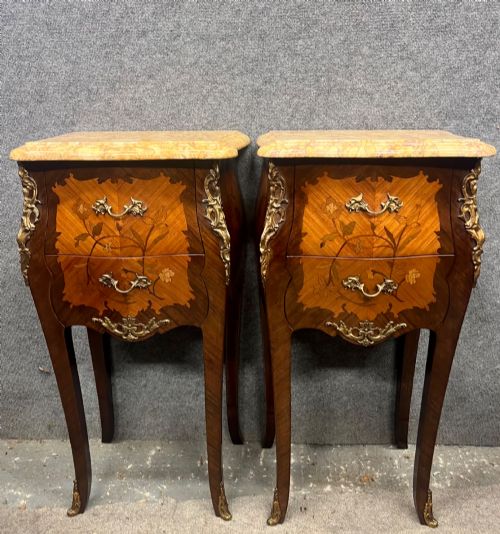
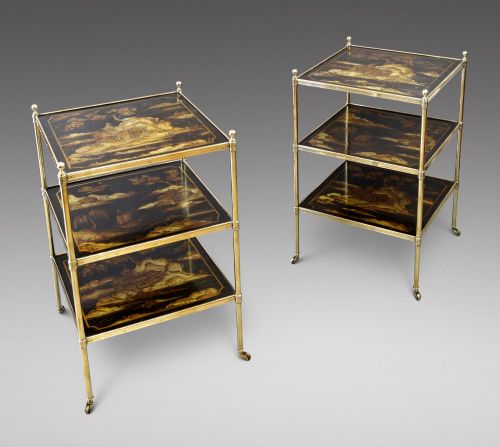
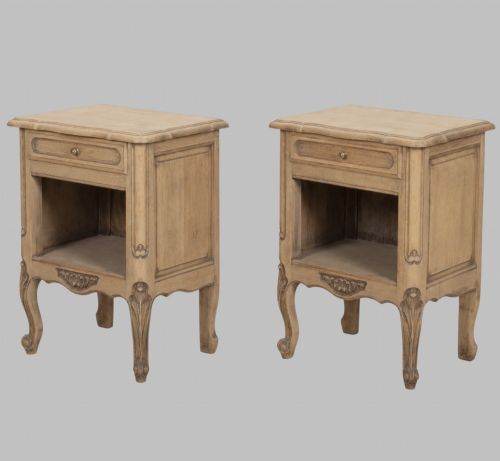
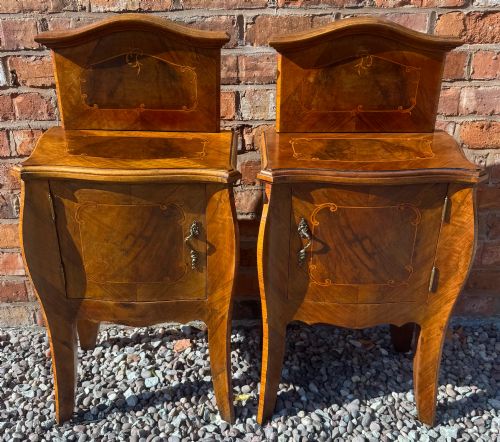
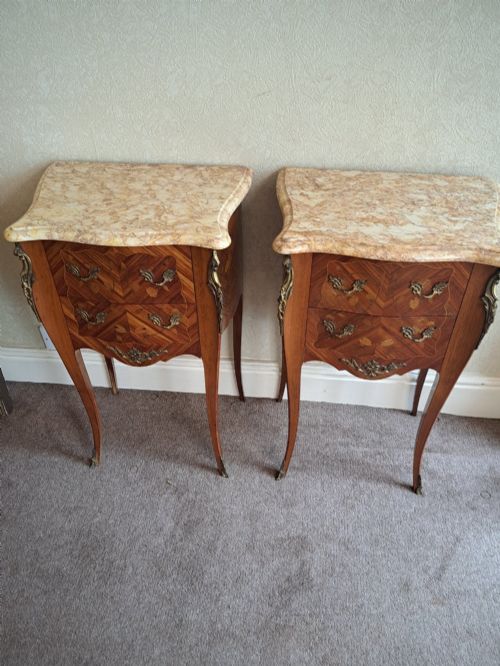
A french style nightstands pair comprises matching small bedside tables, cabinets or commodes originating from periods spanning the late nineteenth century into the mid-twentieth century. These items take forms such as bedside chests, lamp tables, and small commodes designed to sit alongside a bed.
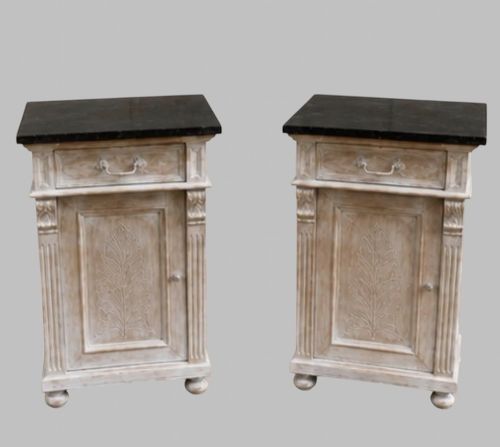
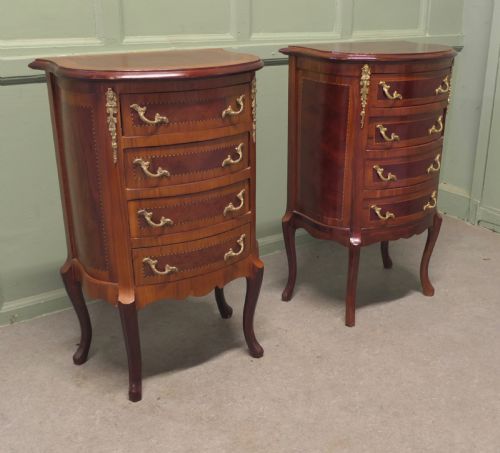
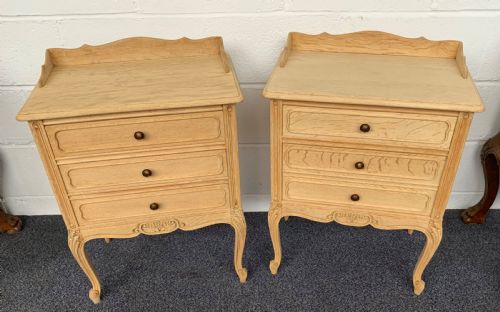
The selection includes pieces created in revival designs such as Louis XV and Louis XVI styles, alongside French chateau and provincial interpretations. Common configurations include open lamp tables, single-door cabinets, and multi-drawer chests tailored for bedside use.
How they were made
Cabinet makers utilised timber frameworks of walnut, oak, mahogany, kingwood, rosewood, and satinwood, often applying decorative veneers and marquetry or parquetry patterns. Surface enrichment frequently involved hand-painted finishes, lacquer work, or carved detailing.
Many examples incorporate fitted marble tops in various shades alongside cast brass or ormolu mounts, handles, and gallery rails. Construction methods combine traditional joinery with applied decorative metalwork characteristic of Continental furniture workshops.
Listings feature oak, walnut, mahogany, and exotic veneers like kingwood and rosewood, frequently paired with marble and brass.
What varies in quality
The standard of execution depends heavily on the precision of the timber veneers, the crispness of marquetry patterns, and the definition of hand-carved wood elements or cast brass mounts. Superior examples demonstrate careful matching of grain patterns across the pair and well-fitted marble surfaces.
Construction integrity inside the drawers and cabinet carcasses distinguishes finer production from standard commercial output. The weight and detailing of bronze or brass mounts and the subtlety of painted or lacquered finishes further separate grades of manufacture.
Sormani
The French Style Nightstands Pair Glossary
- Marquetry
- Decorative patterns formed by fitting together thin slices of wood veneer onto a structural surface. This technique allows for complex pictorial or geometric designs across tabletops and drawer fronts.
- Ormolu
- Gilded bronze mounts and decorative hardware applied to furniture frames. These metal elements accent corners, feet, and drawer pulls on revival pieces.
- Parquetry
- Geometric wood veneer patterning arranged in repeating shapes such as cubes or chequers. It creates a structured surface texture on cabinet tops and sides.
- Commode
- A low standing chest of drawers or cabinet with doors. In this context, it refers to small bedside variants scaled for domestic bedrooms.
- Chevet
- A French term for a small bedside table or nightstand. These pieces typically feature small drawers or enclosed cabinet spaces.
French Style Nightstands Pair: Frequently Asked Questions
What periods do these nightstands come from?
The pieces span from the late nineteenth century through to the middle of the twentieth century, with significant representation from the 1900s, 1920s, and 1930s. Makers during these decades frequently drew inspiration from eighteenth-century French royal aesthetics.
Revival tastes dictated the production methods across these decades, meaning nineteenth-century creations often sit alongside early twentieth-century interpretations sharing identical stylistic roots.
How do I care for veneered surfaces?
Veneered and polished timber requires protection from direct sunlight and excessive moisture to prevent warping or fading of the delicate woods. Using coasters and dry dusting with a soft cloth maintains the polished finish without harming the historic surface.
Avoid silicone-based polishes, opting instead for traditional microcrystalline wax applied sparingly when the timber appears dry.
What is the difference between a chevet and a commode?
A chevet is specifically a small bedside table designed for nighttime storage, whereas a commode is traditionally a low chest of drawers or cupboard. In modern usage, smaller commodes often serve double duty as bedside tables.
Scale is the primary distinguishing factor, with chevets built expressly for the compact dimensions required next to a bed.