
Pair French Cabinets
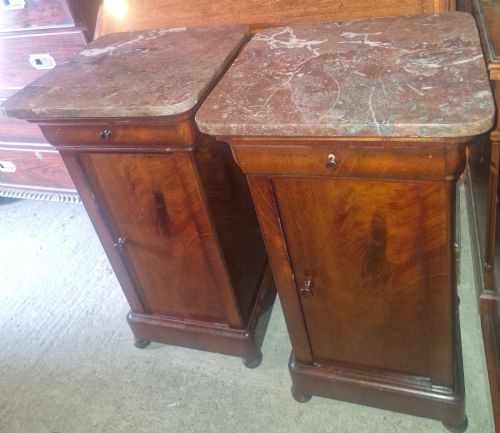
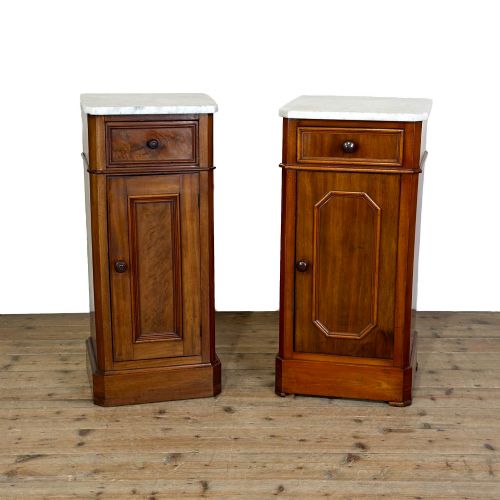
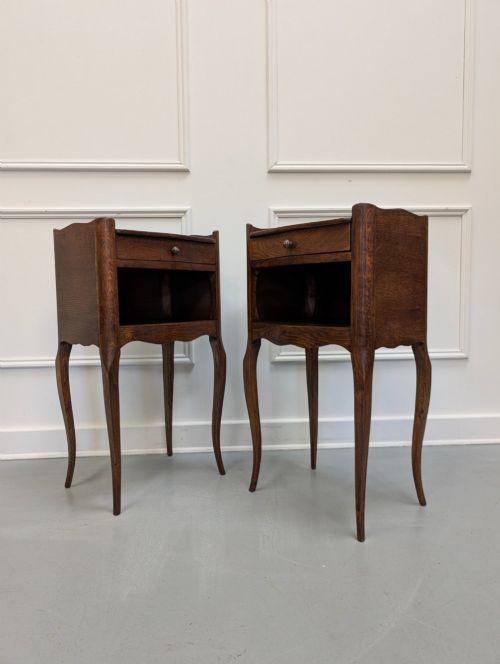
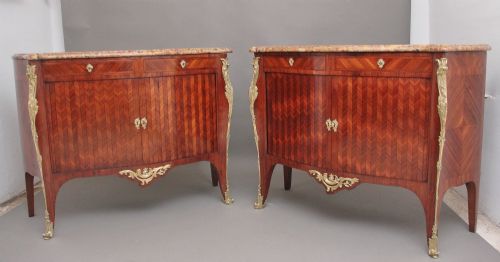
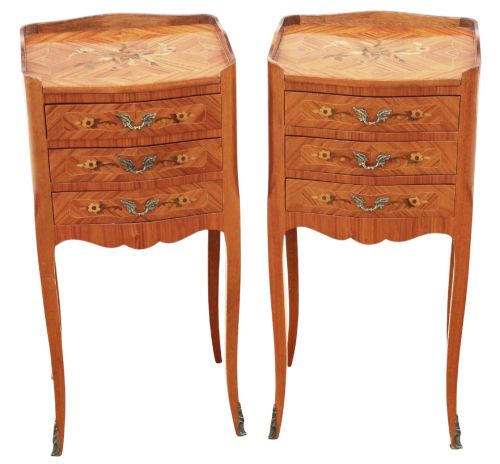
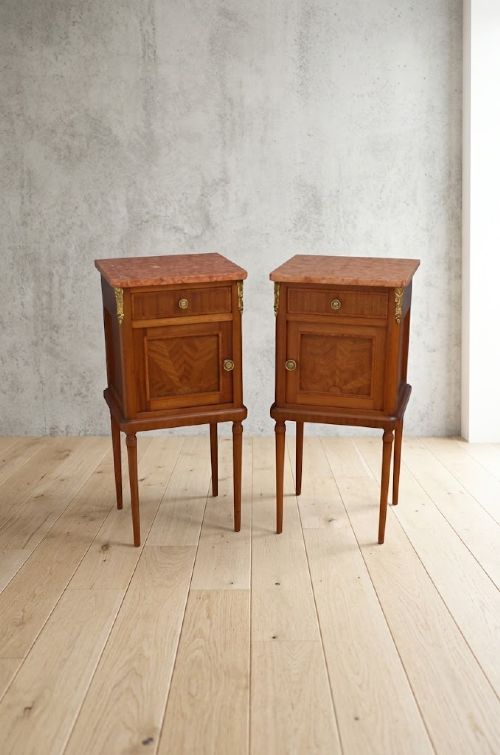
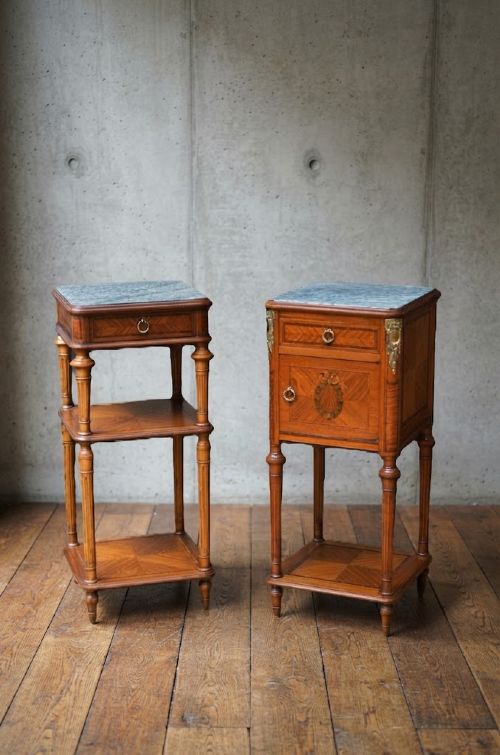
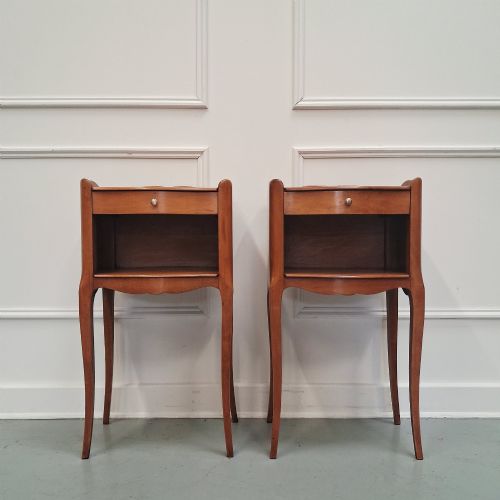
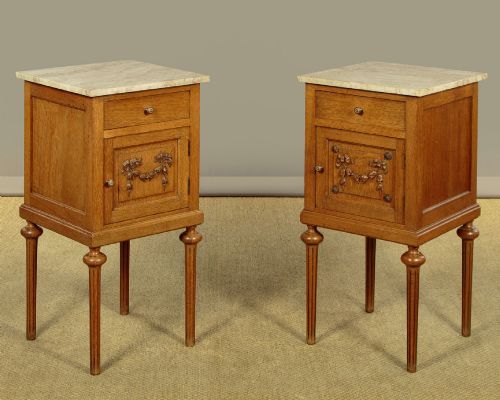
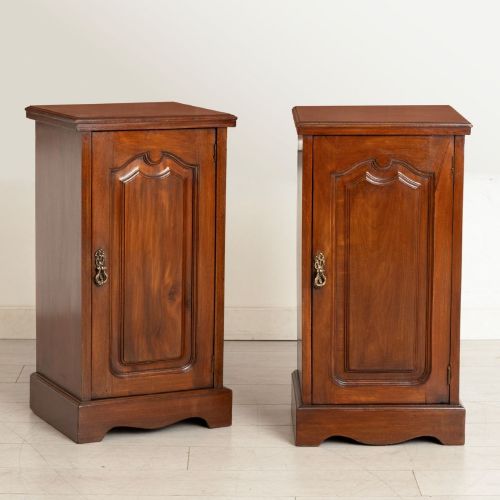
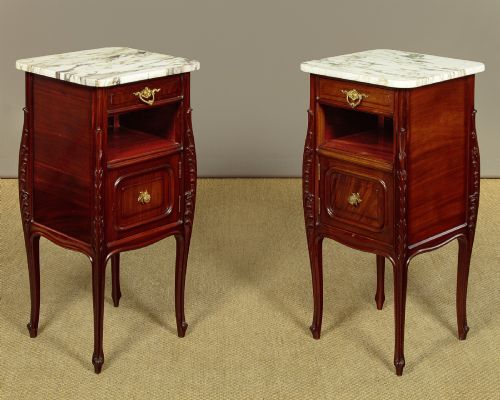
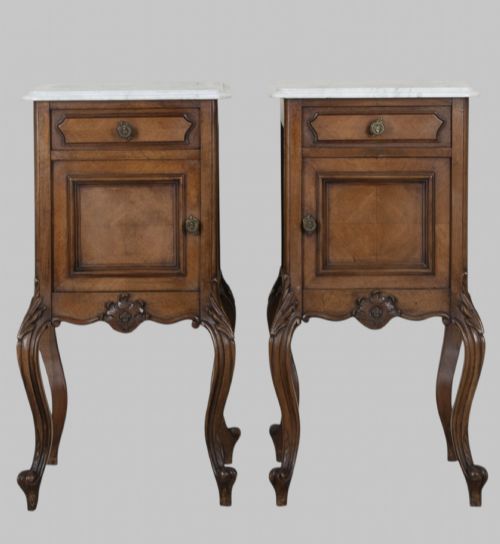
Pair french cabinets bring balanced symmetry to a room, appearing most frequently on this page as bedside tables, commodes and smaller lamp tables dating from the nineteenth and early twentieth centuries.
Pair French Cabinets
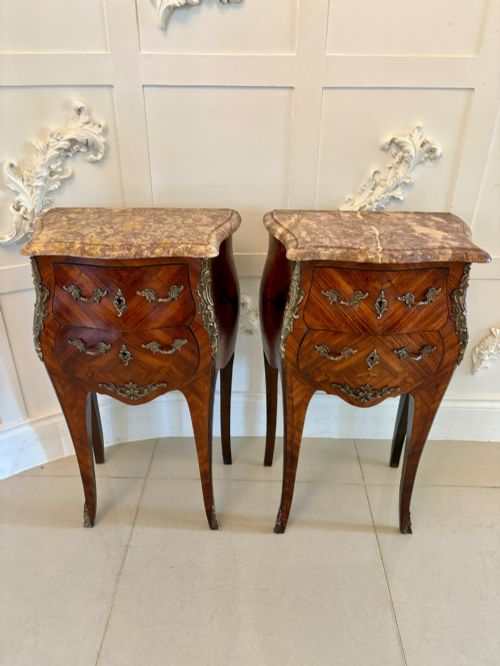
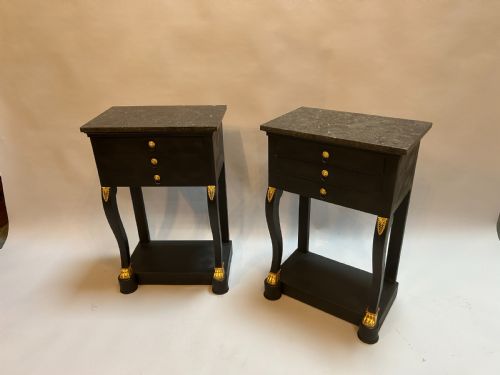
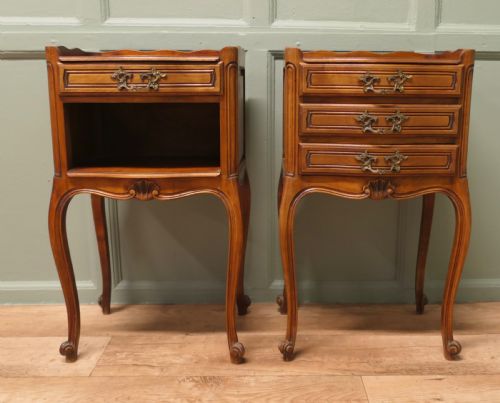
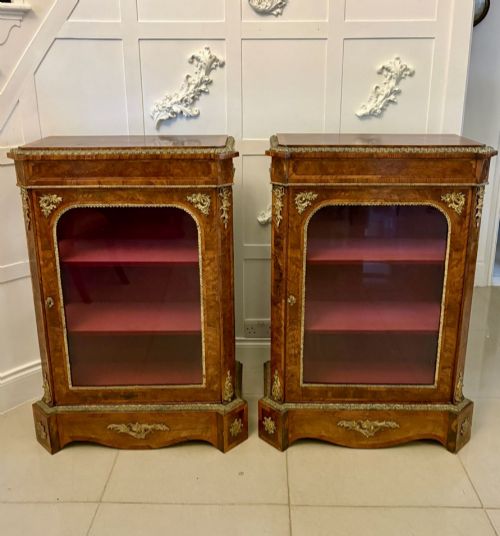
When searching for pair french cabinets, buyers encounter a concentrated selection of dual storage furniture designed for domestic symmetry. The forms span compact bedside cupboards, lamp tables, taller side lockers and marble-topped commodes originating from continental workshops.
The material record shows a strong presence of walnut, kingwood and oak, alongside lighter satinwood and painted finishes. These pieces bridge utilitarian bedside storage and decorative revival styles, drawing heavily on Louis XV and Louis XVI design idioms.
How they were made
Cabinetmakers utilised dense timbers such as mahogany, walnut and kingwood as carcase foundations, often applying intricate marquetry and parquetry veneers in geometric or floral patterns. Exotic woods were contrasted with native oak and cherrywood in provincial pieces.
Many examples incorporate fitted marble slabs to the upper surface, paired with cast or chased ormolu and brass mounts. Porcelain plaques and gilt bronze hardware complete the construction details recorded across the archive.
The listings on this site span eight distinct decades of production, running from the 1860s through to the 1930s.
What varies in quality
The standard of execution rests on the precision of the veneer work and the crispness of the cast mounts. Superior examples display seamless marquetry matching across both items in the set, whilst simpler provincial pieces rely on solid oak or painted surfaces without applied ornamentation.
Structural integrity and the retention of original stone tops and metal fittings dictate the standing of individual pairs. Harmony between the two items determines their success as a matched set in a room.
E. Kahn·Jules Leleu·Edmé Samson & Cie
The Pair French Cabinets Glossary
- Marquetry
- Decorative veneer work arranged in pictorial or geometric patterns across the wooden surface. Craftsmen cut thin slices of contrasting timber to form intricate motifs.
- Ormolu
- Gilded bronze mounts applied to furniture edges and corners for ornamentation. This technique gained widespread favour during the eighteenth-century revivals.
- Commode
- A low chest of drawers or cabinet designed for domestic storage. These pieces frequently feature shaped fronts and marble tops.
- Parquetry
- Geometric wood inlay patterns resembling mosaics. Squares, triangles and lozenges create repetitive visual rhythms on tabletops and doors.
- Vernis Martin
- A simulated Japanese lacquer technique developed in France. It produces a glossy, translucent finish over painted designs.
Pair French Cabinets: Frequently Asked Questions
Are these cabinets always found as exact pairs?
Most listings show matched pairs designed together, though some represent near-pairs gathered over time. Slight variations in dimensions can occur in older provincial workshop output.
Buyers should examine the internal construction and wood grain closely to confirm whether two pieces originated from the exact same bench.
What are marble-topped cabinets typically used for?
Marble tops provided a durable, water-resistant surface next to a bed or in a reception room for lamps and washing equipment. The stone also added significant weight to smaller bedside chests.
Different colours of marble, from white to veined dark varieties, appear across the nineteenth-century examples.
How do I identify Louis XV style features?
Louis XV revival pieces display characteristic cabriole legs, curved serpentine fronts and asymmetrical floral mounts. The overall silhouette avoids straight lines in favour of flowing organic contours.
Ormolu mounts frequently wrap around the corners to accentuate these curving structural outlines.
Did provincial workshops use the same woods as city makers?
Provincial cabinetmakers relied more heavily on local timber supplies such as oak, cherrywood and pine. Paris workshops tended to utilise imported luxury veneers like kingwood, mahogany and burr walnut.
Painted and bleached finishes also feature prominently among regional French pieces from the early twentieth century.