


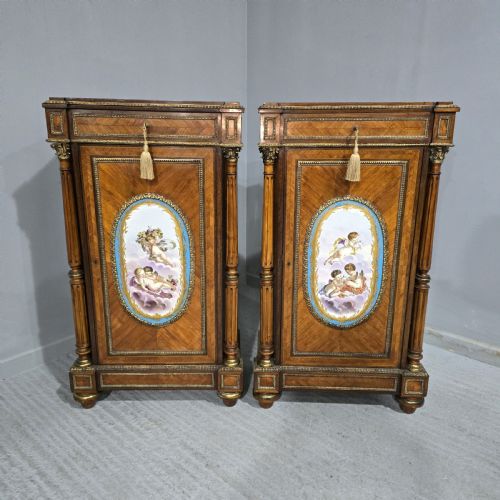


Louis XVI Pier Cabinet
A louis xvi pier cabinet brings architectural symmetry and refined French taste into a room.
Louis XVI Pier Cabinet
A louis xvi pier cabinet sits against the wall space between windows, often taking the form of a slender side cabinet or glazed display piece. These furnishings appear in styles spanning the eighteenth century through late nineteenth-century revivals like Napoleon III.
The pieces on this page include walnut, satinwood, and ebonised wood examples, frequently mounted with porcelain plaques and ormolu. Cabinets range from intimate proportions to tall, monumental pairs.
Makers drew on classical restraint, pairing straight lines with marquetry and pietra dura panels. Buyers frequently encounter nineteenth-century revivals alongside authentic late eighteenth-century examples.
Materials and construction
Craftsmen built these cabinets using supportive timbers like walnut and satinwood, then applied intricate marquetry and ebonised finishes to the exterior surfaces. Many feature contrasting veneers arranged in geometric or floral patterns.
Gilt bronze and ormolu mounts punctuate the timber frames, secured around doors, corners, and plinths. Marble tops provide a durable, weighty surface above the cabinet carcase.
Glazed doors and inset Sevres style porcelain plaques break up the wooden expanses. Boullework brass and tortoiseshell inlay also appear on revival pieces from the nineteenth century.
Current listings feature materials including ormolu, porcelain, marble, ebonised wood, glass, kingwood, satinwood, and gilt bronze.
Judging quality
Quality rests upon the crispness of the gilt bronze mounts and the precision of the timber inlay. Finer cabinets display hand-chiselled ormolu details rather than mass-cast metal.
The integration of decorative elements like pietra dura panels or painted porcelain plaques distinguishes standard production from exceptional work. Balanced proportions and tight veneer joints indicate superior cabinetmaking.
The Louis XVI Pier Cabinet Glossary
- Ormolu
- Gilded bronze used for decorative mounts and furniture trim. It provides a bright metallic contrast against dark ebonised wood or warm satinwood.
- Pietra dura
- Inlay technique using cut and fitted polished coloured stones to create pictorial designs. It appears on high-status nineteenth-century cabinet doors.
- Marquetry
- Artful arrangement of wood veneers to form decorative patterns or pictures on furniture surfaces. Craftsmen select contrasting grain directions to catch the light.
- Pier cabinet
- A narrow cabinet designed specifically for the wall space between two windows. These pieces often feature glass doors to display porcelain and small objects.
- Boulle
- Technique of inlaying brass and tortoiseshell into wood furniture surfaces. It gained popularity during the reign of Louis XIV and returned in nineteenth-century revivals.
Louis XVI Pier Cabinet: Frequently Asked Questions
What is a pier cabinet used for?
These cabinets serve both as decorative architectural elements and display spaces for porcelain and small treasures.
Their narrow footprints allow them to occupy tight wall spaces between windows without crowding a room.
How do I spot a revival piece?
Nineteenth-century revival pieces often employ machine-finished ormolu mounts and standardised hardware compared to eighteenth-century originals.
Examining the secondary timbers inside the carcase helps reveal the true period of construction.
Where do porcelain plaques come from?
Cabinets frequently incorporate Sevres style porcelain plaques painted with figures, birds, or floral motifs.
These ceramic panels are framed directly into the wood doors or upper friezes of French cabinets.
How do I care for marble tops?
Marble surfaces require gentle cleaning with mild soap and water to avoid dulling the polished stone.
Acids from spilled liquids can etch marble, so coasters and prompt wiping help preserve the finish.