



Antique Sevres Mounted Cabinet
When you select an antique sevres mounted cabinet, you acquire a nineteenth-century focal point combining glazed display space with hand-painted porcelain panels.
Antique Sevres Mounted Cabinet
An antique sevres mounted cabinet brings together nineteenth-century European display furniture and hand-painted porcelain plaques. These pieces emerge primarily from Victorian and later nineteenth-century workshops adopting Louis XV and Louis XVI revival styles.
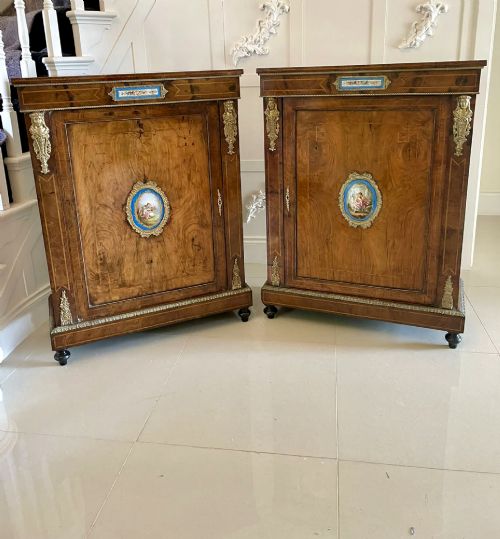
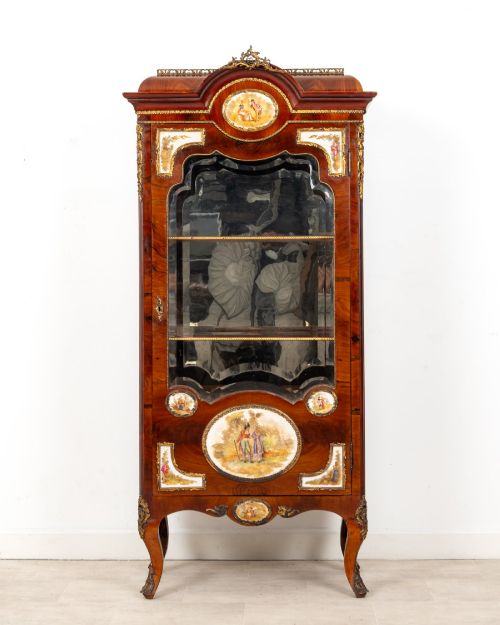
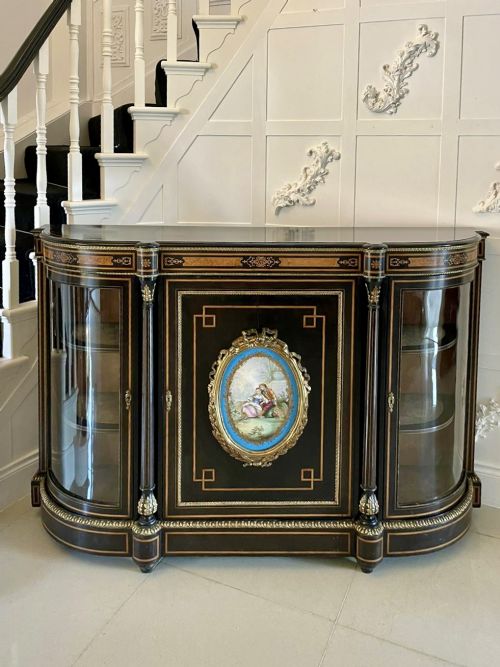
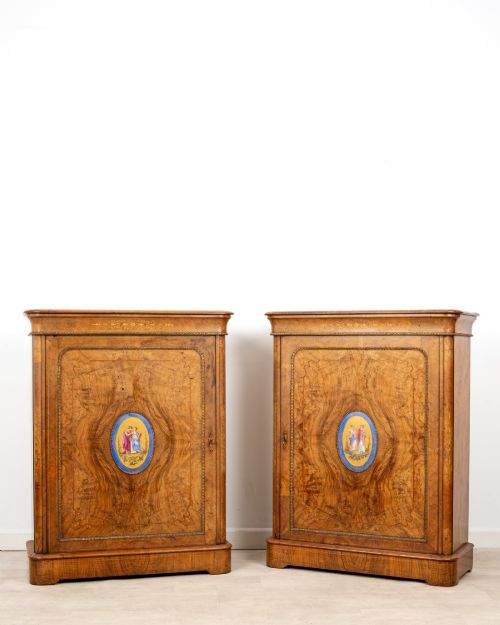
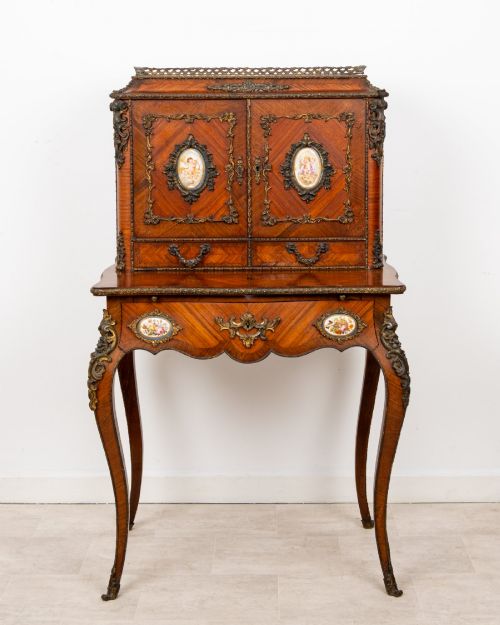
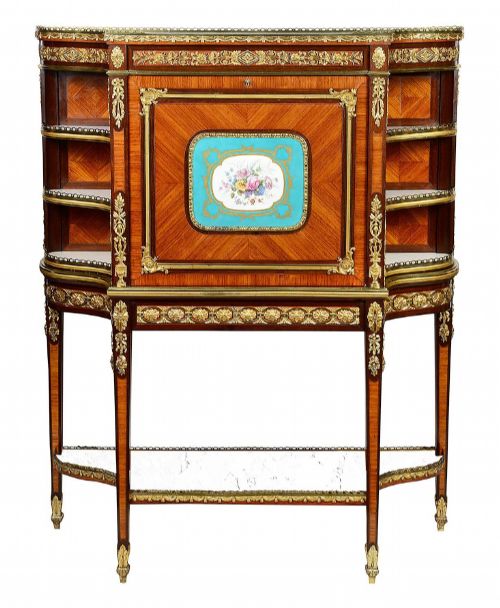
Buyers meet varied forms on this page, ranging from low credenzas and side cabinets to tall pier cabinets and writing desks known as bonheur du jours. The common thread is the integration of ceramic plaques into the wooden structure.
Makers utilised rich timbers including walnut, kingwood, burr walnut, and ebonised wood to house the porcelain inserts. Many examples originate from French or English cabinet makers working during the Victorian era.
Materials and Technique
Cabinet makers built these pieces using solid and veneered hardwoods such as kingwood, satinwood, and walnut, often laid over a secondary wood carcase. Surfaces received intricate marquetry, inlays, or ebonised finishes to frame the porcelain elements.
Cast gilt bronze, ormolu, and gilt metal mounts were fixed around the doors, legs, and porcelain plaques to accent the timber frames. These metal mounts required skilled chasing and gilding to match the curved contours of the furniture.
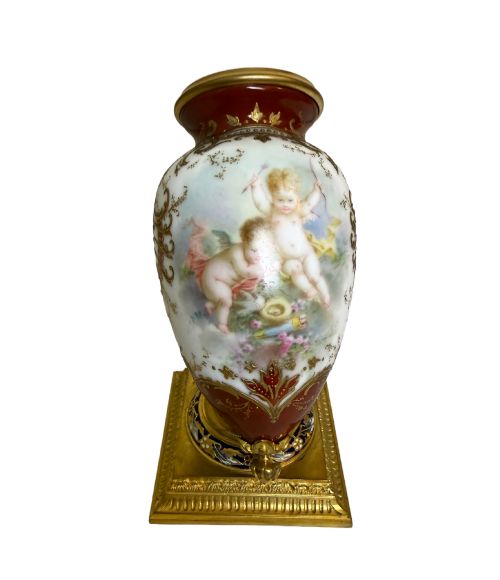
Ceramic plaques, painted with pastoral scenes, birds, or portraits, were inset directly into the wood panels or doors. These painted porcelain components were produced to evoke earlier French royal aesthetics.
Listings feature nineteenth-century dates including the 1850s, 1860s, 1870s, 1880s, 1890s, and 1900.
Judgement of Quality
The standard of an antique sevres mounted cabinet depends upon the crispness of the gilt bronze or ormolu mounts and the artistry of the painted porcelain plaques. Finer pieces display hand-painted detail with depth and precision rather than simple transfer prints.
Construction methods dictate longevity, marked by the selection of dense timbers like burr walnut or kingwood and precise marquetry work. Subtleties in timber selection and the weight of the cast bronze separate standard production from exhibition pieces.
Blake London·Town and Emanuel
The Antique Sevres Mounted Cabinet Glossary
- Ormolu
- Gilded bronze applied as decorative mounts to furniture. The technique involves coating cast bronze with a mercury and gold amalgam before heating.
- Credenza
- A low cabinet or sideboard designed for display and storage, frequently fitted with glass doors and porcelain panels in nineteenth-century revivals.
- Pier cabinet
- A narrow display cabinet built to stand against the wall space between windows. These upright pieces often incorporate glazed doors and ceramic plaques.
- Bonheur du jour
- A small writing desk featuring a superstructure with small drawers, shelves, or cupboards above the writing surface. These desks frequently incorporate porcelain mounts and gilt bronze details.
- Kingwood
- A dense, heavy Brazilian timber with distinctive dark violet-brown grain patterns utilised in fine French cabinet making. This wood appears frequently in nineteenth-century revival furniture.
Antique Sevres Mounted Cabinet: Frequently Asked Questions
What is an antique sevres mounted cabinet?
These pieces are nineteenth-century display furniture incorporating porcelain plaques painted in the manner of the Sèvres factory. They were built in varied forms including credenzas, pier cabinets, and writing desks.
Cabinet makers utilised timbers such as walnut, kingwood, and ebonised wood, pairing them with gilt bronze mounts. The porcelain plaques serve as central decorative panels on doors and upper structures.
How were these cabinets used originally?
Wealthy households utilised these cabinets in formal reception rooms to display ceramics, glass, and curiosities. The lower cupboards provided enclosed storage for household items or books.
Writing variations like the bonheur du jour combined display functions with a compact surface for correspondence. Their decorative presence reflected the taste for French court styles during the Victorian period.
How do I care for wood and porcelain?
Maintain these surfaces by keeping them away from direct sunlight and extreme temperature fluctuations, which can affect timber and veneer. Dust the gilt bronze and wood gently with a dry, soft cloth.
Avoid liquid cleaners on the porcelain plaques and ormolu mounts to preserve the painted details and gilding. Periodic polishing with appropriate wax protects the wooden surfaces.
How can I tell the period?
Dating relies on construction methods, secondary timbers, and the style of the gilt bronze mounts. Nineteenth-century revival pieces often replicate Louis XV and Louis XVI aesthetics with Victorian manufacturing techniques.
Examine the backboards, drawer linings, and screw types to confirm nineteenth-century production. Stylistic shifts between the 1850s and 1900 guide the dating of individual cabinets.